Start-Up Beaver Dams Transform Parched California Creeks into Salmon Havens, New Research Finds
By fisheries.noaa.gov, fisheries.noaa.gov.
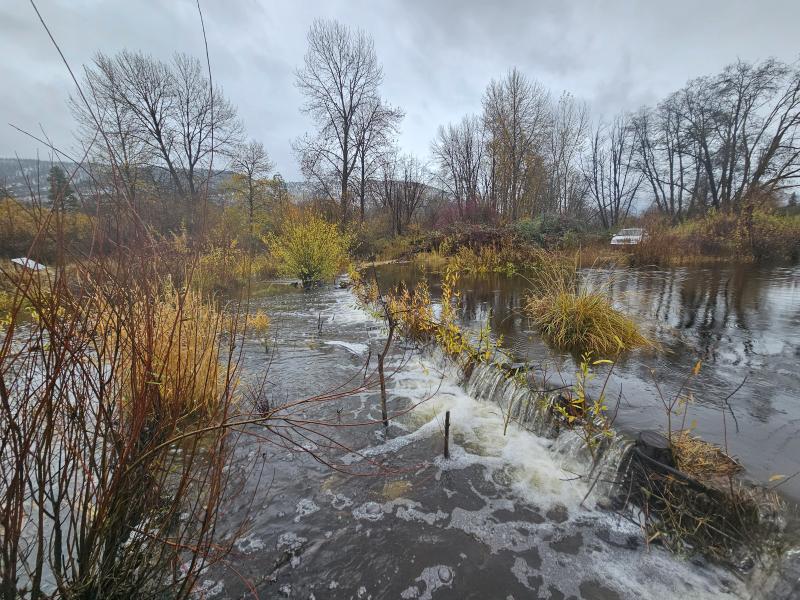
Battered by early gold mining and diminished by logging and diversions,the lower section of Sugar Creek often ran dry in summer. The tributary of the Scott River in Northern California’s Klamath Basin once supported coho salmon—but as it diminished, so did they.
In 2014, NOAA Fisheries researchers worked with the Scott River Watershed Council to sink lines of inexpensive wooden posts interwoven with willow branches across the creek. Called beaver dam analogues (BDAs), the simple structures slowed water flows like beaver dams.
Almost immediately, more juvenile coho salmon survived to fill the creek. Within 2 years, more adult coho salmon were returning, new research showed. Their numbers surged on Sugar Creek and French Creek, another stream with BDAs, just as coho salmon in other local creeks without BDAs collapsed from drought.
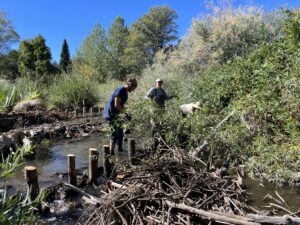
“There was skepticism every step of the way that this would work, that it would provide benefits, until you see the fish actually coming back and you see the fish thrive there,” said Michael Pollock, a research scientist at NOAA Fisheries’ Northwest Fisheries Science Center who led the research. Adult salmon returns demonstrate the benefits of healthy habitat by contributing to fisheries and other economic and environmental gains, he said.
The findings indicate climate shifts such as drought may affect species more severely when land use and other changes have first compromised their survival. Reviving their habitat by imitating beavers, for example, increases their resilience in a changing climate where drought may become more frequent and severe.
Greater Bang for the Buck
Jump-starting beaver dams and ponds has potential to accelerate habitat improvements for salmon faster, at a larger scale, and at less cost than engineered solutions such as rebuilding river channels.
Read the full article here: Start-Up Beaver Dams Transform Parched California Creeks into Salmon Havens, New Research Finds
Originally published on 9 September, 2026.