Quietly Sophisticated: The Hood 42 LM
By US Harbors
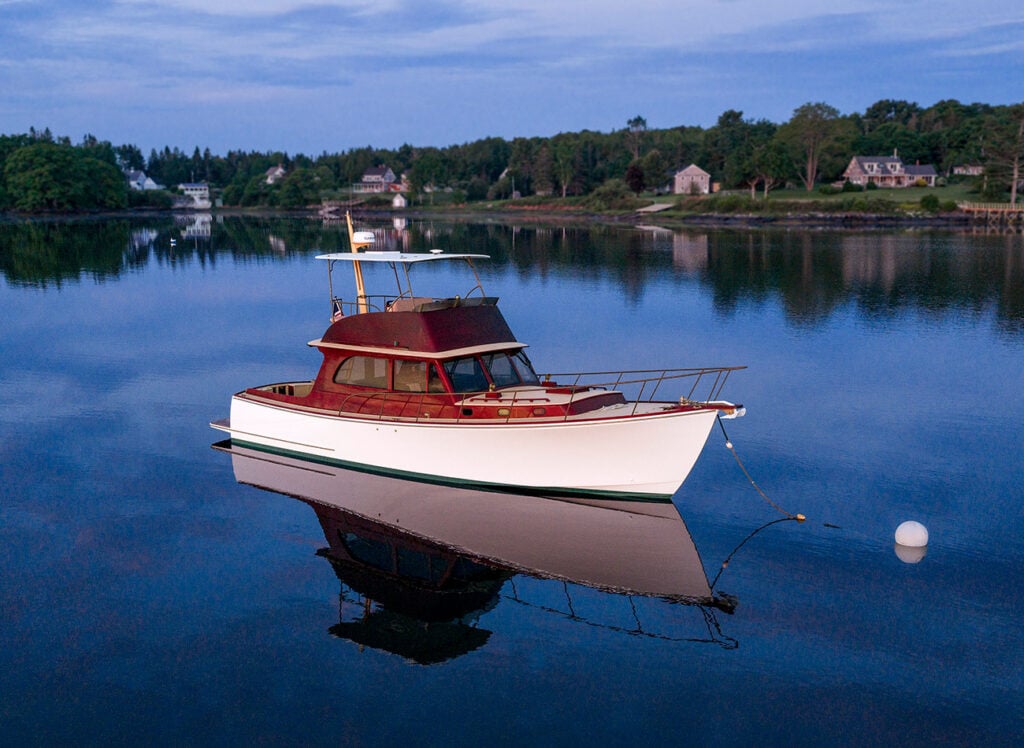
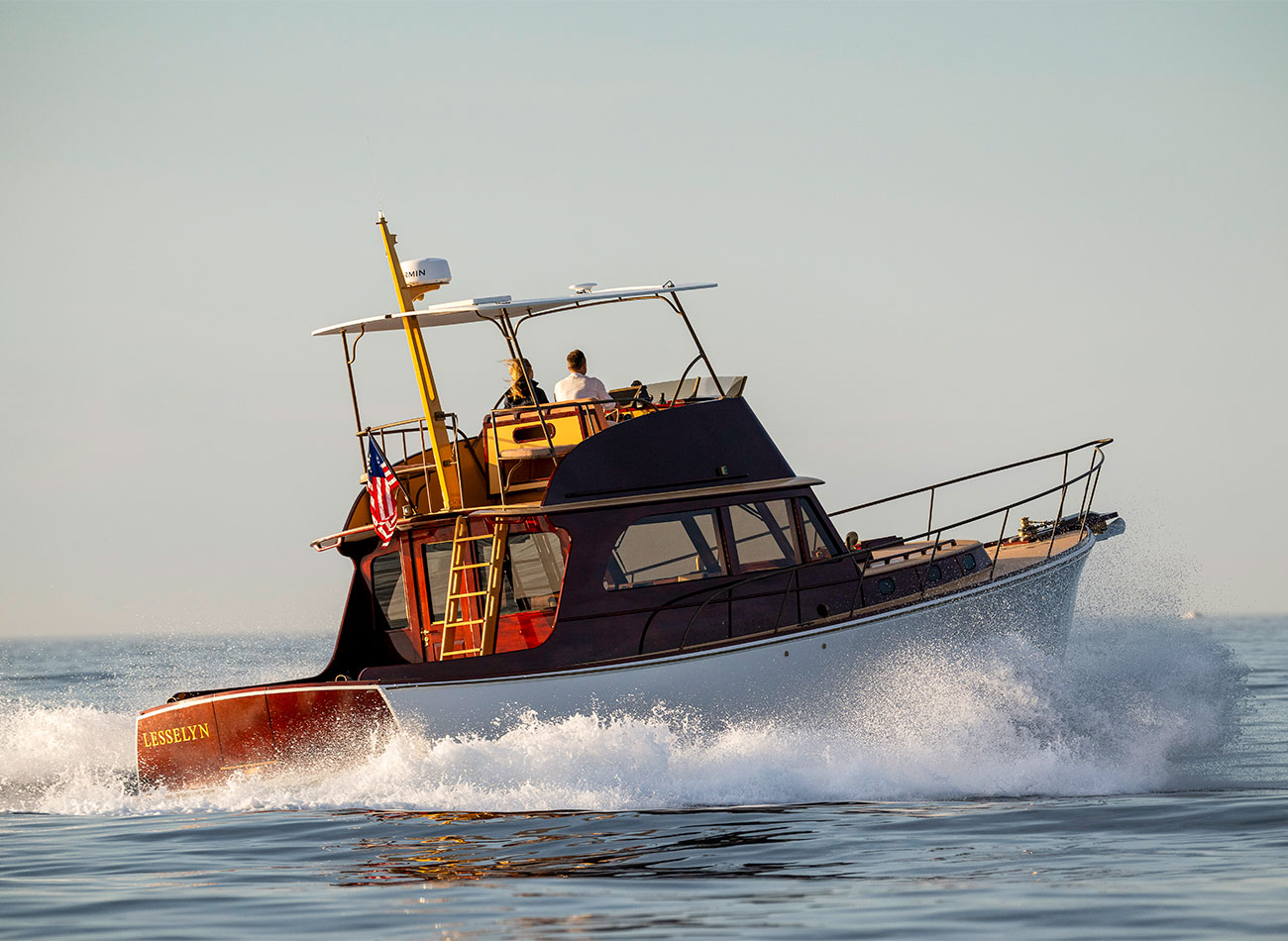
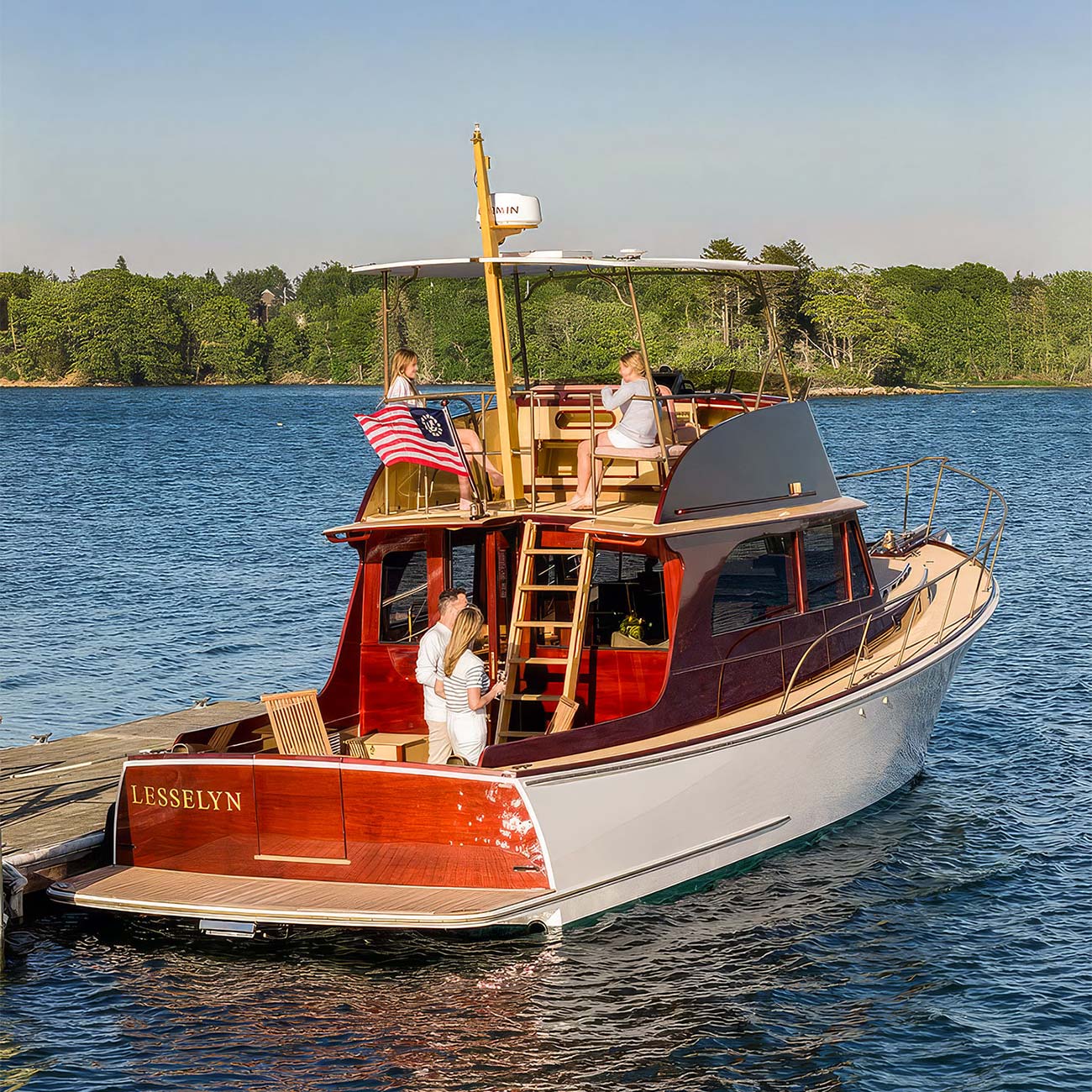
At first glance, the Hood 42 LM might be confused for a boat that worked the Maine coast fifty years ago, but upon further inspection, the fifteen coats of Epifanes varnish over mahogany and custom-cast bronze hardware reveal that this boat was built for cruising. Beyond the traditional look lies a much more sophisticated design with unique spaces below, cold-molded hull construction that reduces noise levels, and a power system that eliminates the need for a generator.
The Hood 42 LM is the latest collaboration between C.W. Hood Yacht Design and Lyman-Morse Boatbuilding. Their partnership began with the Hood 57 LM flagship, grew to include the Hood 35 LM, and now the Hood 42 LM, offered in both flybridge and express sedan configurations. A fourth model, the Hood 46 LM, is currently in build at their yard in Thomaston.
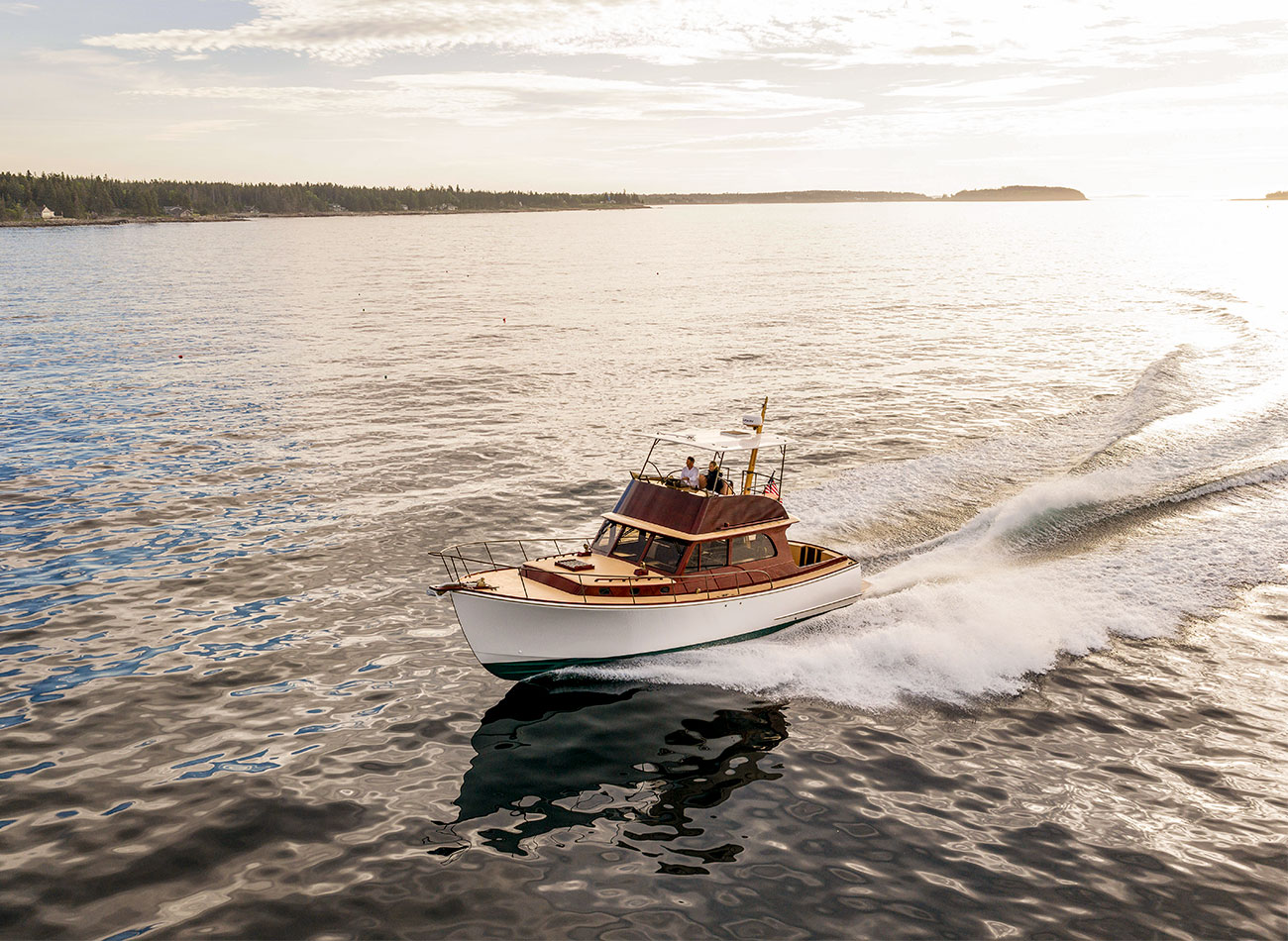
At a time when new power cruisers have taken on a more futuristic look with angular lines and fold-down sides that open the cockpit to the water, the 42 goes the other way. Her look may draw inspiration from boats that have worked the Maine coast for generations, hulls that earned their reputation by being seaworthy and dry, but her modern planing hull, paired with twin Volvo D6 engines and DPI drives, gives the Hood 42 LM a cruise speed in the mid-30-knot range and a top speed of 39 knots, delivering better performance than traditional Downeast lobster yachts.
Cold-Molded, and Quiet by Design
The hull is cold-molded with layers of Douglas fir and cedar laid in alternating directions and sheathed in epoxy and e-glass. Beyond its strength and light weight, a wood-composite hull of this kind is a natural insulator against both heat and sound.
A quiet boat matters to cruisers and to the owners of Hull #1. During the design phase, the build team at Lyman-Morse worked with J&A Associates, the engineering arm of Soundown, to shape the insulation package and vibration-dampening scheme. The engine room and utility spaces are sheathed in Soundown insulation to keep mechanical noise down. Lyman-Morse fits dampening tiles on all of its powerboats; on the 42, the coverage area was expanded around the Seakeeper gyro and the transom.
Power Without the Generator
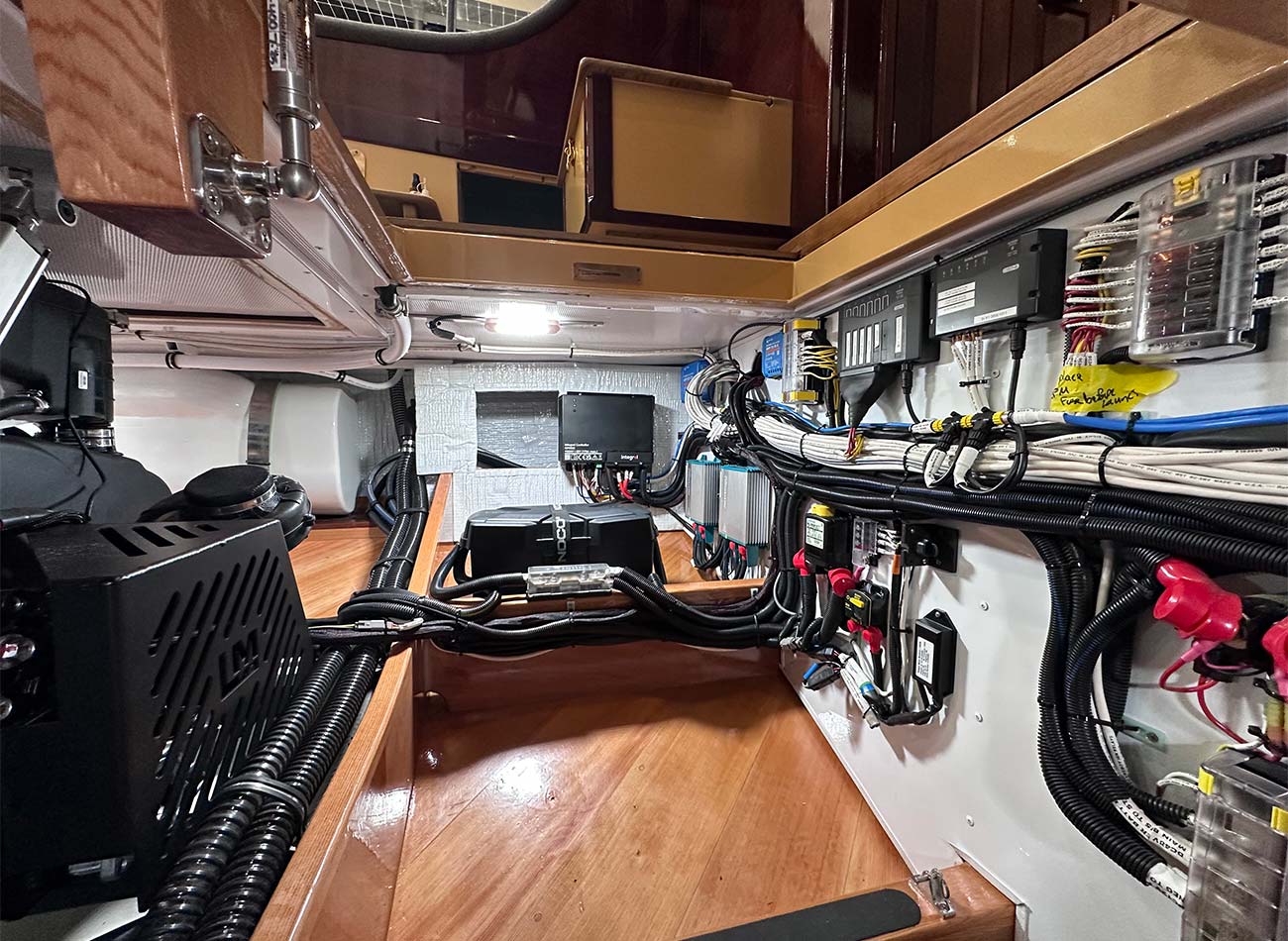
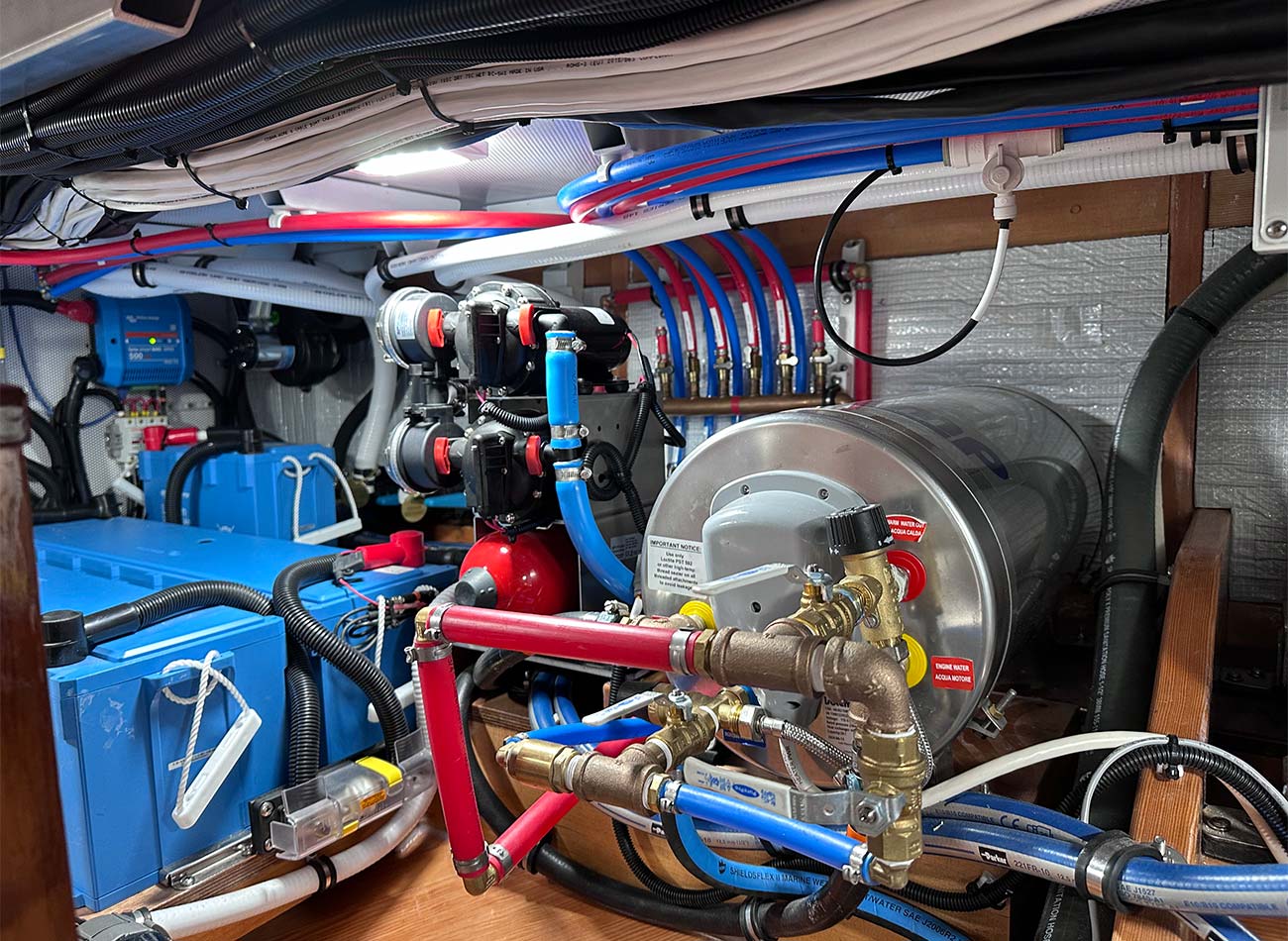
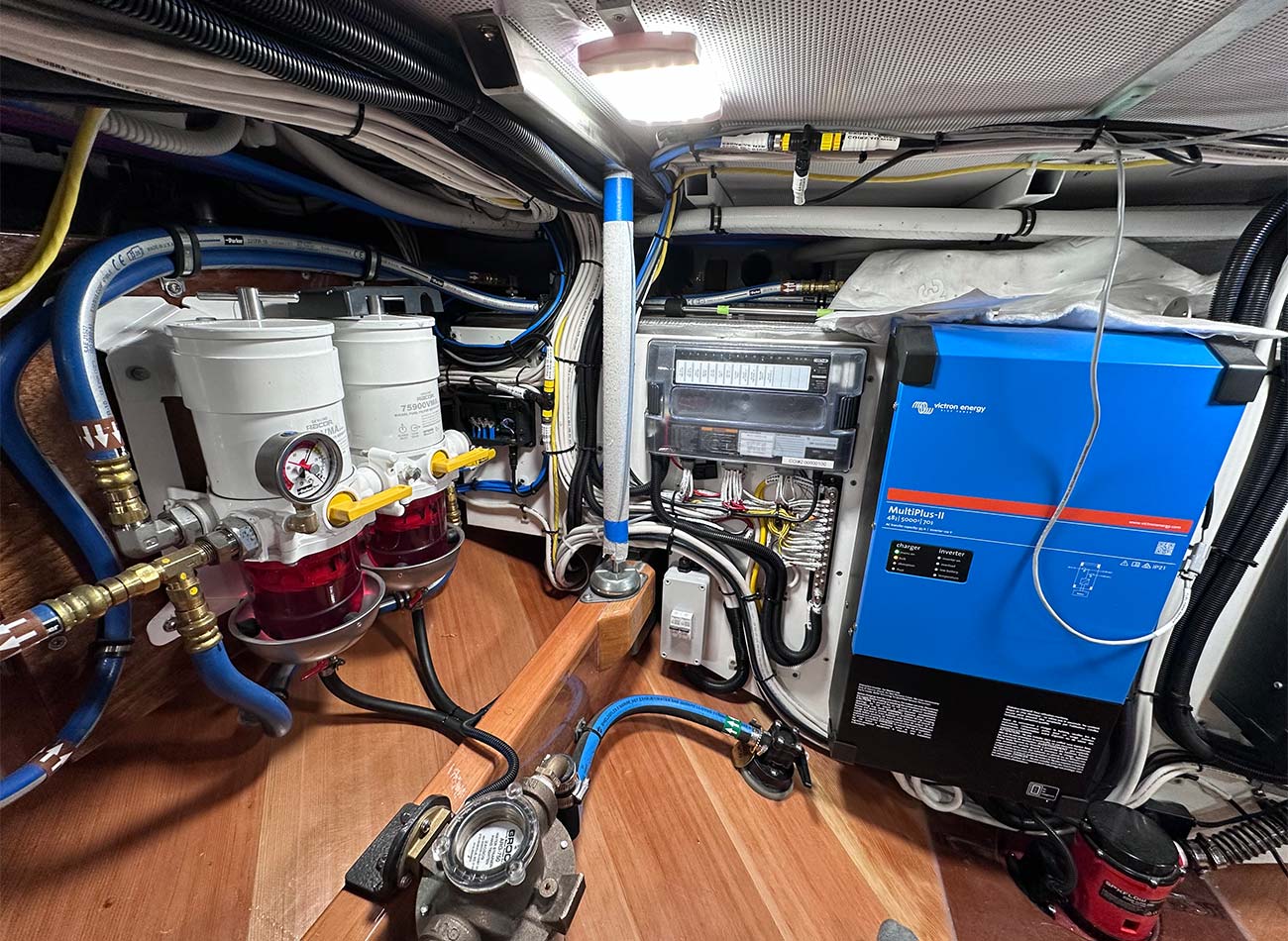
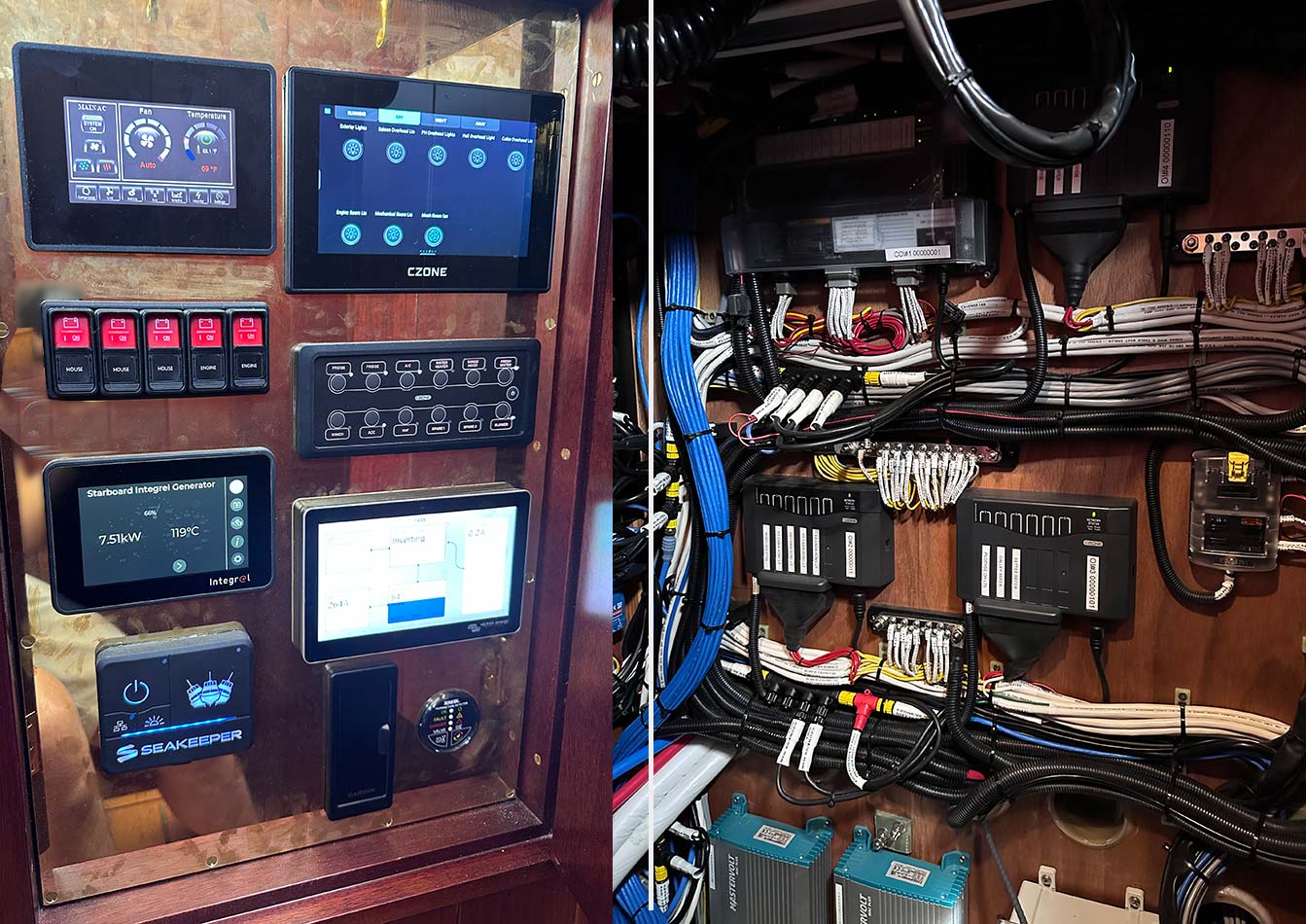
One of the most notable engineering choices on Hull No. 1 is the absence of a traditional diesel generator, which is unusual for a cruising boat of this size. Instead, Lyman-Morse installed an Integrel E-Power system to handle all house bank electrical demands.
A pair of Integrel E-Power 9 DE units, one on the front of each engine and belt-driven off the main engine shaft, charge a 48-volt, 600 amp-hour Victron lithium house bank, together producing up to 18 kW. The installation was approved by Volvo’s engineers; Integrel applications are already cleared for many makes and models, but the 42 was the first for this engine.
The result reshapes daily life at anchor. “During our dock testing, the batteries supported air conditioning, refrigeration, and typical house loads for two days without charging,” says Lance Buchanan, the Boatbuilding Division Manager at Lyman-Morse.
When the bank does need topping up, there is no all-night generator to run: just running the engines for about two hours at 1,200 rpm recharges enough to continue your cruise, and underway at cruising speed, it charges far faster. The system regulates its own output to the battery’s state of charge and runs only when the engines are on. No exhaust, no vibration, one fewer engine to service, and for anyone who has spent a still night at anchor listening to a neighbor’s genset, the point needs no explaining.
The Main Salon
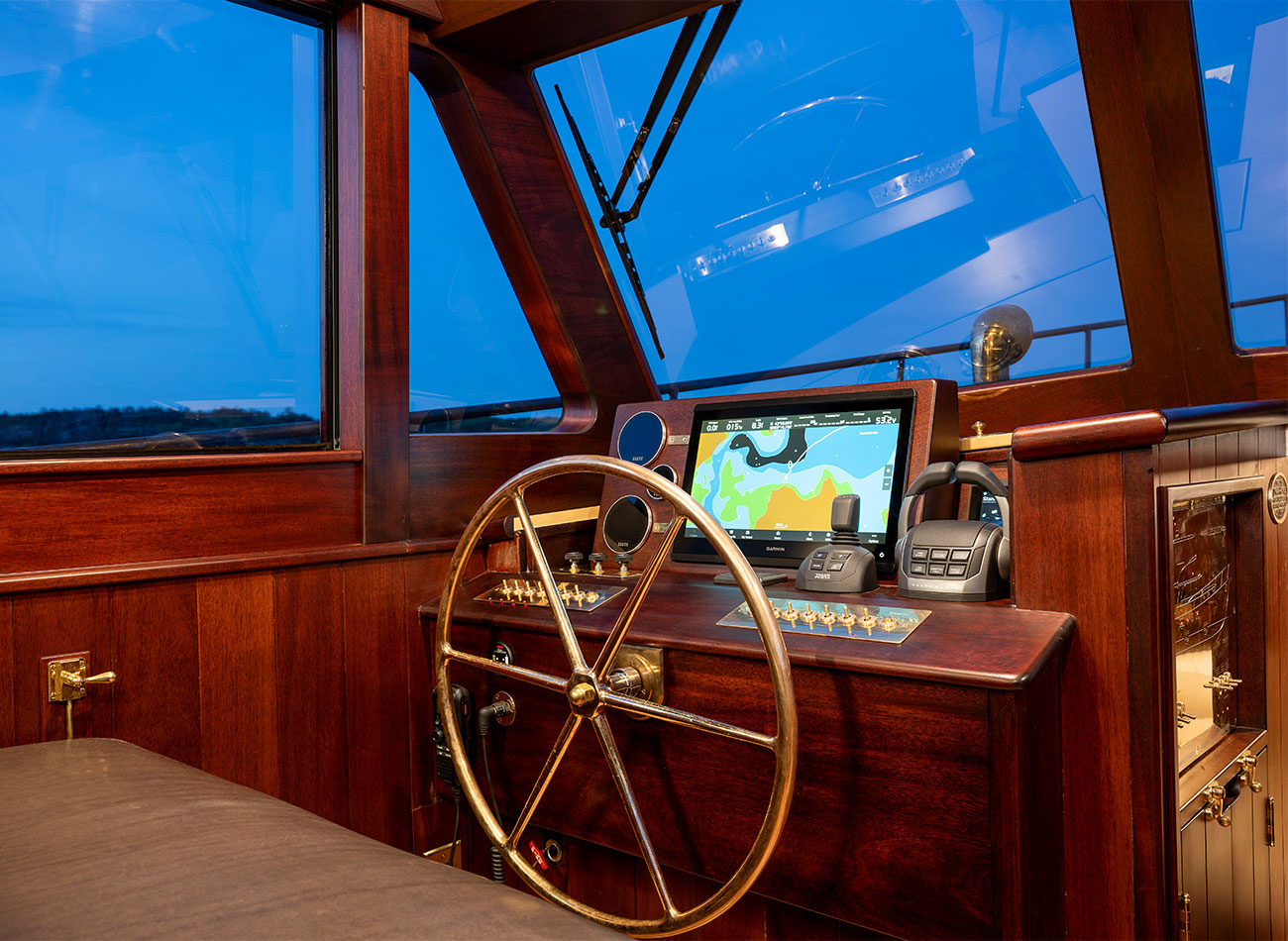
As you step into the main salon, the galley is positioned to port opposite an L-shaped dinette to starboard. Forward, paired double helm seats frame the companionway, where a lightweight carbon-fiber door is wrapped in rich, perfectly varnished veneers with a counter-balanced drop window and screen. The enclosed pilothouse transforms when the weather allows. Side and aft windows lower electrically at the push of a button, with integrated screens deploying effortlessly, opening the space to the breeze while keeping bugs out. Aft in the cockpit, there is generous open space for a teak dining table and folding chairs.
Below Deck
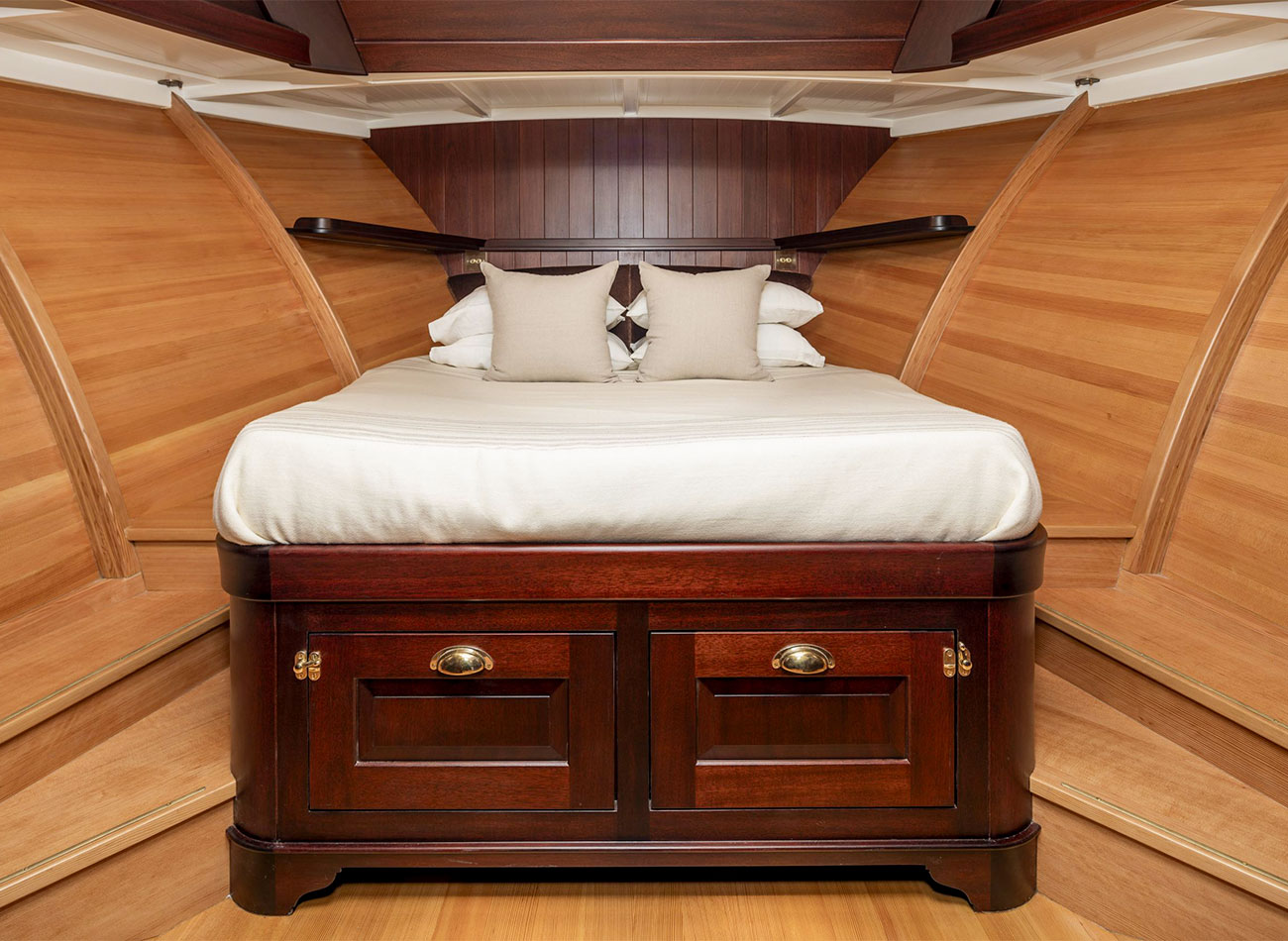
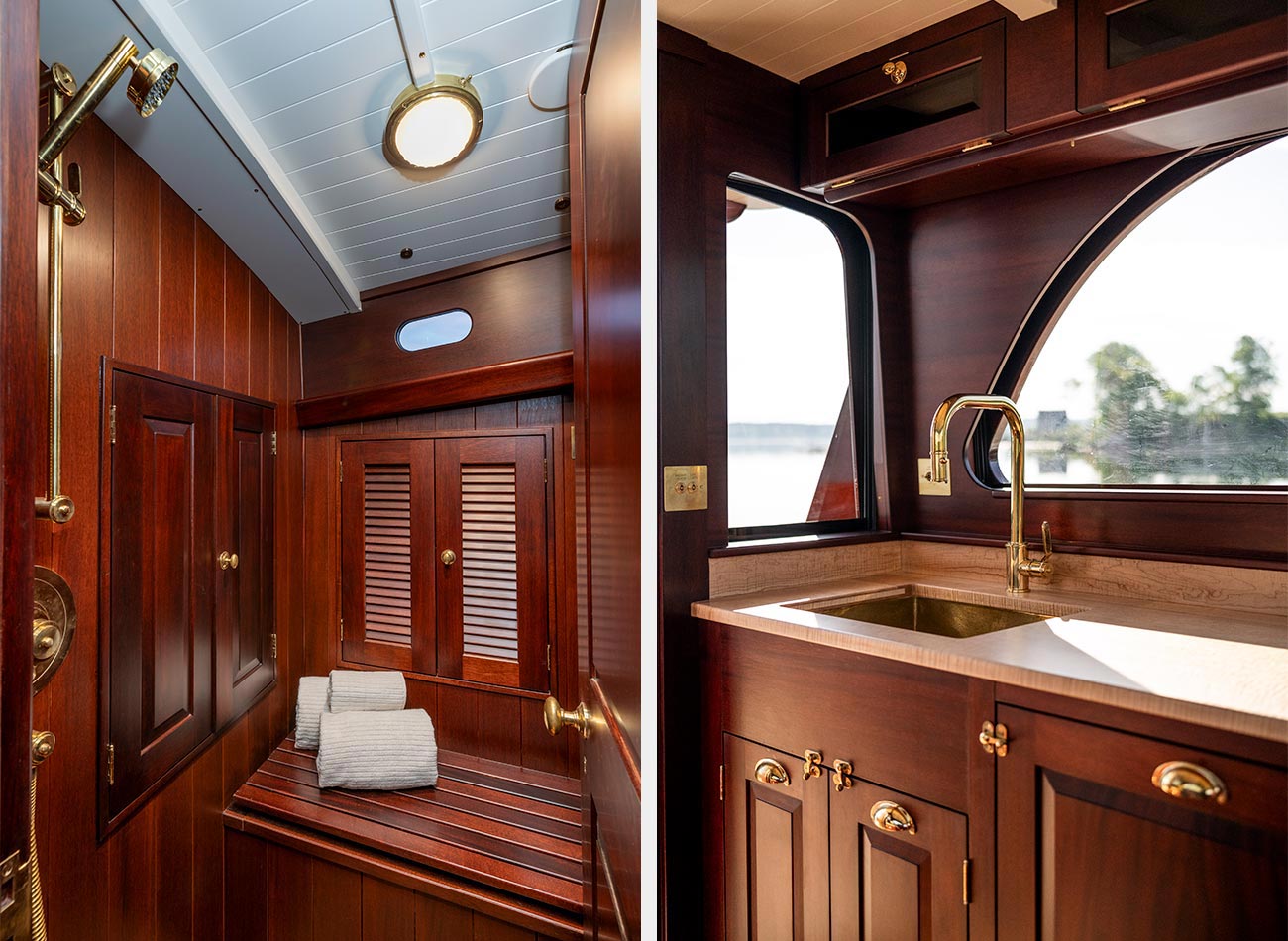
Down below, the layout provides a well-considered owner’s space in keeping with a boat meant for a couple to cruise in comfort. The cabin is arranged around a spacious stateroom forward with the head compartment to starboard and a dedicated shower stall to port.
The interior mahogany is stained dark and given a deep, lustrous varnish, and the tufted leather upholstery and soft goods are the work of Alfred’s Upholstery, a Maine shop. Because the 42 is built semi-custom, each owner has some latitude over layout, materials, and palette within the bounds of the design.
On the Water
From the cockpit, a custom ladder climbs to the flybridge, where the helm sits on centerline beneath a T-top, with a lounge to share the view and sightlines in every direction. With twin Volvo Penta D6 diesels powering DPI stern drives, the Hood 42 will cruise in the mid-30-knot range with a top end of 39 knots. Volvo Penta’s Electronic Vessel Control system brings together Joystick Docking, Joystick Driving, and Dynamic Positioning.
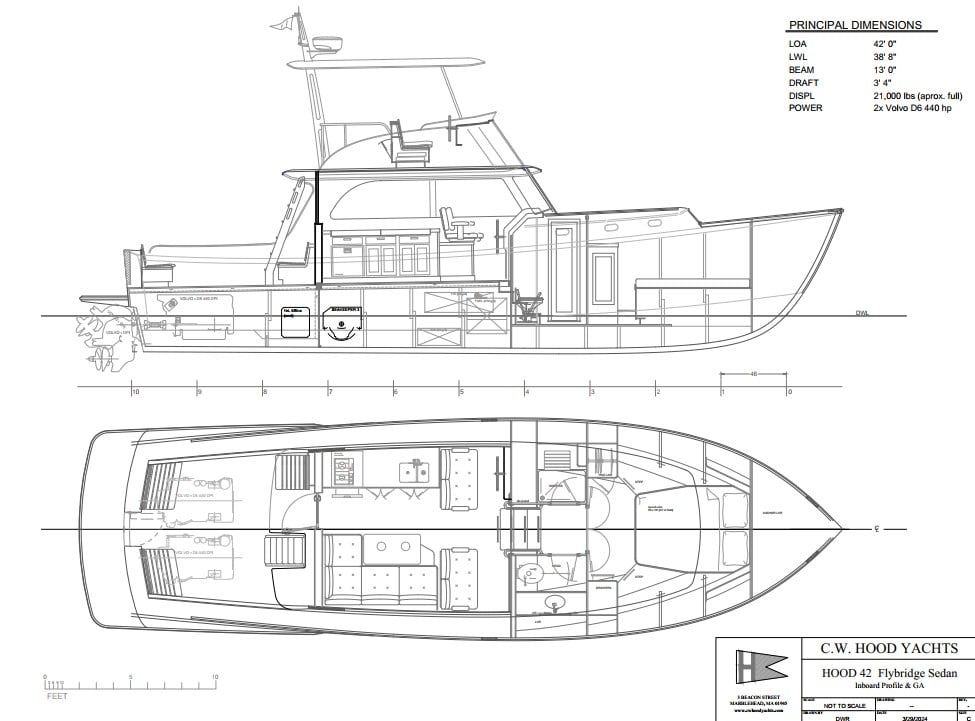
Hood 42 LM — Specifications
Length Overall — 42′ 0″ (12.80 m)
Beam — 13′ 0″ (3.96 m)
Draft — 3′ 4″ (1.02 m)
Displacement — 21,000 lbs (9,525 kg)
Power — Twin Volvo Penta D6 440 hp, Volvo Penta DPI stern drives
Cruising Speed — mid-30-knot range
Top Speed — 39 knots
Control Systems — Volvo Penta EVC (Joystick Docking, Joystick Driving, Dynamic Positioning)
House Power — Integrel E-Power (18 kW combined) / 48V 600Ah Victron lithium
Underneath the varnish and the quiet power systems, the Hood 42 LM is a celebration of Maine boatbuilding at its finest. The classic lines and striking aesthetic are what draw you to the dock, and the thoughtful design and silent nights at anchor make this collaboration so compelling.