Meet Hawaii Fish Company, Tilapia Farmers in Hawaiʻi

By fisheries.noaa.gov, fisheries.noaa.gov.
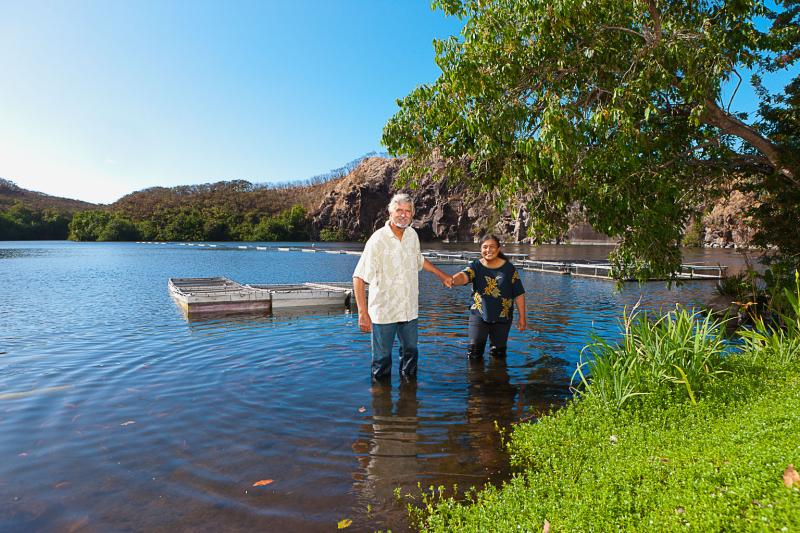
For husband and wife duo Ron and and Estralita Weidenbach, fish farming is a family business. The couple met in the 1970s while Ron was consulting at the East West Center in Honolulu and the World Bank, focusing on sustainable aquaculture projects in Asia. Estralita was a graduate student at the University of Hawaʻii at Manoa. They founded Hawaii Fish Company together in 1978. It started as an aquaculture consulting firm, but the couple soon decided that fish farming would be a good industry for their family.
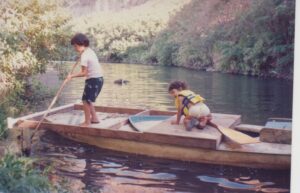
Weidenbach children at work on the farm. Credit: Hawaii Fish Company.

“As our three children have grown up, we’ve enjoyed seeing them involved in different farm tasks, from helping with daily fish feeding or catching and sorting fish when they were younger to more complex research activities as they got older,” Ron said. “We believe our family business helped them learn about hard work and find meaning and enjoyment in science. All three of our children remain involved with the farm, and our youngest daughter, Mikia, currently works on the farm full time.”

Ron and Estralita started raising their first fish in aquariums and children’s swimming pools in Estralita’s backyard. By 1982, they were the first in Hawaiʻi to commercially culture Chinese catfish and were the first vendors to sell live fish. Since 1985, Hawaii Fish Company has regularly sold fish to Honolulu’s live seafood markets and local restaurants. Today, they primarily grow tilapia in a 7-acre freshwater pond located at a flooded former quarry site on the North Shore of Oʻahu, Hawaiʻi.

Farming Tilapia from Floating Cage to Table

Tilapia are grown to market size in floating cages on the freshwater pond. Credit: Hawaii Fish Company.
Hawaii Fish Company manages every step of their fish’s life, from spawn to harvest. They operate their own land-based hatchery in breeding raceways and nursery tanks adjacent to the pond. Their brood stock spawn naturally as temperatures climb in early summer, and the baby fish—called fry—are transferred to separate tanks. Once the fry are big enough, typically around 2-3 months old, they’re transferred into floating cages in the pond.

Read the full article here: Meet Hawaii Fish Company, Tilapia Farmers in Hawaiʻi

Originally  published on 18 September, 2026.