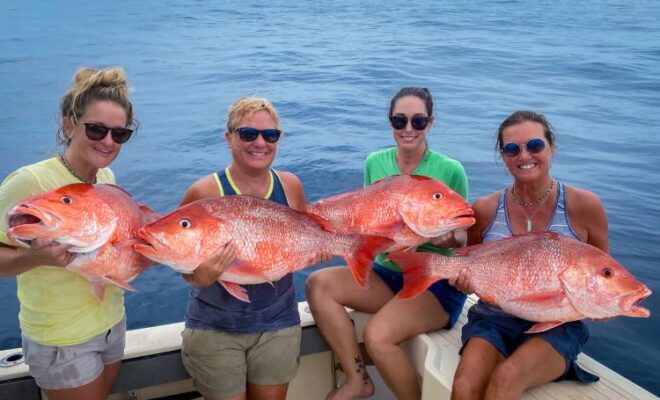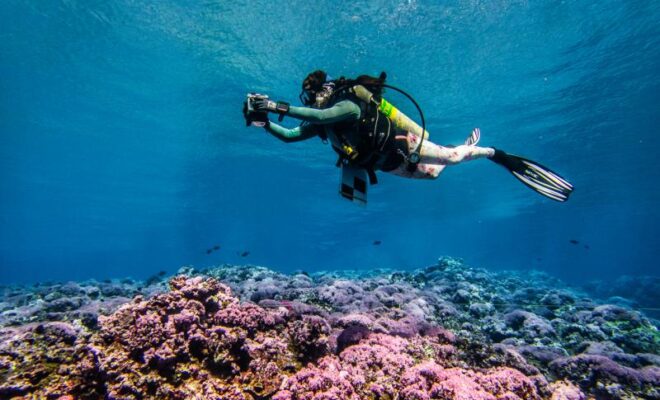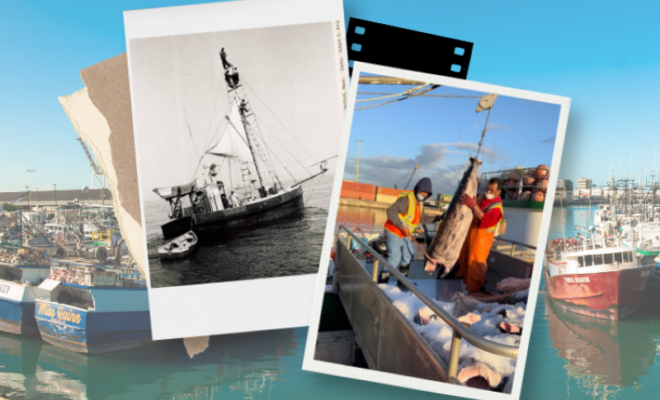
The United States is a global leader in fisheries excellence, and NOAA's regional priorties will increase opportunities for American fishermen and women. (Image credit: Shutterstock via NOAA Fisheries)

NOAA Announces Regional Priorities To Advance America-First Seafood Strategy

7/5/2026 - By noaa.gov, noaa.gov. Today, NOAA announced regional priorities to revitalize the U.S. seafood sector focused on reducing burdens on domestic fishing, increasing production, improving access, and enhancing economic profitability. This bold, coordinated effort by the Department of Commerce through NOAA Fisheries is in direct response to the President’s Executive Order Restoring… SEE MORE
A scientist measures a tagged greater amberjack prior to releasing it. (Photo courtesy of Texas A&M University-Corpus Christi)

Research Project Provides New Estimates Of Greater Amberjack Abundance in U.S. South Atlantic, Gulf Of America

7/3/2026 - By seagrant.noaa.gov, seagrant.noaa.gov. A multi-year research project to estimate the number of greater amberjack in the U.S. South Atlantic and Gulf of America has provided new insight into the species. The Greater Amberjack Count was led by Sean P. Powers, Ph.D., fisheries ecology professor and Director of the Stokes School of Marine… SEE MORE
Vessels from the West Coast squid fleet followed market squid north into Oregon as ocean waters warmed, leading Oregon to adopt its first regulations for squid fishing in the state. Photo courtesy of California Department of Fish and Wildlife.

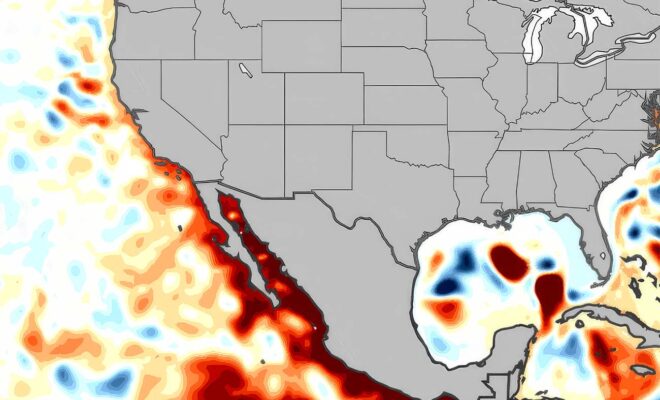
7 Ways El Niño and Large Marine Heatwave Could Affect West Coast Marine Species

6/23/2026 - By fisheries.noaa.gov, fisheries.noaa.gov. A large marine heatwave has bathed parts of the West Coast in very warm ocean waters over the past year, breaking temperature records in the Pacific. NOAA has also announced that El Niño has developed in the tropical Pacific and is predicted to intensify to a moderate or strong level this… SEE MORE
Brenden Doyle, the founder and owner of The Great Marsh Shellfish Company, grows oysters in the largest contiguous salt marsh in New England. Credit: The Great Marsh Shellfish Company

Meet The Great Marsh Shellfish Company, Oyster Growers in Massachusetts

6/14/2026 - By fisheries.noaa.gov, fisheries.noaa.gov. When you farm shellfish on Massachusetts’ beautiful coastal marshes, the world is your oy-stah! At least according to Brenden Doyle, a Gloucester native with family roots in Massachusetts’ commercial and recreational fishing industry. He spent his childhood boating and fishing around Cape Ann and learning about the… SEE MORE
Image Credits: Fisheries.noaa.gov.

Celebrate National Fishing and Boating Week!

6/11/2026 - By fisheries.noaa.gov, fisheries.noaa.gov. Marine recreational fishing is a cherished American pastime and draws millions of anglers to support our coastal communities. Celebrate our nation's love for fishing and boating during National Fishing and Boating Week. Cast a line and join anglers across the country in celebrating National Fishing and Boating… SEE MORE
Image Credits: Fisheries.noaa.gov.

NOAA Fisheries Announces $2.3 Million to Study Atlantic Mackerel with the Northeast Fishing Industry

6/11/2026 - By fisheries.noaa.gov, fisheries.noaa.gov. NOAA Fisheries is beginning a cooperative research initiative, partnering with the Northeast fishing industry to learn more about Atlantic mackerel population dynamics. The initiative will receive $2.3 million in the current fiscal year. The project will engage more than 50 fishing vessels to collect and analyze data… SEE MORE
Neskowin Creek, a salmon stream in Tillamook County, Oregon, flows out to the Pacific Ocean. Credit: Adobe Stock

Reconnecting Rivers Boosts Oregon Coast Coho Recovery

6/10/2026 - By fisheries.noaa.gov, fisheries.noaa.gov. NOAA Fisheries supports one of the most ambitious salmon restoration projects on Oregon’s coast: the Salmon SuperHwy. This partnership of more than a dozen organizations works across the Tillamook, Nestucca, and Sand Lake watersheds. It works to restore fish passage at dozens of stream barriers, such as failing… SEE MORE
Spring Chinook Salmon. Credit: Michael Humling, U.S. Fish & Wildlife Service

NOAA Fisheries Finds Listing Gulf of Alaska Chinook Salmon Under the Endangered Species Act “Not Warranted”

5/28/2026 - By fisheries.noaa.gov, fisheries.noaa.gov. NOAA Fisheries’ 12-month review shows a low risk of extinction. NOAA Fisheries has completed a status review and 12-month finding for Gulf of Alaska Chinook salmon in response to a January 2024 petition. The Wild Fish Conservancy petitioned to delineate and list one or more evolutionarily significant units (ESUs) of Gulf of Alaska Chinook salmon… SEE MORE
A humpback whale feeds on schooling forage fish in Prince William Sound Alaska. Photo taken under NOAA Fisheries Permit #24378 Credit: NOAA Fisheries/John Moran

Capelin: a “Sea Canary” for Marine Ecosystem Change in Response to Heatwaves

5/27/2026 - By fisheries.noaa.gov, fisheries.noaa.gov. Capelin are a major forage fish species in high-latitude marine ecosystems. Recent heatwaves in Alaska led to a dramatic decline in capelin abundance, which can have major impacts on predators, including marine mammals, seabirds, and fish. Twenty years ago, Dr. George Rose with Memorial University of Newfoundland called capelin… SEE MORE