Cephalopods From Shallow to Deep in Your National Marine Sanctuaries
By Rachel Plunkett, sanctuaries.noaa.gov.
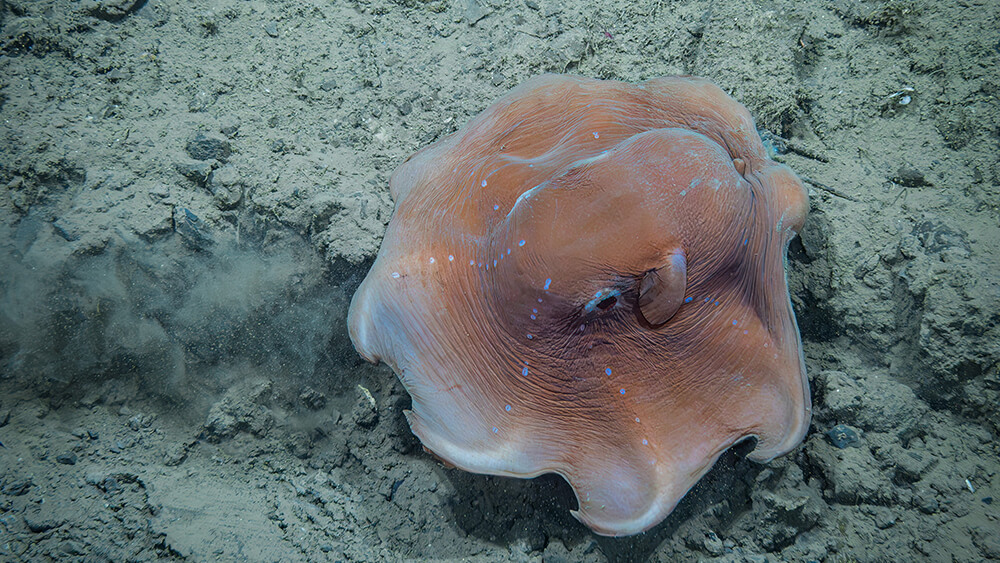
With remarkable senses, complex behaviors, and extraordinary adaptations, cephalopods are some of the ocean’s most fascinating animals. From shallow coral reefs to the darkest reaches of the deep sea, octopuses, squid, cuttlefish, and their relatives have evolved remarkable ways to hunt, hide, communicate, and survive. Cephalopods also play important roles in marine ecosystems. As predators, they feed on fish, crustaceans, mollusks, and other animals, while also serving as an important food source for fish, seabirds, sharks, and marine mammals. Because many cephalopods grow quickly, have short life cycles, and respond to changing ocean conditions, shifts in their abundance and distribution can also provide scientists with clues about broader ecosystem change.
In celebration of Octopus Day on October 8 and Cephalopod Awareness Days from October 8–12, we’re taking a closer look at some of the cephalopods found in and connected to national marine sanctuaries. Along the way, we’ll explore unusual adaptations, cultural connections, scientific discoveries, and memorable encounters—including a rare deep-sea squid recently observed in sanctuary waters.
Bigfin Squid (Magnapinna spp.)
Featured Sanctuary Sightings: Monterey Bay National Marine Sanctuary

Bigfin squid (Magnapinna spp.) are among the most distinctive cephalopods ever observed in the deep sea. Their arms and tentacles extend into extremely long, threadlike filaments and often bend at sharp, elbow-like angles, giving the animals a silhouette unlike that of most other squid. Scientists think the sticky filaments may help capture small prey as the squid hovers above the seafloor, but much about bigfin squid—including what they eat and how they reproduce—remains unknown. They are also among the deepest-dwelling squid ever recorded, with observations from more than 20,000 feet below the ocean surface. The deep-dwelling bigfin squid (Magnapinna spp.) should not be confused with the bigfin reef squid (Sepioteuthis lessoniana), which is found in shallow coastal areas of the Pacific such as in Hawaiian Islands Humpback Whale National Marine Sanctuary.
Read the full article here: Cephalopods From Shallow to Deep in Your National Marine Sanctuaries