Coral IVF: How Scientists Are Breeding Heat-Resistant Reefs for Florida’s Future
By Dawn Anderson, best4boats.com.
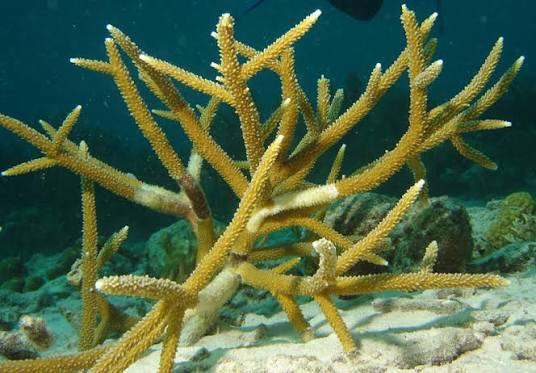
The reefs that protect South Florida’s coastlines, harbors, and marinas are in crisis — and scientists at the University of Miami are using an unlikely tool to fight back: assisted reproduction. After a record marine heatwave in 2023 wiped out up to 100 percent of elkhorn and staghorn coral across the Florida Keys, researchers are collecting coral eggs and sperm during annual spawning events, fertilizing them in the lab, and raising the offspring in nurseries before transplanting them onto damaged reefs. It’s a technique known as coral IVF, and for boaters and coastal communities who depend on healthy reef structure for wave protection, fishing, and diving, the stakes couldn’t be higher.
As Dawn Anderson writes for Best4Boats:
A team from the University of Miami surveyed 52,000 coral colonies across 391 sites to measure the damage. Their findings, published through the Rosenstiel School in October 2025, were bleak: the elkhorn and staghorn coral mortality rates in the Florida Keys and Dry Tortugas were 98% to 100%. Even in the cooler waters of southeast Florida, they still lost close to 38%. The two species, the primary reef builders in the Caribbean, were formally declared “functionally extinct” in Florida waters, which means surviving colonies could no longer reproduce on their own.
The scale of the response has grown rapidly. In November 2024, NOAA awarded a four-year, $16 million grant to an eleven-organization coalition led by the University of Miami to expand coral IVF alongside complementary strategies — including thermal conditioning of young coral, pairing larvae with heat-adapted algae, and even crossbreeding Florida elkhorn with heat-tolerant Honduran parent colonies. In June 2026, researchers expanded the ECoREEF project off Miami Beach, attaching 205 coral colonies and thousands of larvae to 3D-printed reef structures offshore.
For anyone who spends time on the water in South Florida, healthy reef is what breaks wave energy before it reaches the shore, the marina, or the seawall — and it’s the foundation of the region’s fishing and diving economy. With 2026 water temperatures already running ahead of the devastating 2023 season, the race to get enough genetically diverse coral back on the reef has never been more urgent.