Right Whale Speed Zones Take Effect Nov 1 2026
Posted Updated
By US Harbors
The rule dates to 2008 and is now under federal review. Here is where the zones are this season and where the debate over their future stands.
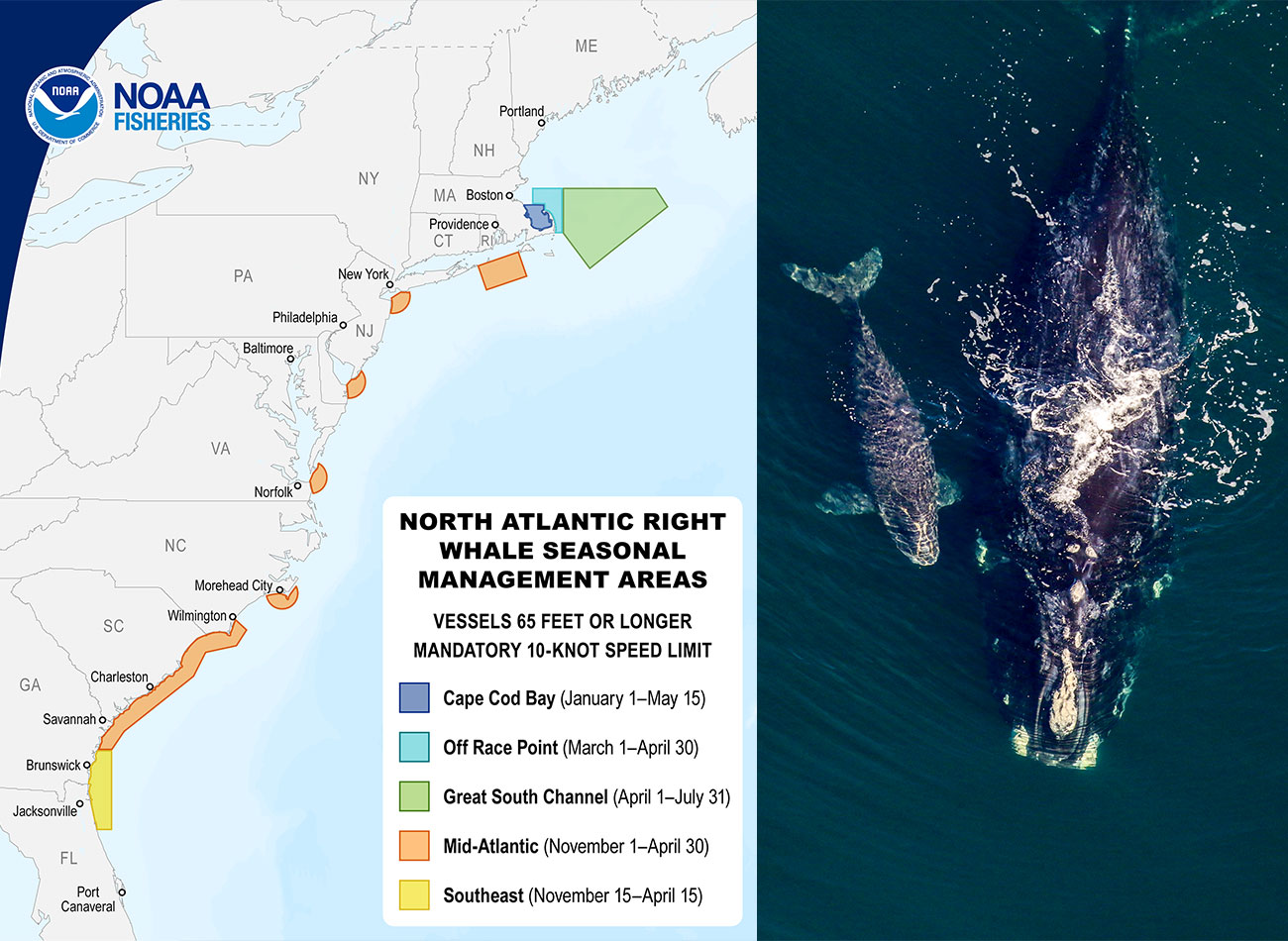
Where and when the 10-knot limit applies
- Block Island Sound
- Within 20 nautical miles of the entrances to the Port of New York and New Jersey, Delaware Bay, Chesapeake Bay, and Morehead City/Beaufort, N.C.
- A continuous band 20 nautical miles from shore between Wilmington, N.C., and Sapelo Island, GA.
-
From Sapelo Island, GA, to just south of St. Augustine, FL.
-
Cape Cod Bay, January 1–May 15
-
Off Race Point, March 1–April 30
-
Great South Channel, April 1–July 31

Boats under 65 feet are not required to slow down in the federal zones. NOAA asks them to do so anyway, because a vessel of any size can strike a whale.
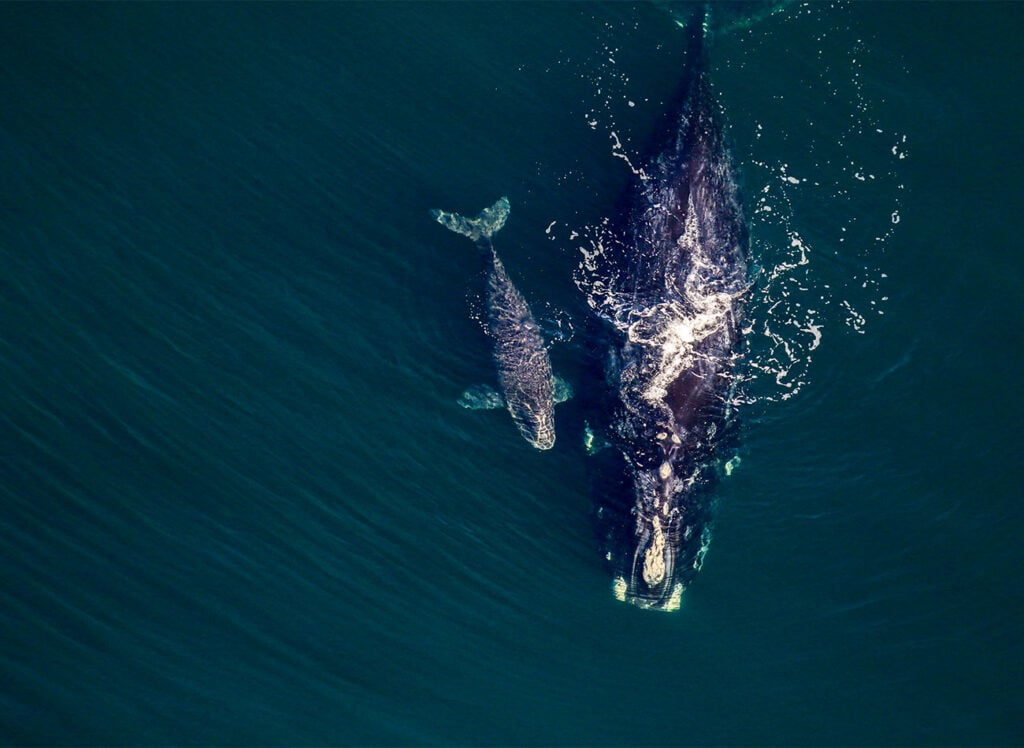
Right whales are dark, have no dorsal fin, and spend much of their time at or just below the surface. That makes them hard to see from the helm, especially in chop, poor light, or murky water. NOAA says the risk is highest for mothers with newborn calves.
When whales are detected outside the seasonal zones, NOAA may declare a voluntary Right Whale Slow Zone. For 15 days, mariners are asked to avoid the area or keep to 10 knots or less.
-
Right whale sightings map, which shows active Slow Zones
-
Email or text alerts for new Slow Zones, for boaters from Maine to Florida
-
Whale Alert app, which notifies you when you enter a Slow Zone
-
Compliance guide (PDF, 2 pages)
In March, NOAA Fisheries published an advance notice of proposed rulemaking. It is considering replacing the seasonal speed limits with alternative management areas and technology-based strike-avoidance measures. Public comments closed in June. On September 17, an executive order directed the Commerce Department and NOAA to integrate marine mammal avoidance technology and to work with the private sector to do it.
Much of the recreational boating and sportfishing industry supports that direction. Viking Yacht Company formed its Whale and Vessel Safety Taskforce in 2022. The task force has been testing detection systems, radar, and AI classification software aboard a 24-foot research boat. In September, Viking wrote to NOAA asking the agency to prioritize the rule making. “Technology has to be part of the solution,” Viking president and CEO Pat Healey told Yachting.