Marine Heatwave Triggered a Hybrid Crab Surge in the Bering Sea
By fisheries.noaa.gov, fisheries.noaa.gov.
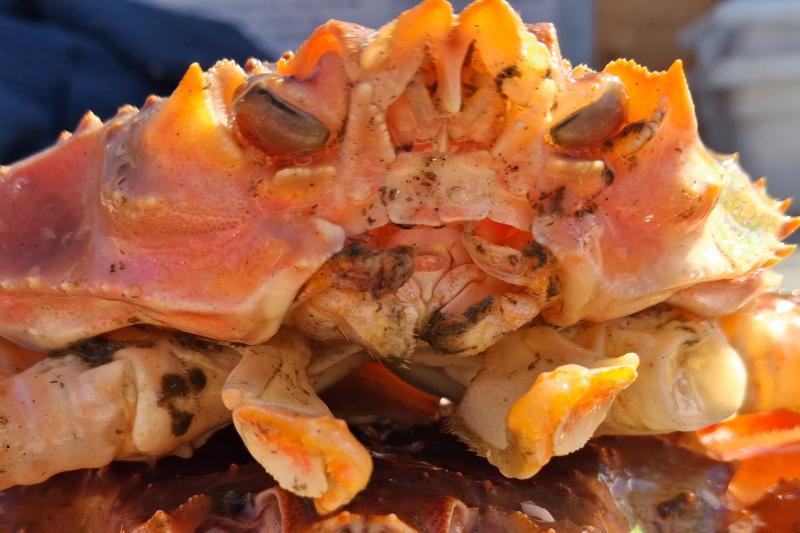
A team of scientists at the Alaska Fisheries Science Center’s Kodiak Laboratory has uncovered an unexpected ecological aftermath following the major 2018–2019 Bering Sea marine heatwave. The results, published in a new Proceedings of the National Academy of Sciences study, show the abundance of snow-Tanner crab hybrids increased by more than 13 times. Snow-Tanner hybrid crabs were previously rare. More strikingly, commercial-sized male hybrids—which can be legally landed during the snow crab fishery—spiked from less than 10 percent of harvestable males to nearly half (41.7 percent) in 2025.
“These results are unprecedented,” said study lead Erin Fedewa. “We were shocked by the magnitude of the hybrid surge while analyzing data from the 2025 eastern Bering Sea bottom trawl survey. It immediately became clear that this ecological response would ripple through to fisheries management.”

Using advanced modeling methods, scientists determined this hybrid boom was not caused directly by warmer waters or increased spatial overlap of mature snow and Tanner crabs. Instead, the catastrophic collapse of the snow crab population following the 2018–2019 marine heatwave likely released hybrids from competition and predation.
Tanner crab abundance similarly surged—reaching the highest recorded in 2025. The research team also attributed this to the snow crab collapse. However, unlike the hybrid surge, the Tanner crab expansion was less surprising. Tanner crab is a sub-Arctic species with an affinity to warmer temperatures, so the population is naturally positioned to benefit in warming waters.

While marine heatwaves are known to disrupt ecosystems, determining the exact mechanisms driving these complex biological responses can be difficult. The team applied dynamic structural equation models to uncover why Tanner and hybrid crab numbers spiked to all-time highs in 2025.