Nine Species of Deep-Sea Sponges Discovered in Alaska
By fisheries.noaa.gov, fisheries.noaa.gov.
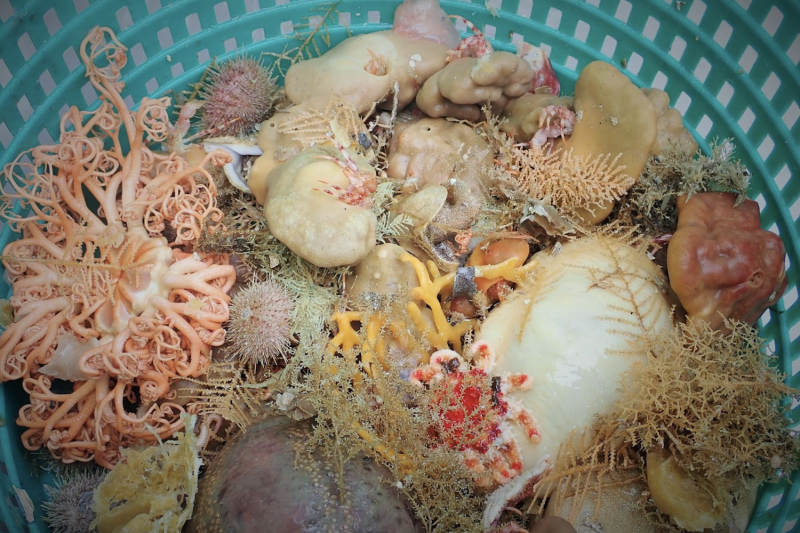
Scientists have discovered nine new species of sponges in the Gulf of Alaska and Aleutian Islands. The specimens were collected during the Alaska Fisheries Science Center’s long-standing annual bottom trawl surveys, which monitor the condition of groundfish and shellfish stocks in Alaskan waters. For these sponge studies, researchers analyzed samples gathered during surveys dating back to 2012.

The new species were described across two recent scientific publications: four in one paper and five in the other. These discoveries raise the total number of known sponge species in Alaska to 232. The findings add to a growing body of knowledge about the richness of marine life in Alaskan waters. They also highlight the Aleutian Islands as a global hotspot for sponge biodiversity.
The studies also mapped sponge genetic codes, which contributes to a marine genetic library. This continues to build a robust catalog that enhances NOAA’s ability to detect species and estimate population abundances using non-invasive environmental DNA sampling.

Sponges are far more than simple ocean dwellers—they are living water pumps. They feed by filtering vast amounts of seawater, build seafloor structure, and produce complex chemical defenses. Dating back more than 600 million years, sponges are among Earth’s earliest multicellular animals. And, they survive and reproduce without a brain, organs, or complex tissue systems.
“Sponges are ecologically important,” said Sean Rooney, fisheries biologist and co-author of the studies at NOAA’s Alaska Fisheries Science Center. “They aren’t plants, but like trees in a forest, they provide complex structure along the seafloor that creates habitat and refuge for commercially important fish and crabs.”
Read the full article here: Nine Species of Deep-Sea Sponges Discovered in Alaska
Originally published on 9 September, 2026.