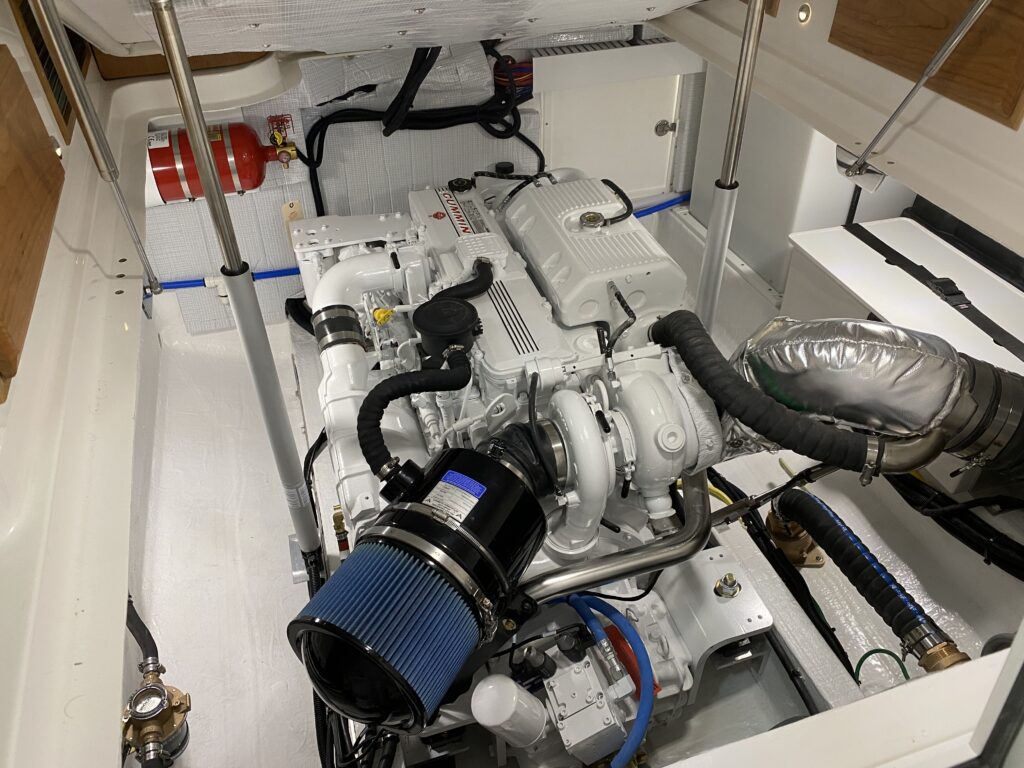
By Kevin Falvey, boatingmag.com.
Regular engine room inspections are essential for harbor safety and preventing breakdowns that can leave vessels stranded or create hazardous situations at docks and marinas. Whether evaluating a potential purchase or maintaining a current vessel, systematic mechanical space inspections can identify problems before they become costly repairs or dangerous emergencies that affect harbor operations.
According to an article by Kevin Falvey in Boating Magazine:
Engine and mechanical spaces can be dangerous places. From cuts delivered by unsheathed hose-clamp tails and improperly trimmed zip-ties to the dangers presented by fumes, fuel and electrical systems, care and respect must attend on this job. Wear PPE, including eye protection and gloves. Also, remove jewelry and watches, which can snag in equipment, cause a spark or explosion or weld your wrist to a battery terminal. Turn off battery chargers and gensets beforehand. Remove ignition keys.
Runs of plumbing and electrical wire routed through a boat pass through bulkheads and partitions. In all cases where it might abrade, chafe-protection must be applied. “Wire loom buys some time but it is not a permanent solution,” D’Antonio says. That means that the cutout or pass-through is generously padded and the wire or plumbing is secured such that it can’t move or vibrate as it passes through.
Seacocks should be accessible. (You may need to stop a leak in a rolling sea.) Make sure the handle is not obstructed by a hose, other equipment or a stringer—we see this on occasion—so that the valve can be closed.
The article, which draws on expertise from ABYC Master Technician Steve D’Antonio, covers additional critical inspection points including battery terminal protection, belt condition, motor mount alignment, and fire suppression system verification—all essential for safe harbor and coastal operations.
Read the full article here: The Importance of Engine-Room Inspections
Originally published January 05, 2026.