In The Zone: The Sabre 51 Salon Express
By US Harbors
When Sabre Yachts completed construction of hull number 200 of its 48 Salon Express model, more than half the crew who built it had also worked on hull number one. The average tenure on that line was 12 years, and they produced a yacht that proved to be one of the Maine boatbuilder’s most beloved. So when the Sabre team set about designing and building the company’s newest vessel, the Sabre 51, they turned to that same cadre of craftspeople. Once again, these men and women have defined what it means to be “crafted in the Maine tradition.”
At the Helm
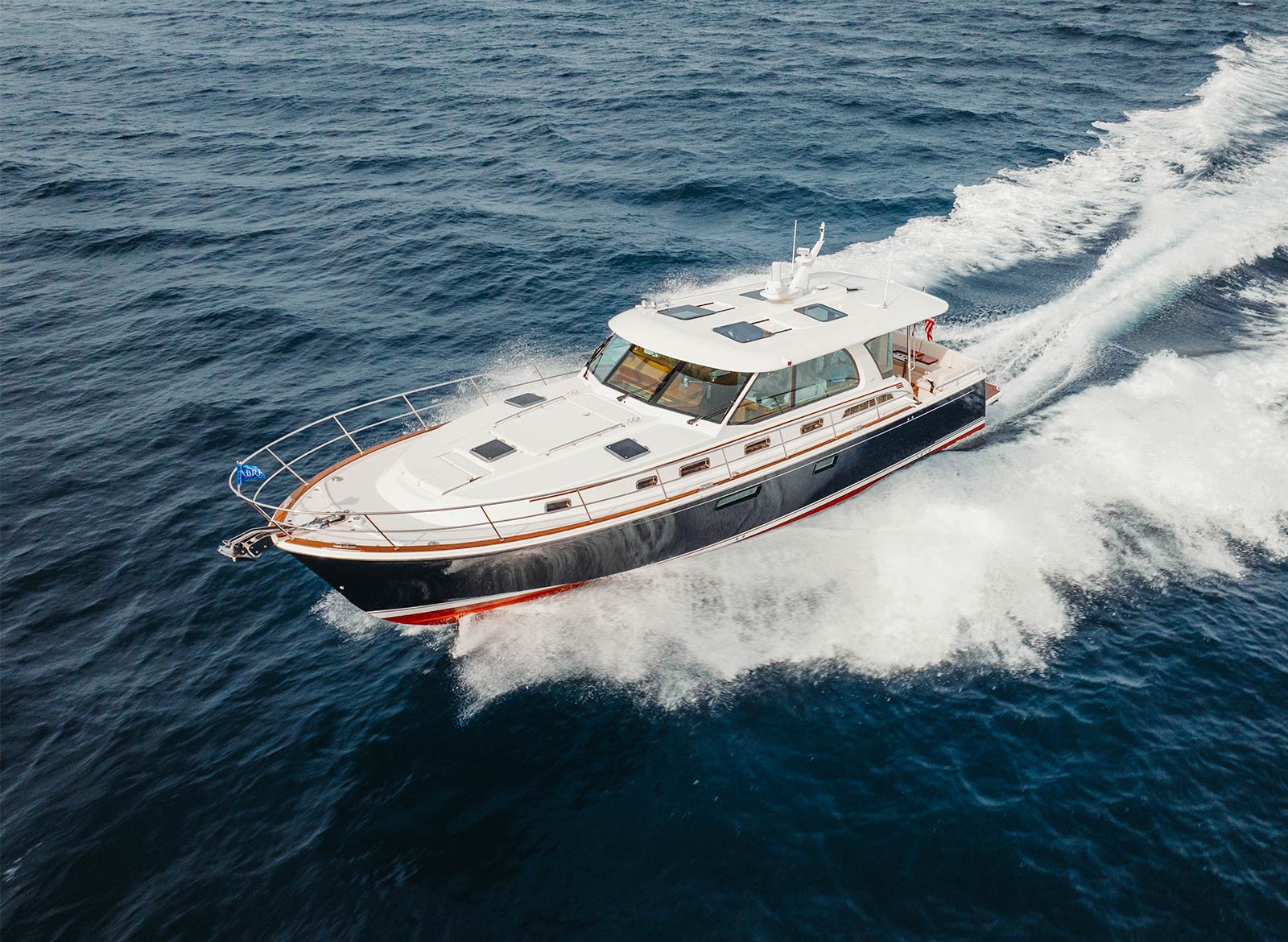
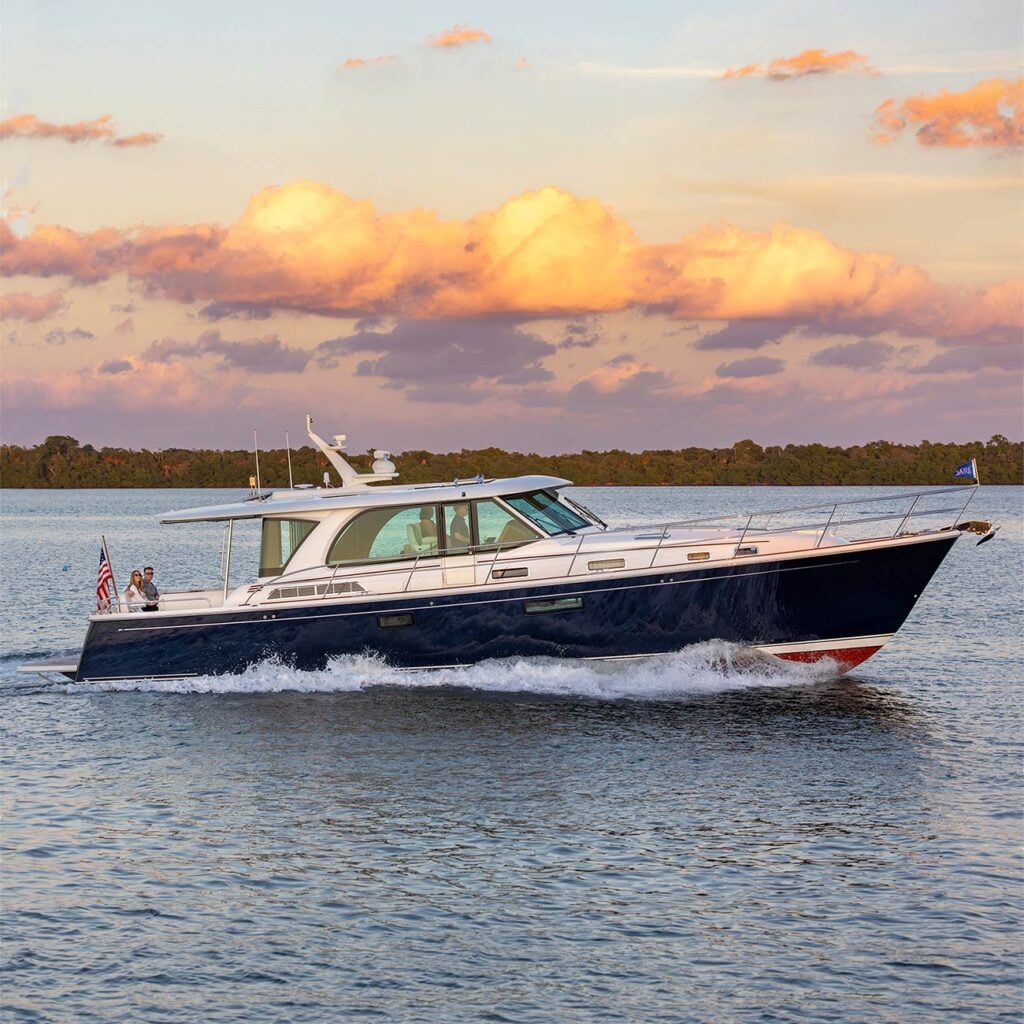
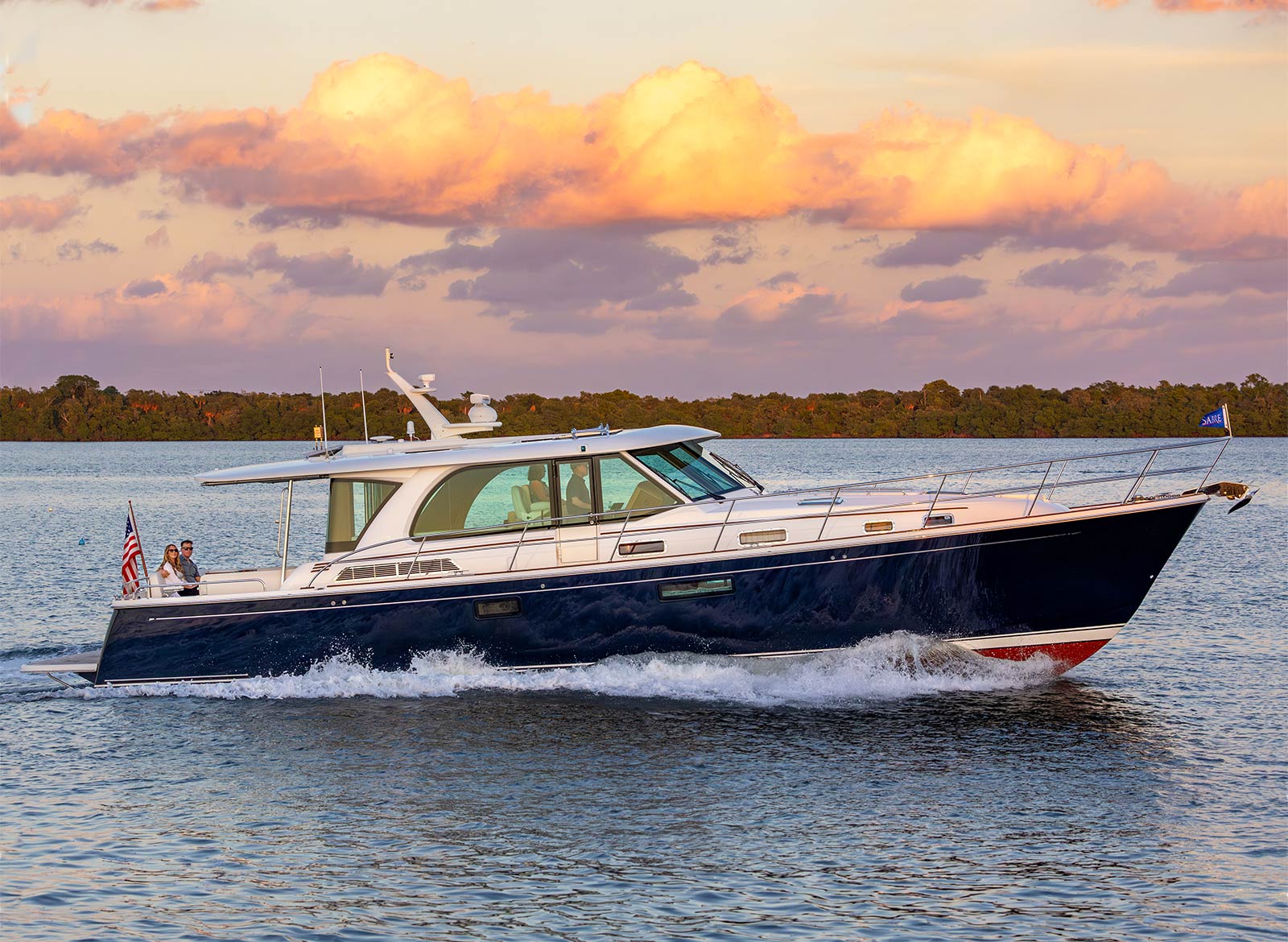
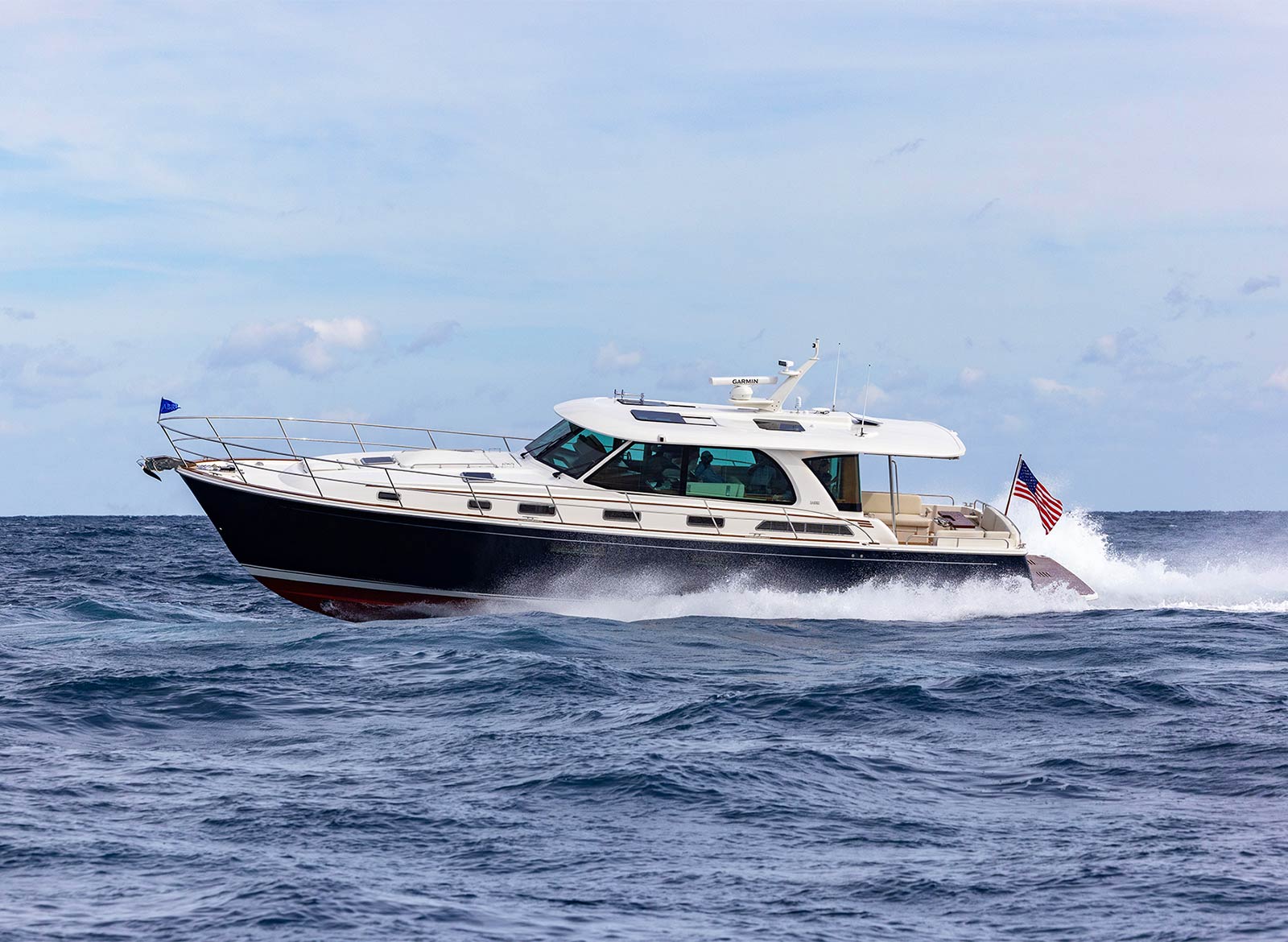
Among the few owners and journalists who have been able to take the helm of the new Sabre 51, the reports are consistent: It is more fun to drive than other boats at this size.
“Every single time I’ve brought someone on a sea trial, I’ve heard the words ‘this exceeds expectations,’” says Allie Alsup, Marketing Manager at Sabre Yachts. “People, across the board, are just giddy when the 51 gets up and goes — especially when we hit some hard-over S turns, steering with the joystick.”
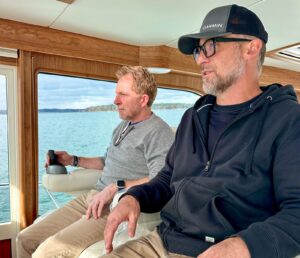
US Harbors was able to join one of the Sabre 51 sea trials in Portland, Maine, before hull number one began her journey south to Miami. We were able to test Volvo’s joystick driving firsthand — seated at the helm, joystick on the armrest, without ever touching the wheel or throttle.
Sabre’s Engineering Manager, Glenn Campbell, took the helm and turned us hard at 28 knots — the kind of maneuver most captains would approach cautiously in a boat this size. The 51 handled it without hesitation. As you bring the boat up on plane, the word that comes to mind is nimble.
The twin Volvo Penta IPS 800 pod drives are at the heart of that experience. Paired with joystick driving and docking, they bring a level of confidence to handling a 57-foot boat (LOA) that changes the way you think about a day on the water. The joystick system, which integrates shift, throttle and steering into a single joystick control, provides precise low-speed control when maneuvering in tight quarters: moving the boat sideways, diagonally, or rotating in place. With joystick docking, tight harbors feel less intimidating, and with joystick driving, the end of a long passage feels more relaxed.
Sabre 51 Salon Express — Performance Data
Cruise (2,800 rpm) — 28.2 knots / 51 gph / 299 nm range
Rated (3,000 rpm) — 31.3 knots / 58 gph
WOT (3,090 rpm) — 32.4 knots / 64 gphPerformance data was measured in Casco Bay, Maine using an average of reciprocal runs with full water, near-full fuel, and 9 crew aboard. The 299 nautical mile range at cruise is based on 90% of the 600-gallon fuel capacity and is consistent with sea trial data from all Sabre models.
Small details, carefully considered
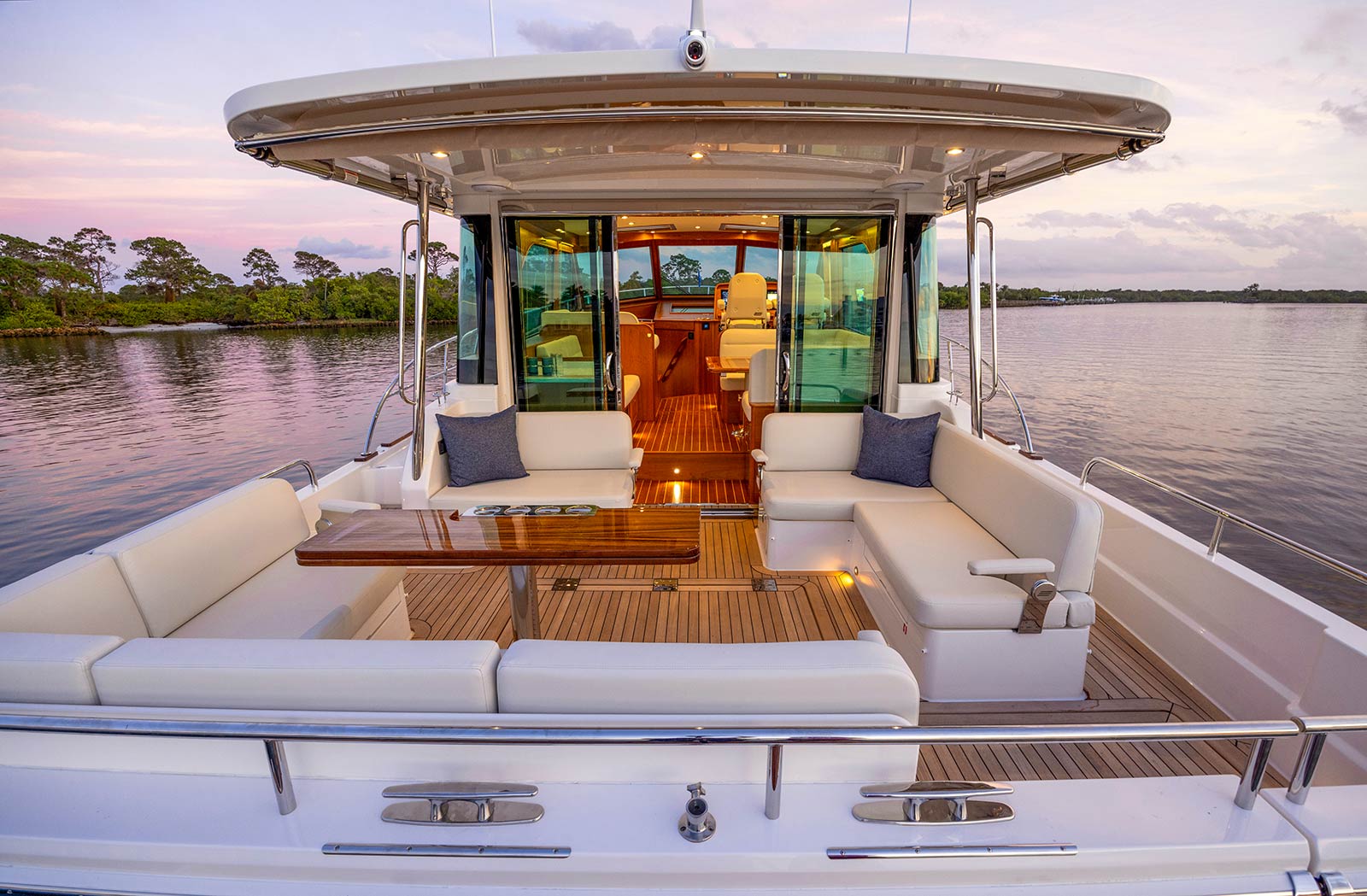
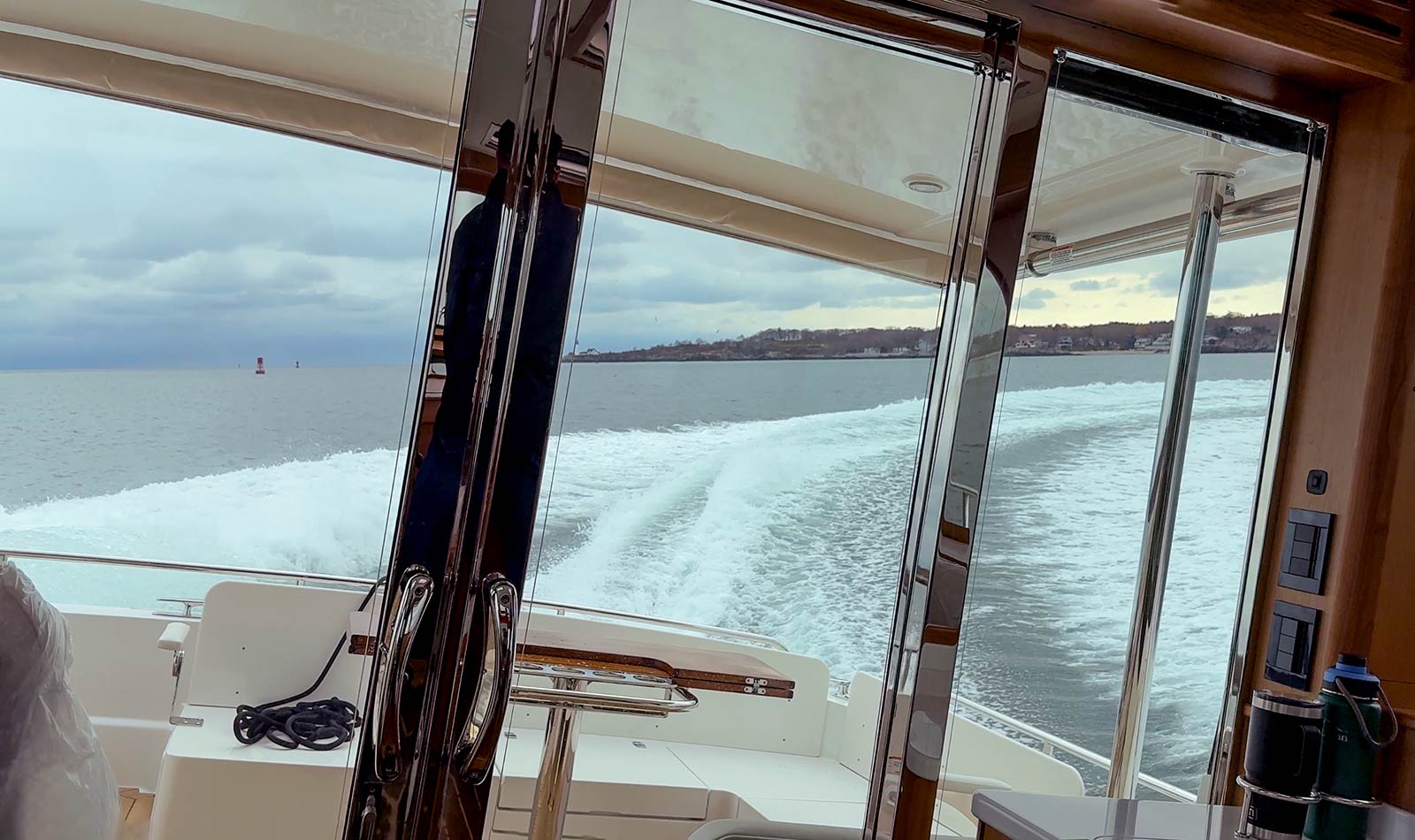
Before a single piece of fiberglass was laid, the Sabre team built a full-scale mockup of the cockpit. Designers and engineers moved elements around by fractions of inches, testing layouts, sitting in seats, with years of owner feedback and more than half a century of boatbuilding behind every decision. The result is a cockpit that feels generous without feeling cavernous, creating a space to gather that is sure to be a favorite of every 51 owner. The cockpit of the 51 is the largest Sabre has ever built, sheltered by the longest hardtop in the company’s history.
“Stepping into the cockpit of the Sabre 51, folks immediately realize it’s a meaningfully bigger boat than the 48,” says Kevin Burns, VP of Design and Product Development at Sabre Yachts. “The usable cockpit beam is about a foot wider.” It’s a straightforward observation, but it points to something most buyers will appreciate — this boat was designed from the human experience inward, not from a spec sheet outward.
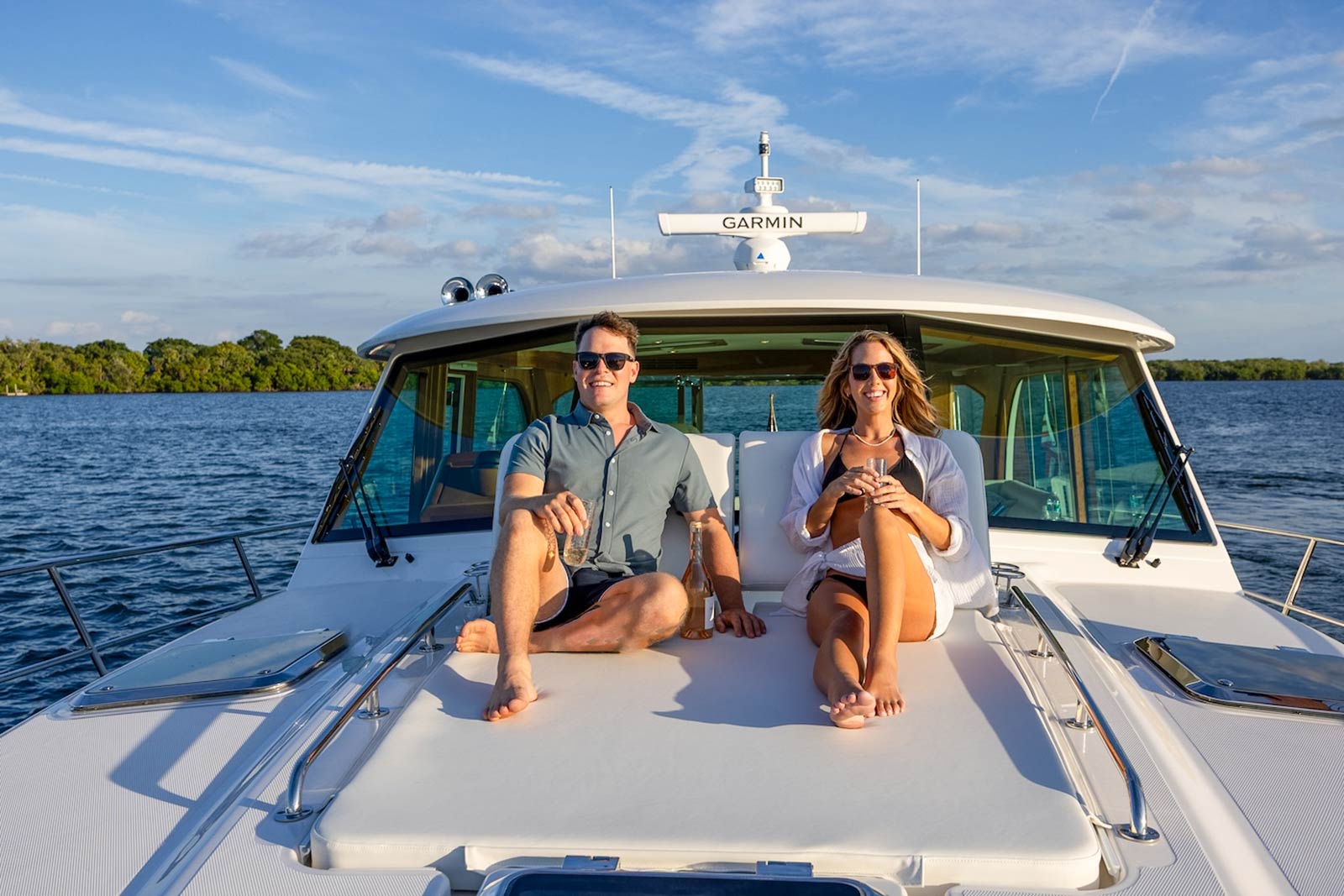
A wide walkway along the starboard side lets the captain get the boat underway from a starboard moor without threading through guests sitting in that cockpit. Up forward, a deployable bow seat, the first of its kind on any Sabre, appears when you want it and hides when you don’t. “Sabre owners absolutely love it,” Burns says. “It’s simple, easy to use, and disappears when you’re not using it. I’ve had a few chances to sit up there during downtime on the Sabre 51 photo shoot. It’s a special spot.”
Below Decks
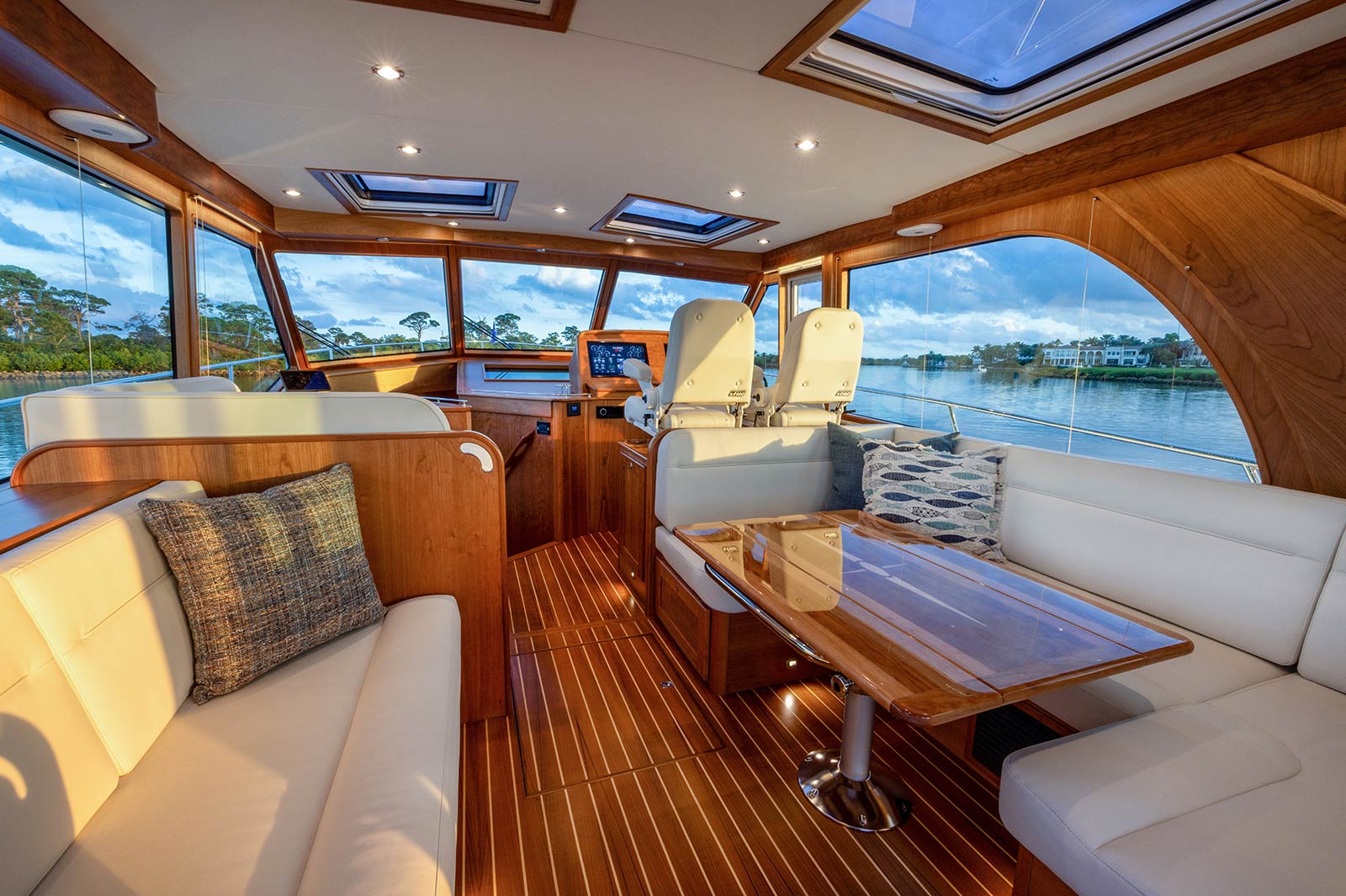
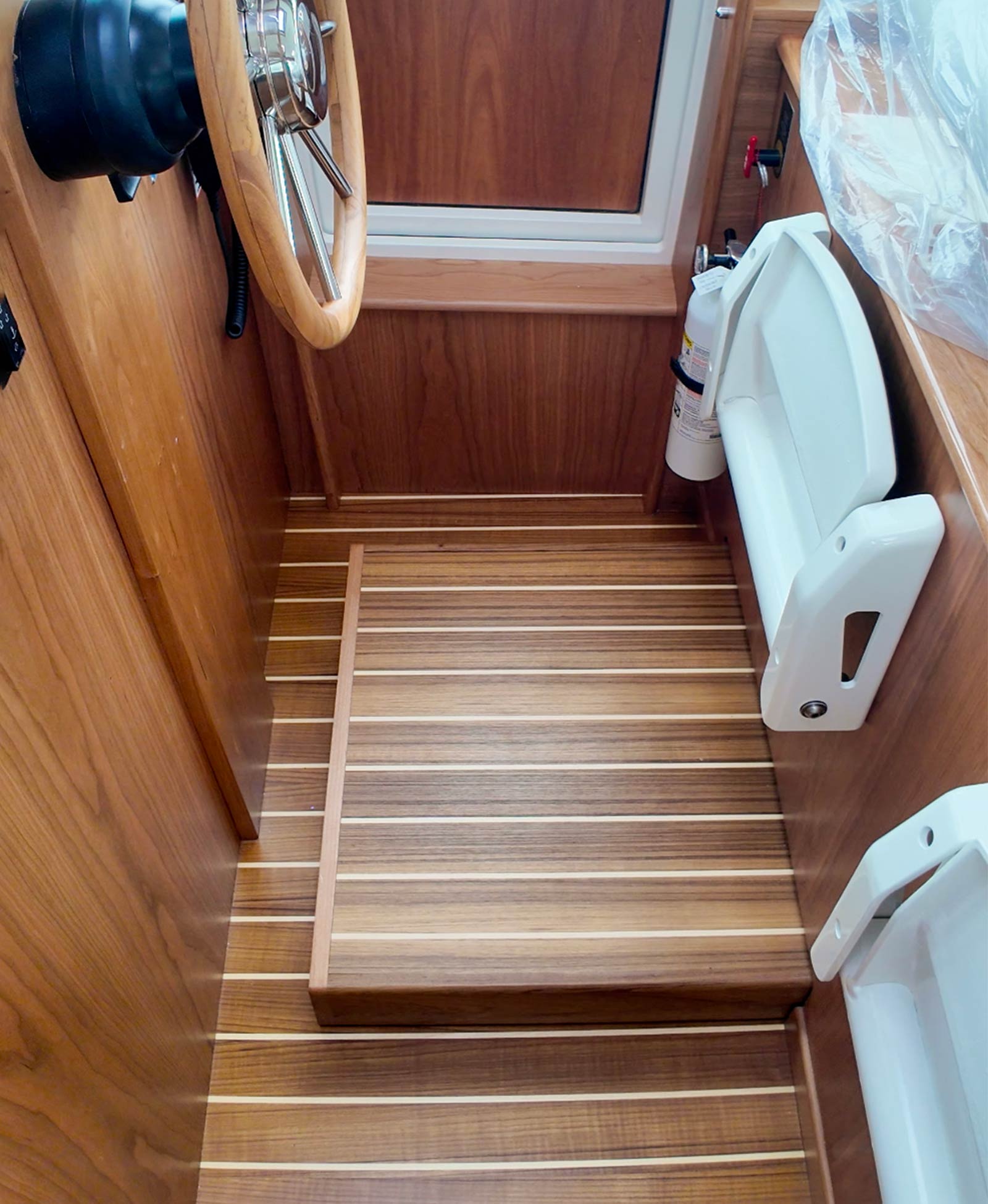
The Sabre 51 is one of the most technologically advanced models Sabre has built, yet its wood interior is crafted by hand in Maine by men and women who learned their trade from those who came before them. That balance of technological sophistication and handcraftsmanship is what Sabre owners have come to expect, and they will not be disappointed in what they find aboard the Sabre 51.
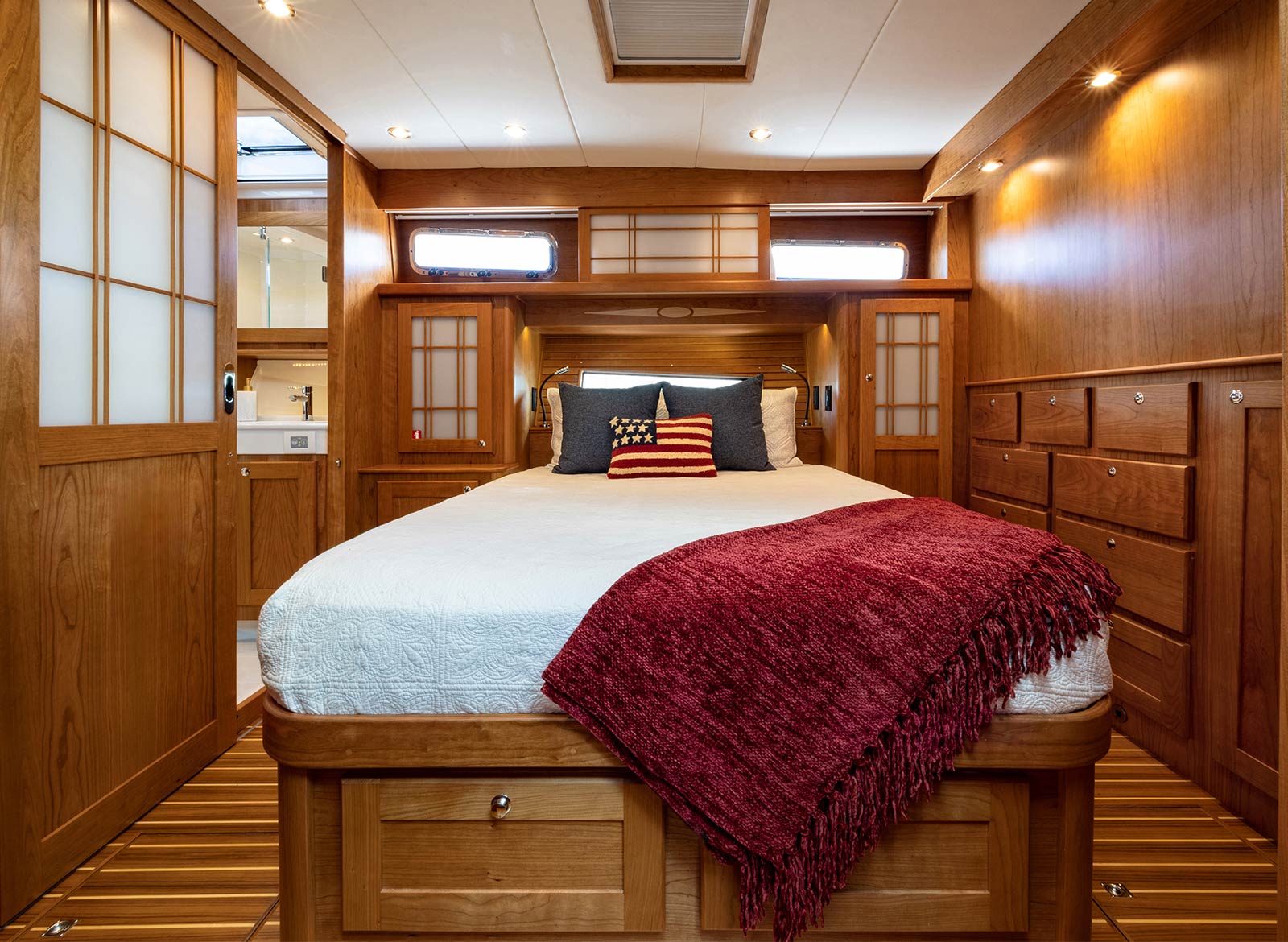
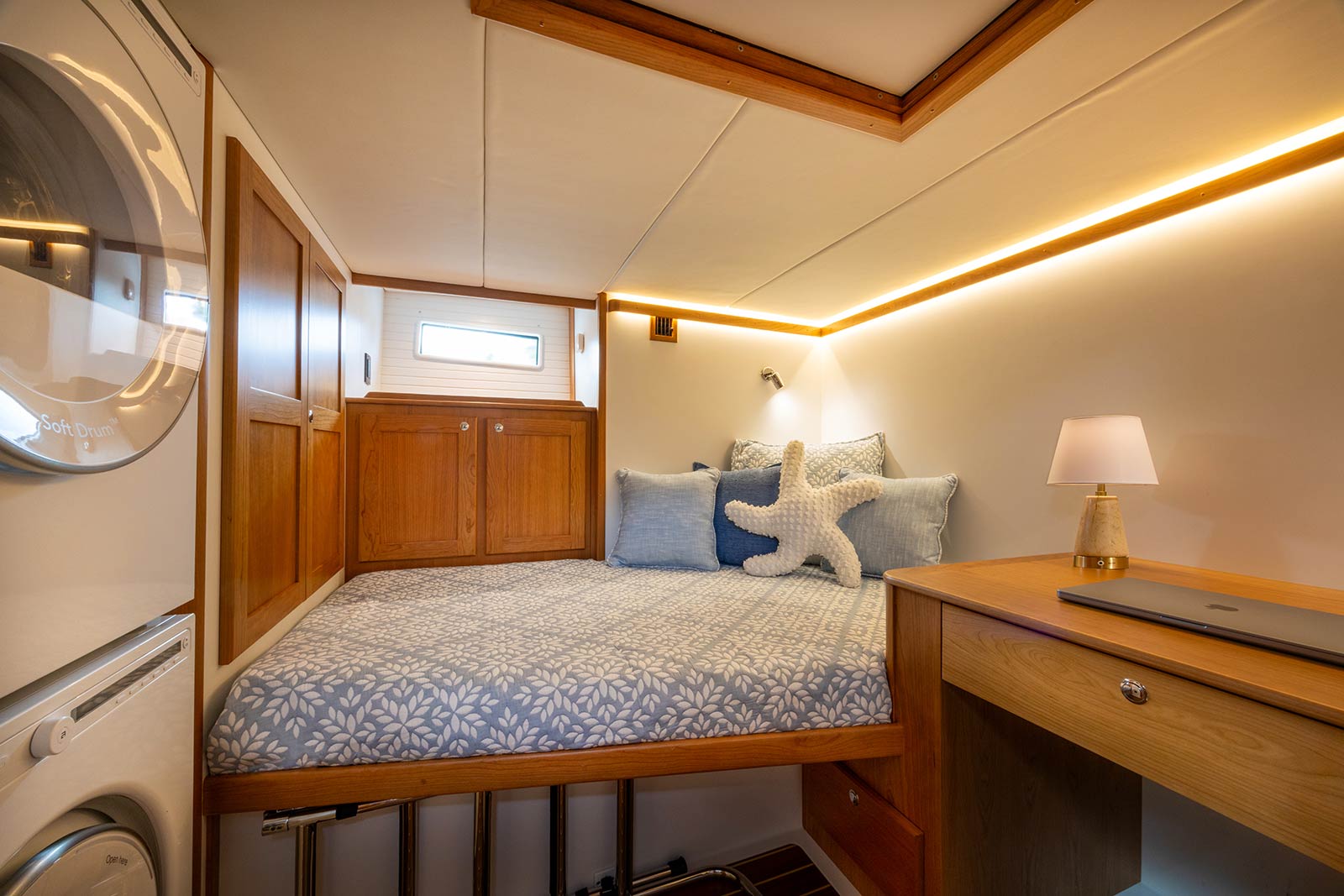
The athwartship master stateroom, situated amidships, was one of the most beloved features of the Sabre 48, and it returns on the 51 — more refined, but instantly familiar to anyone who has spent a night aboard this yacht’s predecessor. Two private staterooms, two heads, and a utility space that can be configured as crew quarters with its own head round out the accommodations for extended cruising.
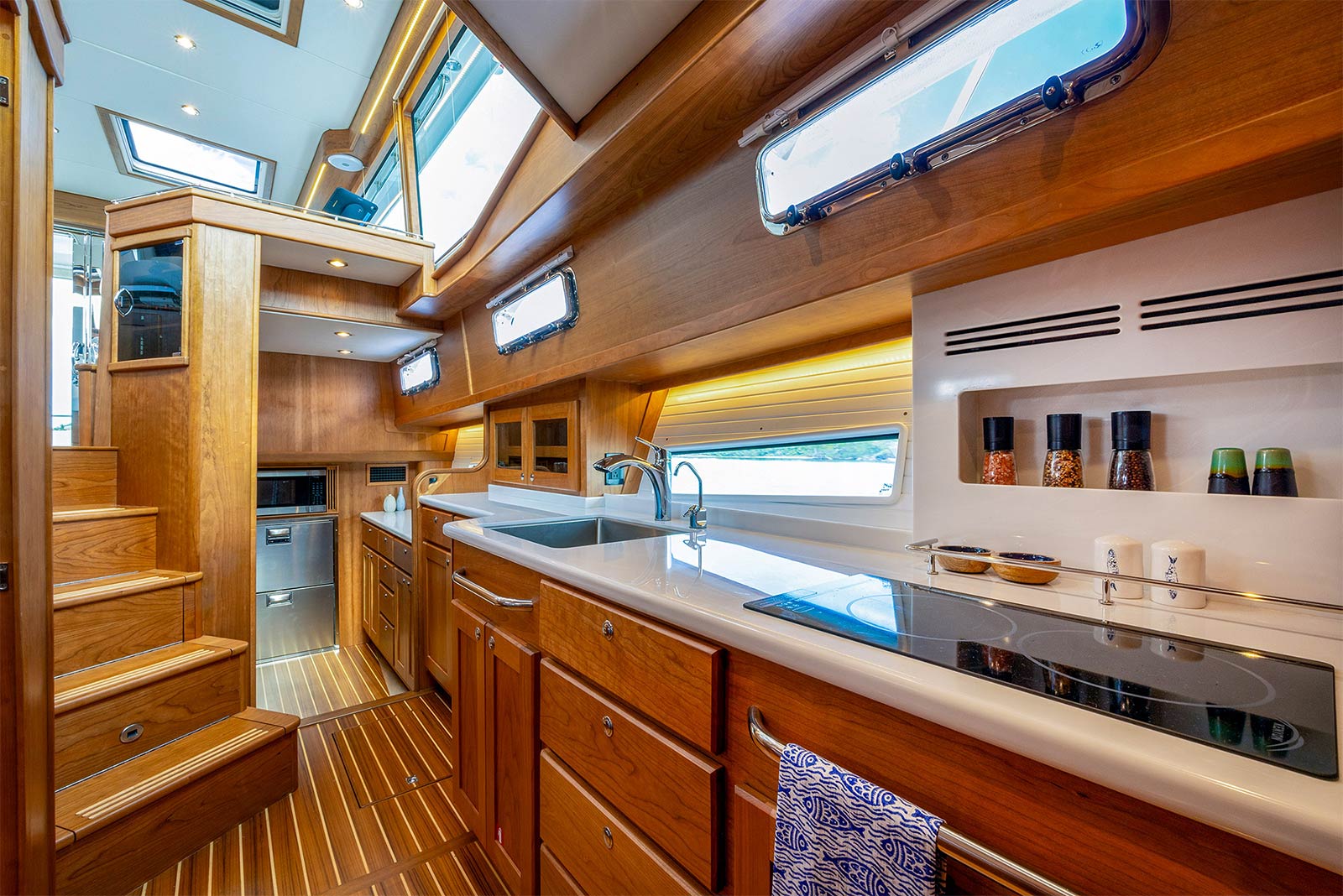
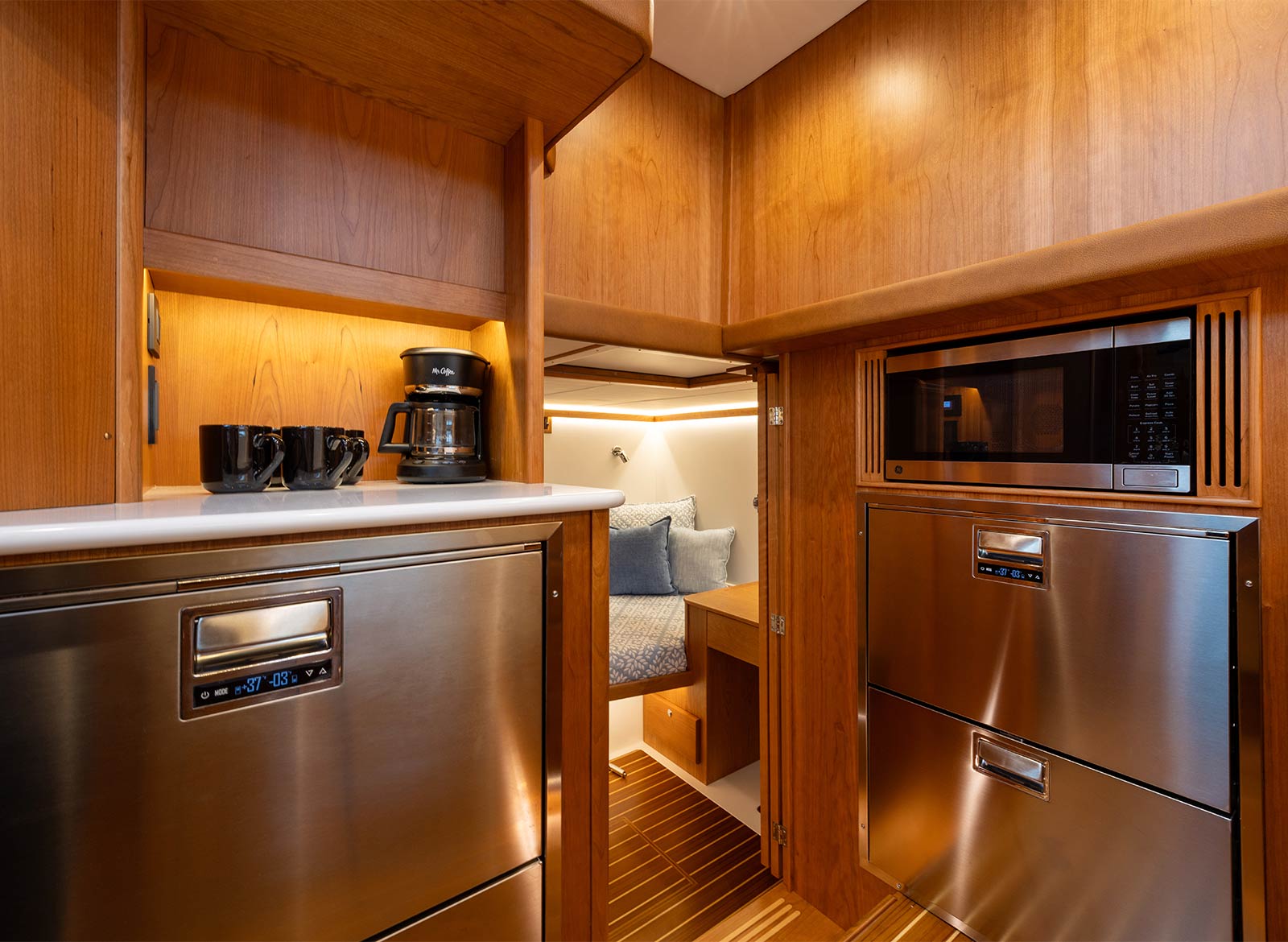
The pantry is new to the 51, and it shows what happens when a design team listens carefully to the people who actually live aboard. Expansive counter space, ample refrigeration, and natural light from two portlights make it a genuine addition to the cruising experience. The combined galley and pantry provide an expansive cooking and living space.
Sabre 51 Salon Express — Specifications
Length Overall — 57’5” (17.50 M)
Beam — 15’11” (4.85 M)
Draft — 4’1” (1.24 M)
Fuel — 600 US Gallons (2,271 L)
Water — 160 US Gallons (606 L)
Holding — 70 US Gallons (265 L)
Air Draft (w/ Mast) — 15’8” (4.78 M)
Power — Twin Volvo-Penta IPS15-800 (D8-600 mHp @ 3,000 rpm)
Quiet Tech
Back at the dock, the technology continues to work quietly in the background. Sabre Connect, the company’s digital switching and telematics system, puts monitoring and control of the boat’s essential systems in the palm of your hand while at the helm or from shore. Tank levels, battery voltage, boarding lights, climate control, and even remote Seakeeper spool-up are all accessible remotely so you can keep an eye on your systems while at the helm or away from your slip.
In the Zone
The designers and engineers have spent years learning from every new build and from countless conversations with Sabre owners. That accumulated experience shapes every decision that goes into a new model. With the 51, Burns says, everything came together in what he calls the “Goldilocks Zone.” In a range that spans from 38 to 58 feet, the 51 sits just right.
Buyers who have been aboard seem to agree. This is a 57-foot boat that handles with agility that defies everyone’s expectations. One owner, after a sea trial, put it simply: “This doesn’t make sense.” For Kevin Burns, that is the highest possible compliment.
That’s the Sabre 51. It makes no sense. In the best possible way.