Balancing Energy Production and Aquatic Resources in the Roanoke River
By fisheries.noaa.gov, fisheries.noaa.gov.
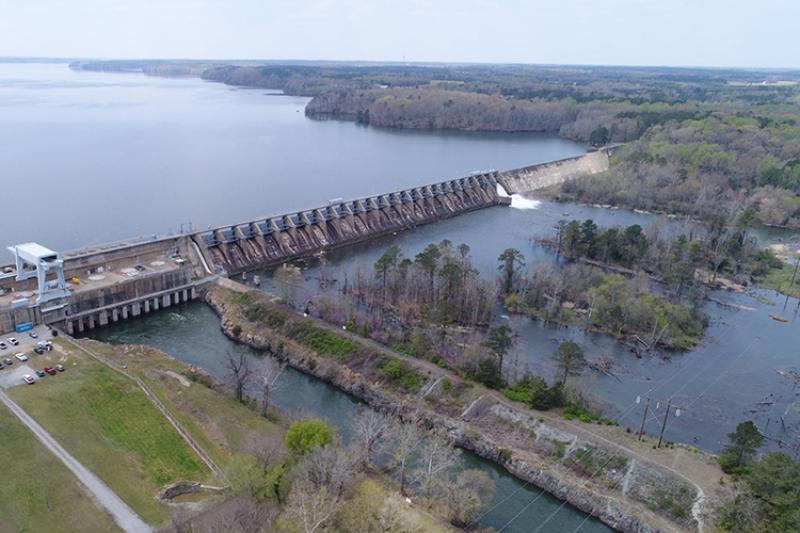
At the Roanoke Rapids Dam, a hydroelectric facility on the Roanoke River in North Carolina, NOAA Fisheries collaborated with Dominion Energy and partners to evaluate how adjusting the flow of water affects migratory fish and mussel populations in the river. Monitoring results are helping to ensure these aquatic organisms have the water flow and habitat they need, while maintaining robust energy production.
When large hydroelectric dams are constructed, the natural river flow is often modified. Water may be diverted through a hydroelectric powerhouse to generate electricity, then into an engineered channel. As a result, portions of the natural river may be cut off or receive less frequent water flow. This alters the river habitat below the dam, which can affect fish and aquatic organisms.
Since the Roanoke Rapids Dam was built, dam operators have diverted a majority of the water flow through a constructed channel so it can be used for electricity generation. This cut off water flow in a portion of the natural river, which became known as the bypassed reach.
In 2004, the Federal Energy Regulatory Commission issued a new license to Dominion Energy to operate the hydroelectric dam. At that time, NOAA Fisheries worked with Dominion Energy and other state and federal resource agencies to develop a new, multi-staged water flow pattern for the bypassed reach. Water flow would be increased during certain times of the year to ensure enough habitat was present for American shad and other migratory fish downstream. Three flow levels were planned for the first 20 years of the license: low, medium, and high. The new license also called for regular surveys to monitor the response of fish and aquatic organisms to the different flows.