Ouzel: A Modern Classic Built with Purposeful Elegance
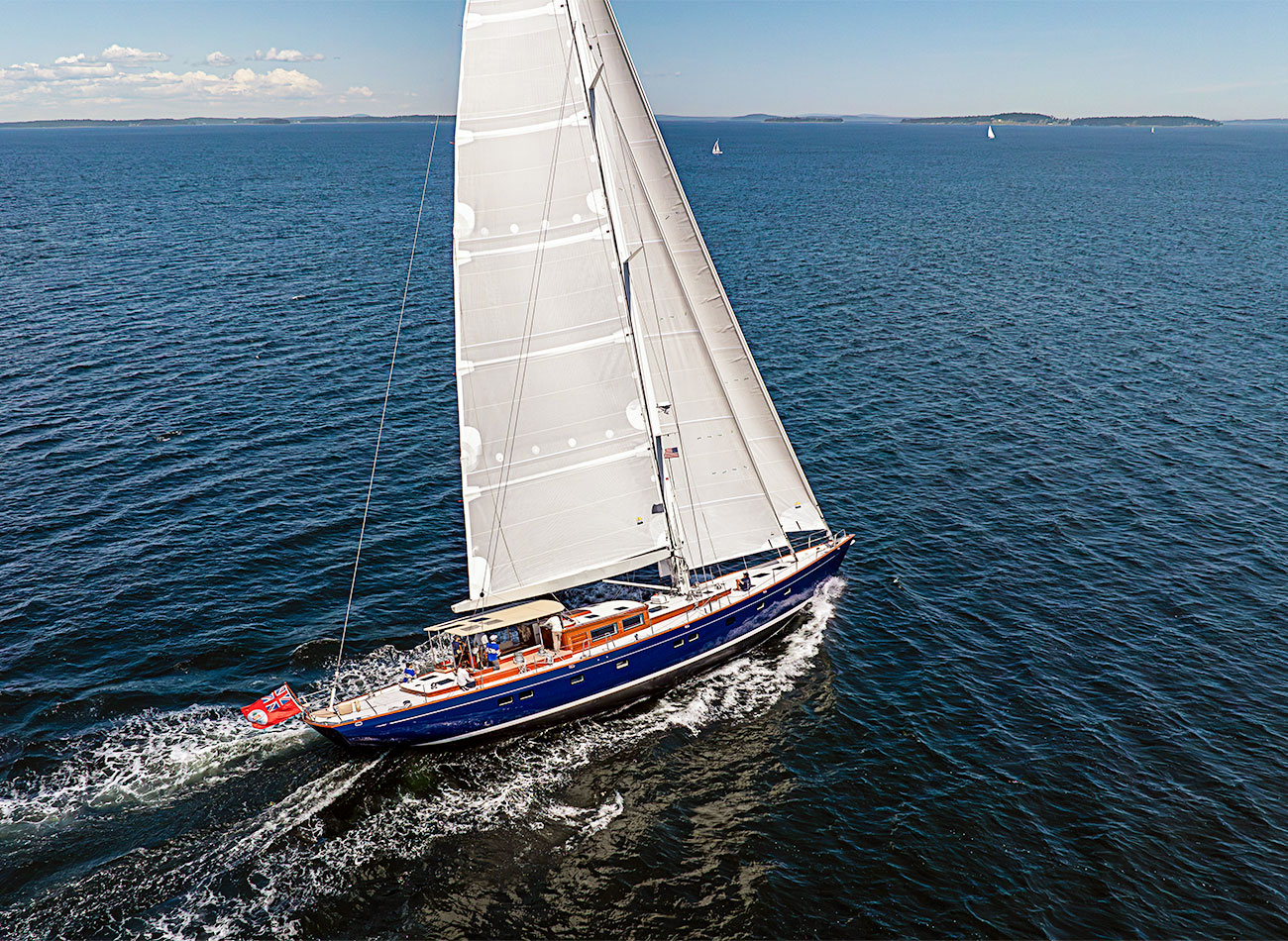
Rockport Marine’s 95-foot Ouzel: a modern classic sailing Superyacht built for world cruising
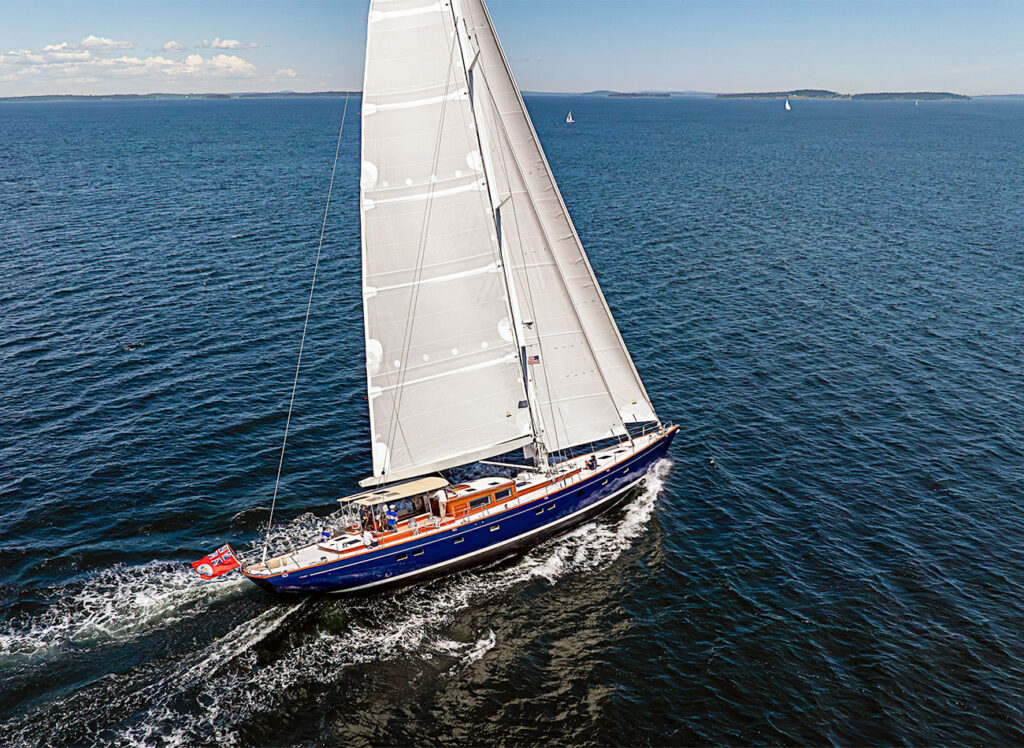
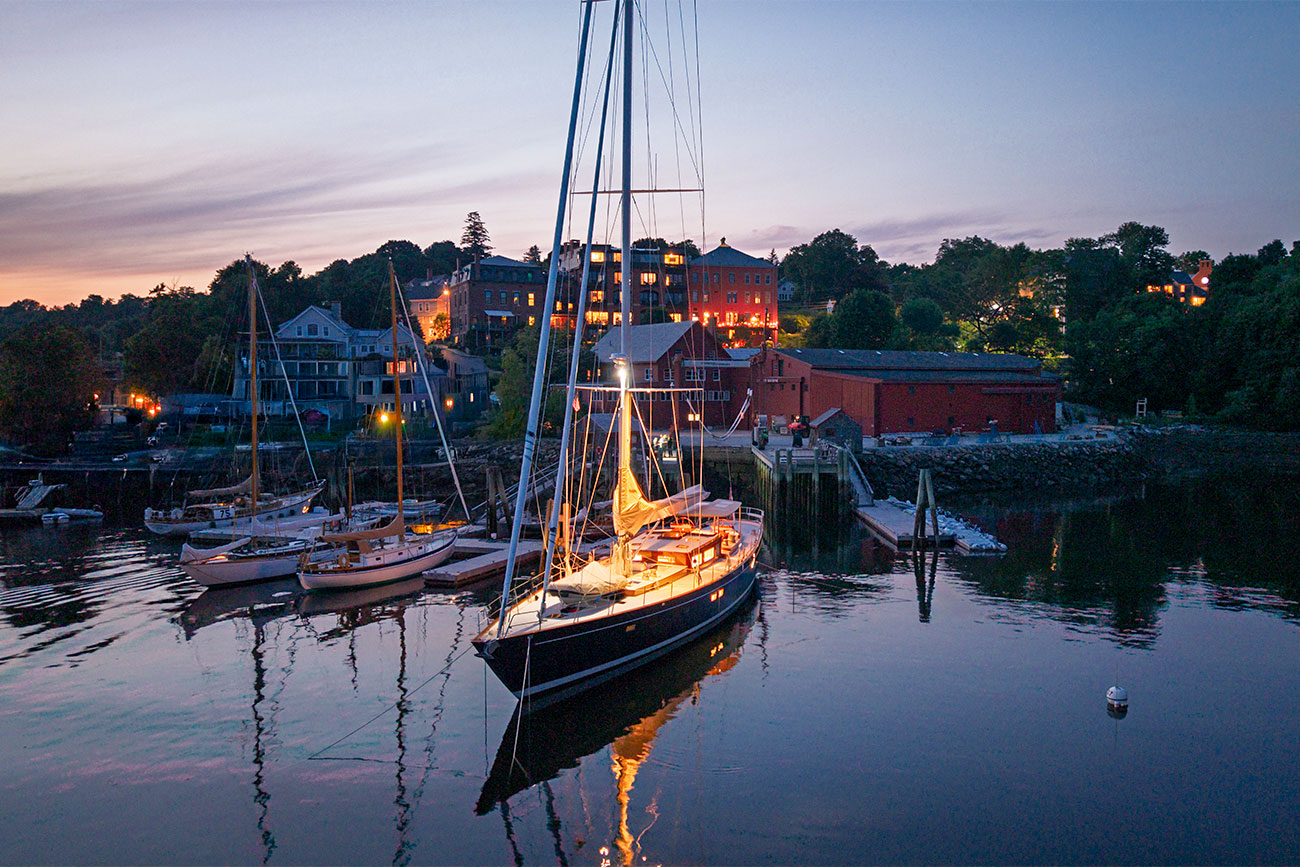
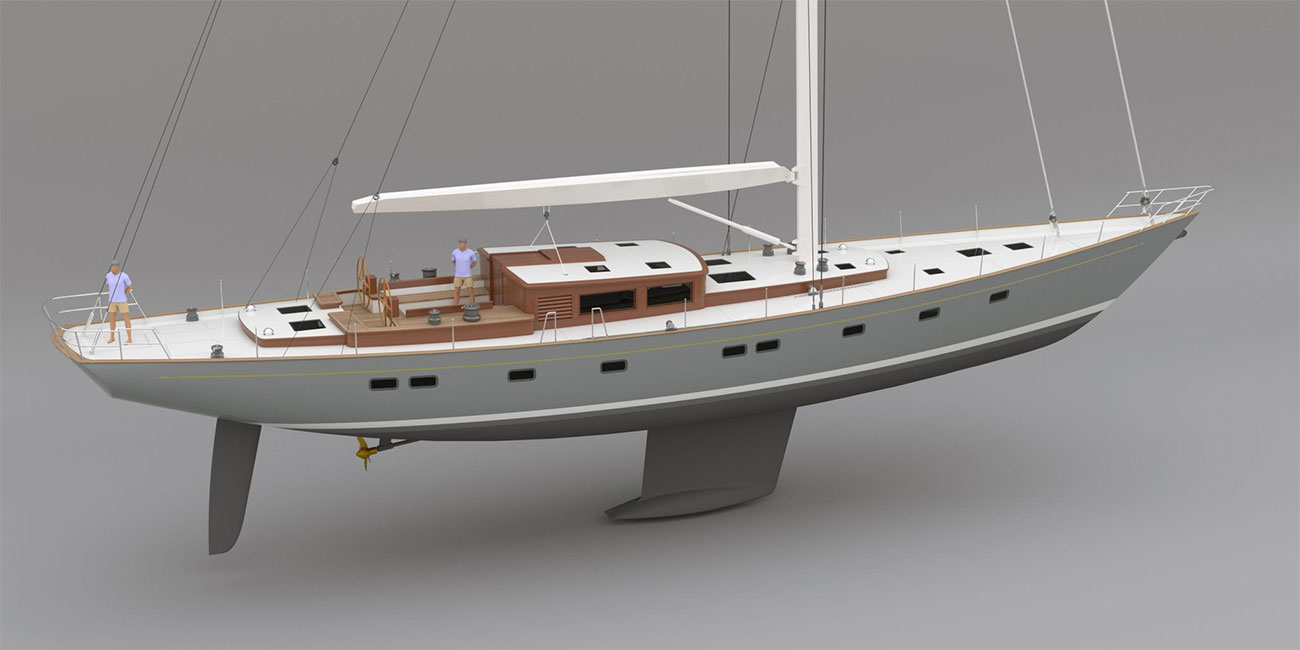
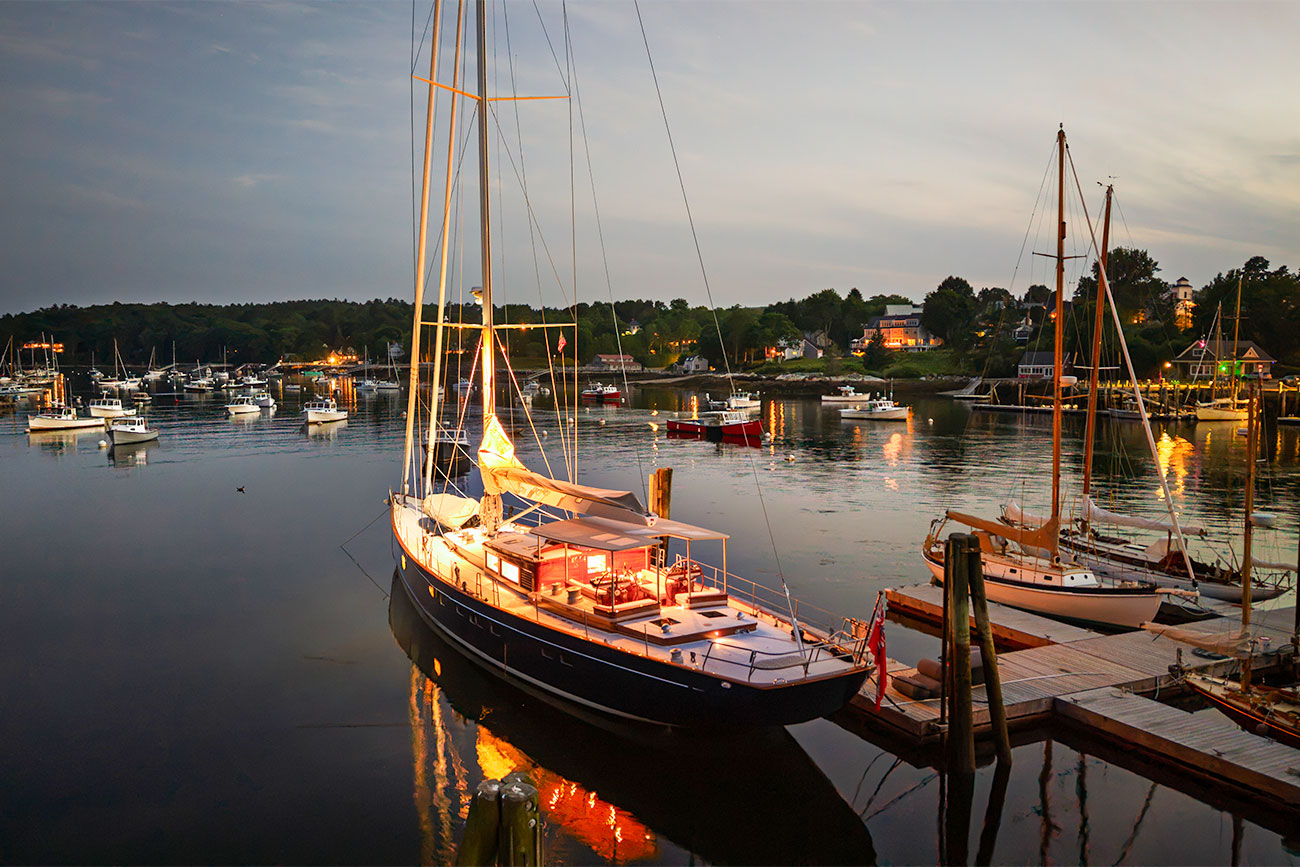
By US Harbors – On a Sunday in November 2025, a mast standing well above the wood-clad buildings at Rockport Marine marked the end of a long build. Ouzel, a 95-foot contemporary classic sailing yacht, was launched at high tide, watched by her owners, crew, project partners and a crowd along the waterfront. Sail trials began in June 2026 on Penobscot Bay, and Rockport Marine delivered her to her owners at the start of Maine’s summer season.
-
Owner’s representative: Peter Wilson, MCM, Newport, R.I.
-
Naval architecture and exterior: Tom Degrémont, Langan Design Partners, Newport, R.I.
- Interior: Mark Whiteley Design, Lymington, England
- Builder: Sam Temple, Rockport Marine, Rockport, Maine
Wood, Carbon and Glass
-
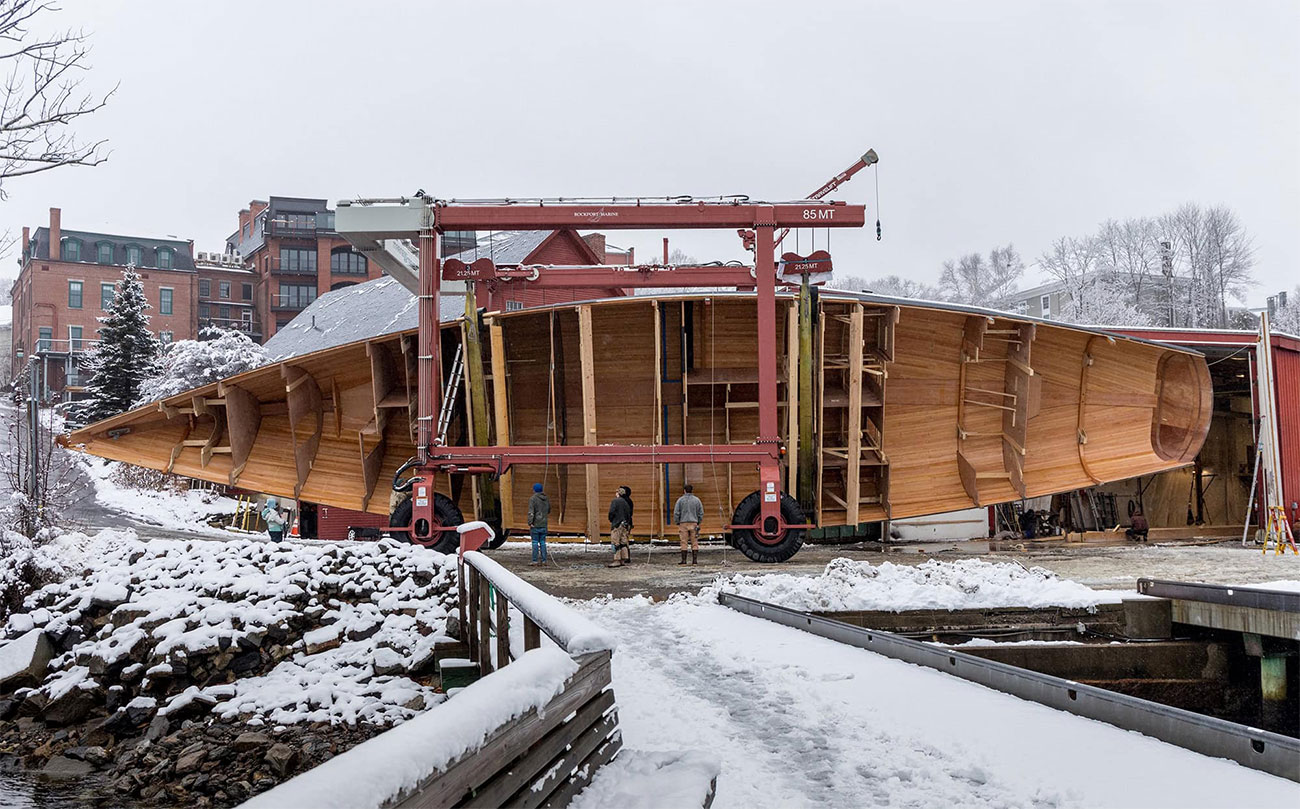
Wood: Layers of Douglas fir and western red cedar are laminated in alternating directions over a male building jig.
-
Carbon fiber: Added where loads are highest, particularly through the midsection, which carries the forces of a rig that sets roughly 3,900 square feet of sail upwind and 6,000 downwind.
-
Glass and foam: E-glass sheathes the outside of the hull, and foam coring lightens bulkheads and other structure.
Mark Whiteley’s interior was built on site, with painted panels, cabinetry in West African avodire and varnished mahogany furniture.
Built in Rockport, Maine
Ouzel is the largest boat Rockport Marine has built, and she pushed the yard to the limits of its shop space, slip width and Travelift capacity. Temple, a third-generation boatbuilder, told Maine Boats, Homes & Harbors magazine that the bigger challenge was people. Rockport Marine added 10 craftsmen for the project, and on a typical day 20 to 25 people worked on the boat. In addition to their own team, about two dozen outside firms were brought in to support the project. Many were Maine shops, among them Billings Diesel of Stonington, which supplied the engine and generator. Others were brought in for narrow specialties: Hall Spars, based in Rhode Island, built the rig, and Irons Brothers cast the keel in the UK.That kind of shared work has deep roots here. Maine boatbuilders have long relied on one another, each shop known for its own trade, and that collective talent is what has made Maine known for exceptional boatbuilding, then and now. Temple credits that depth of skilled tradespeople for making a project of Ouzel’s size possible.
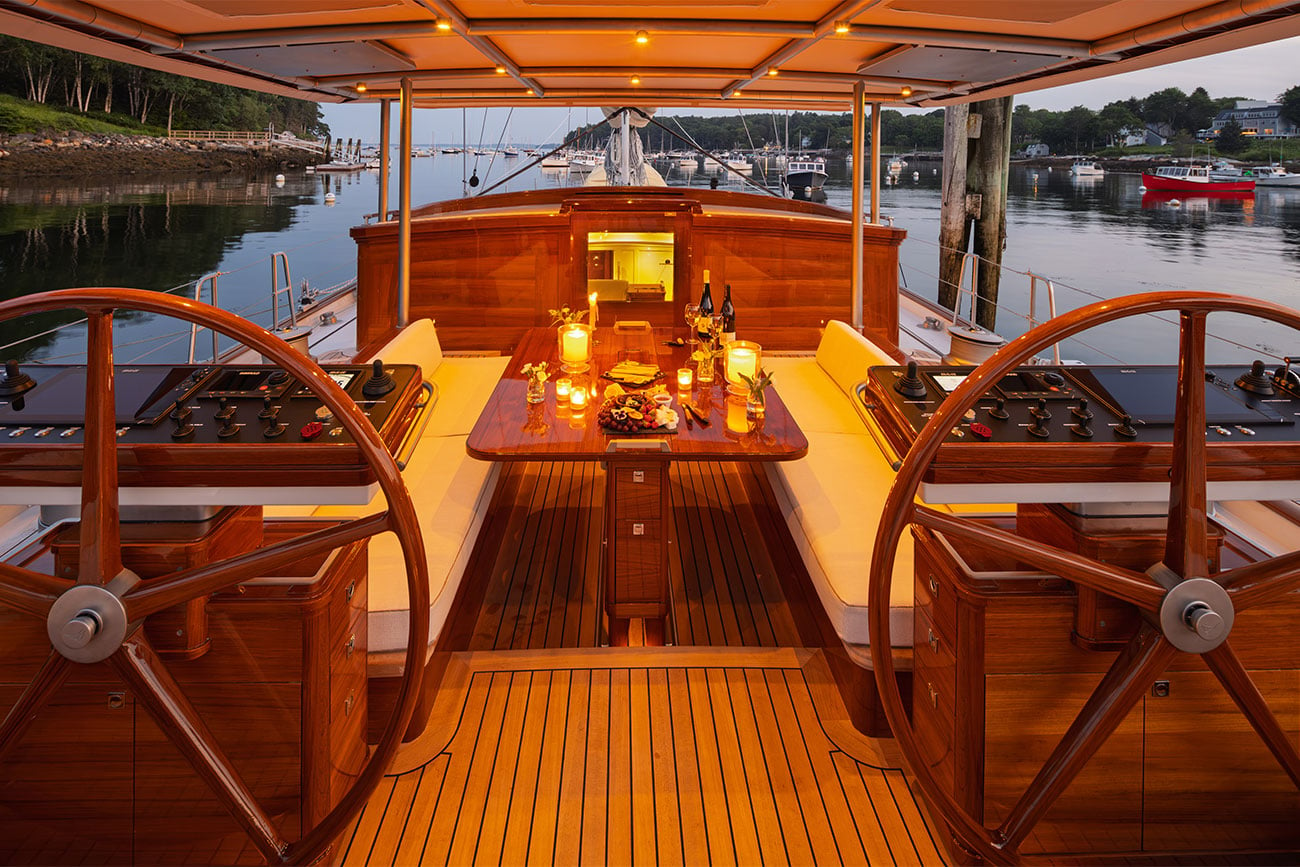
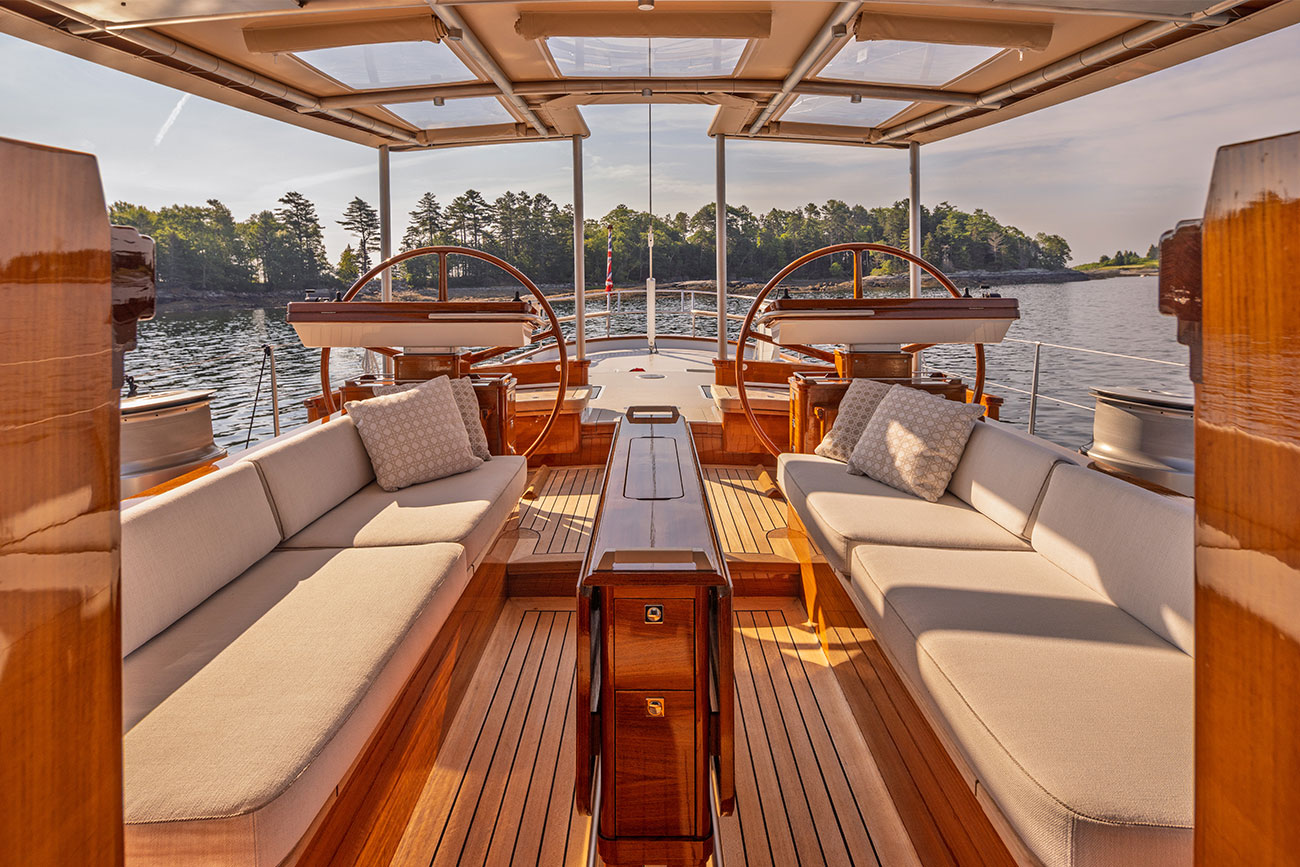
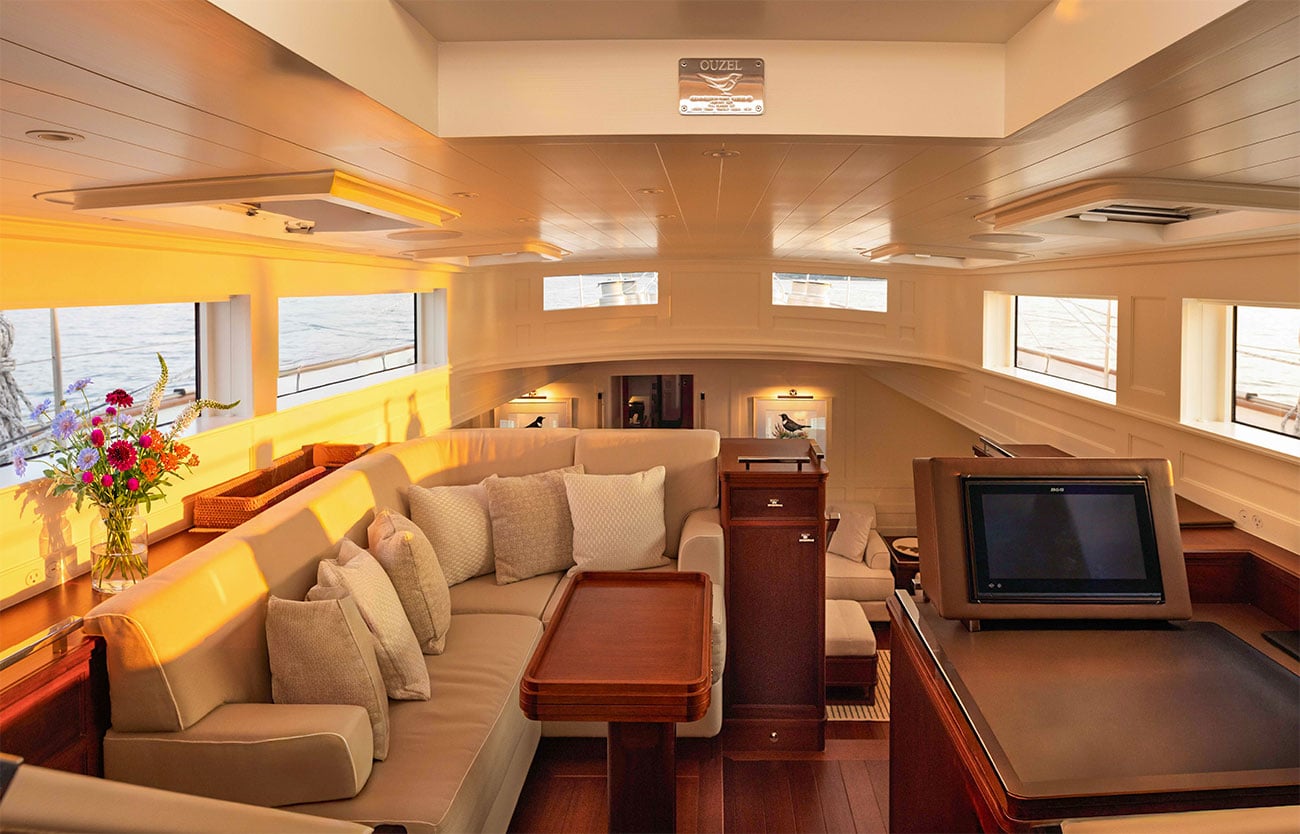
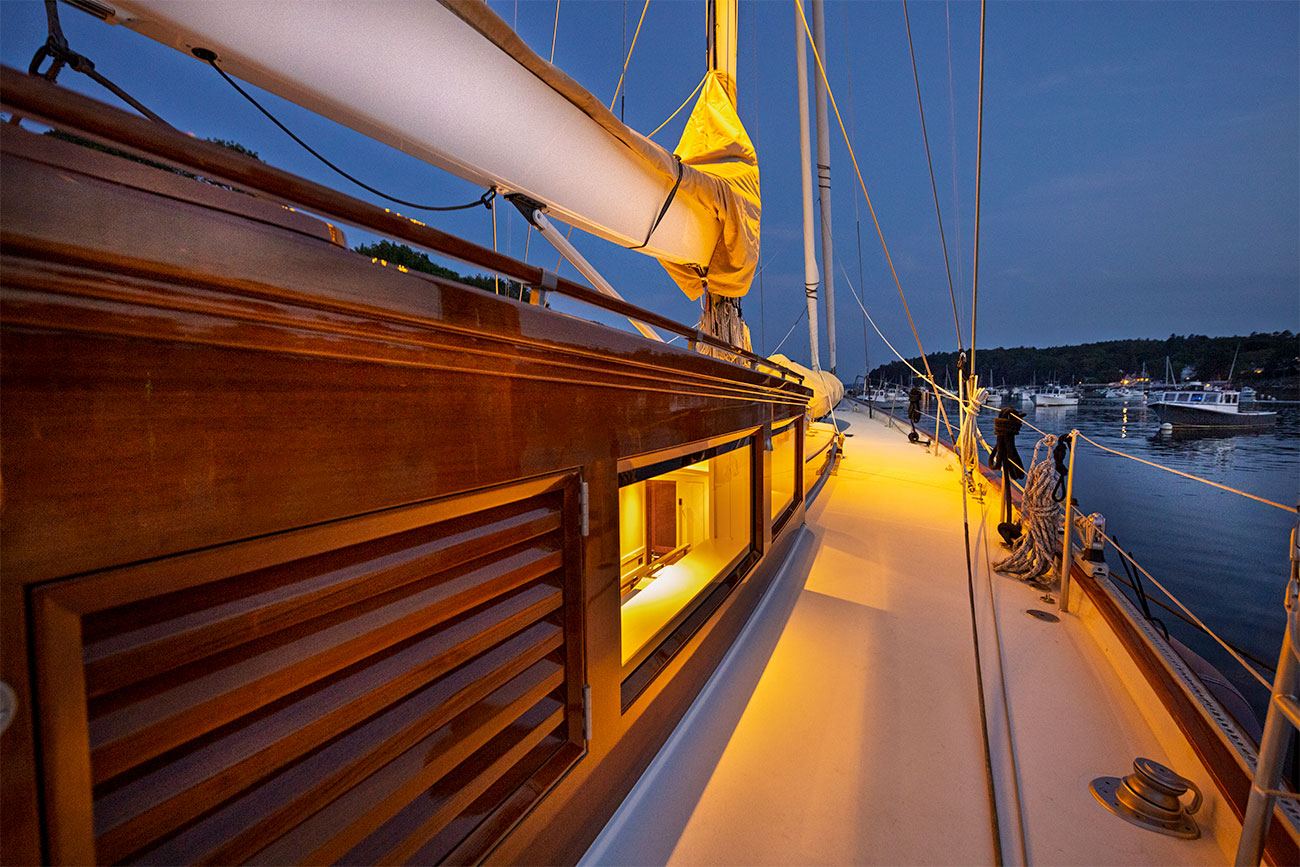
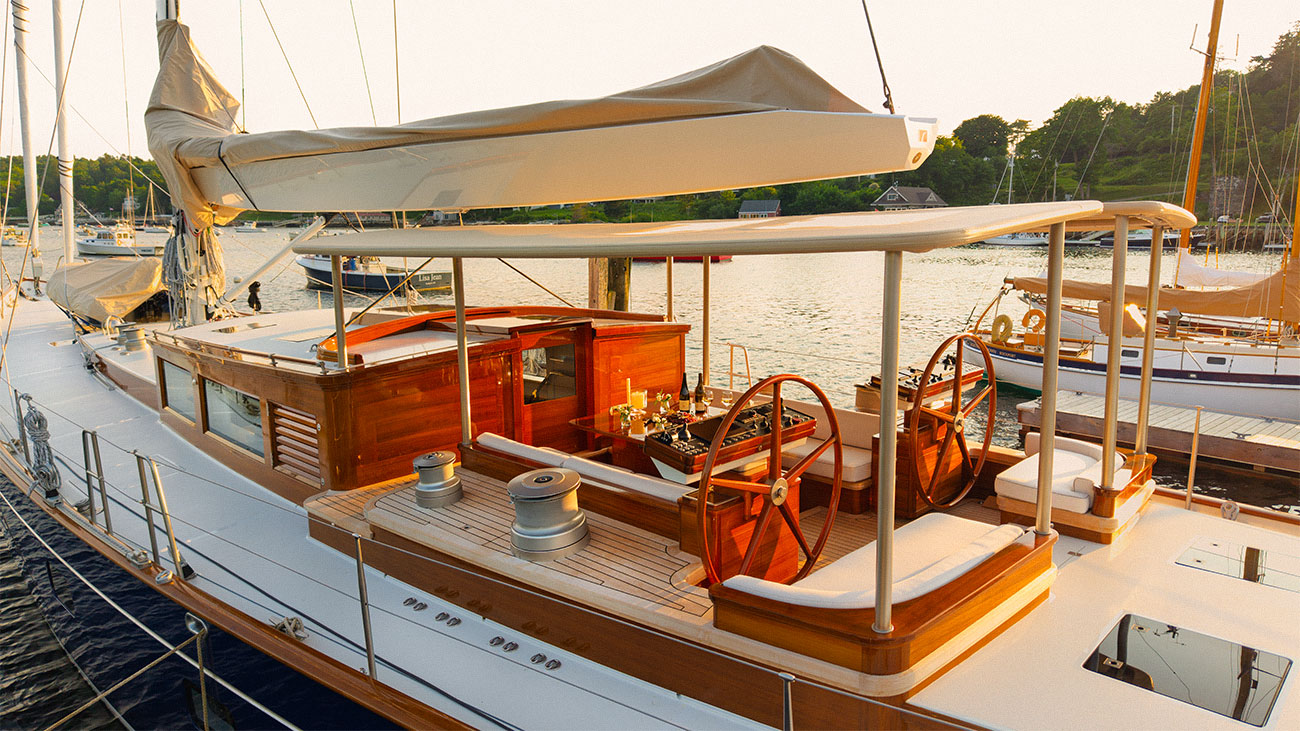
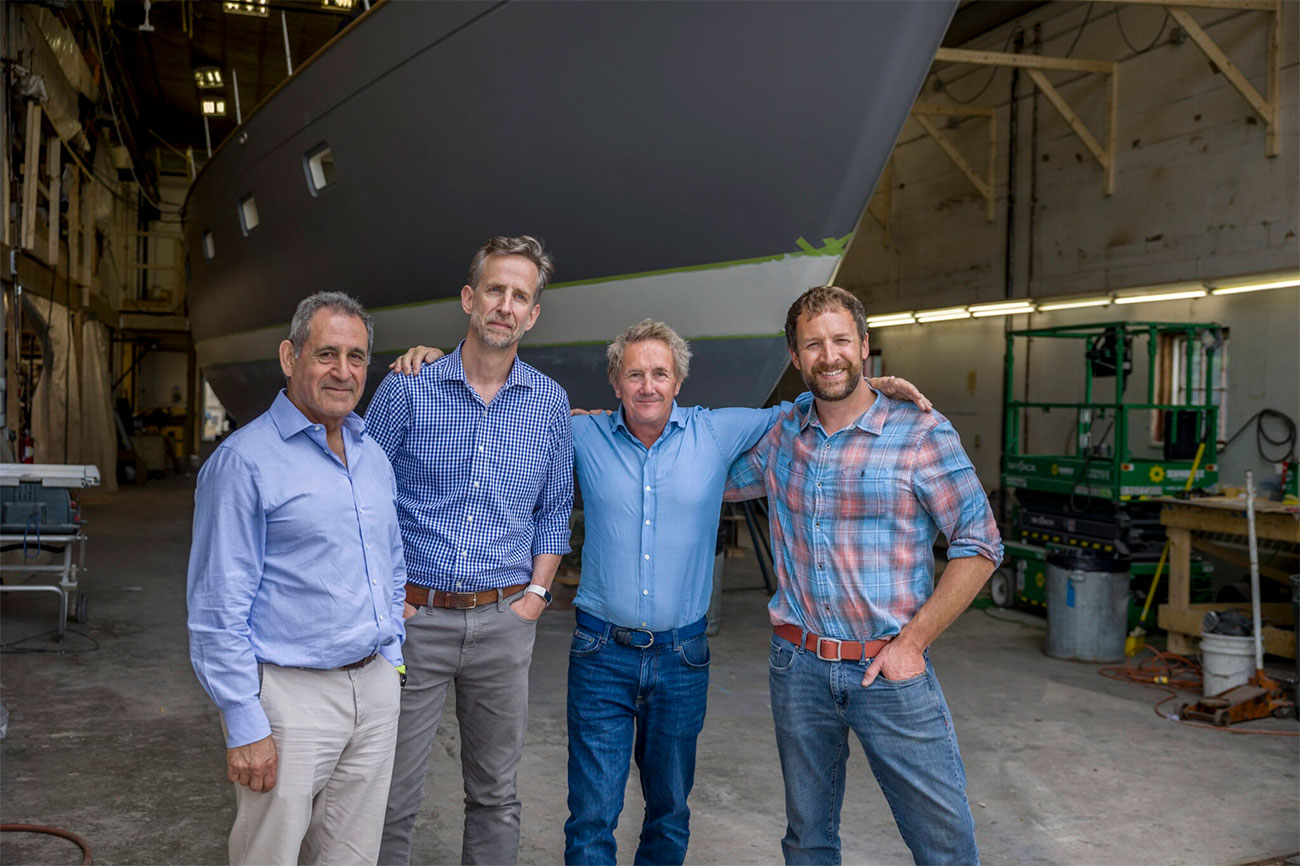
“It’s so satisfying for us to bring a project of this quality from raw materials to completion.” — Sam Temple, Rockport Marine
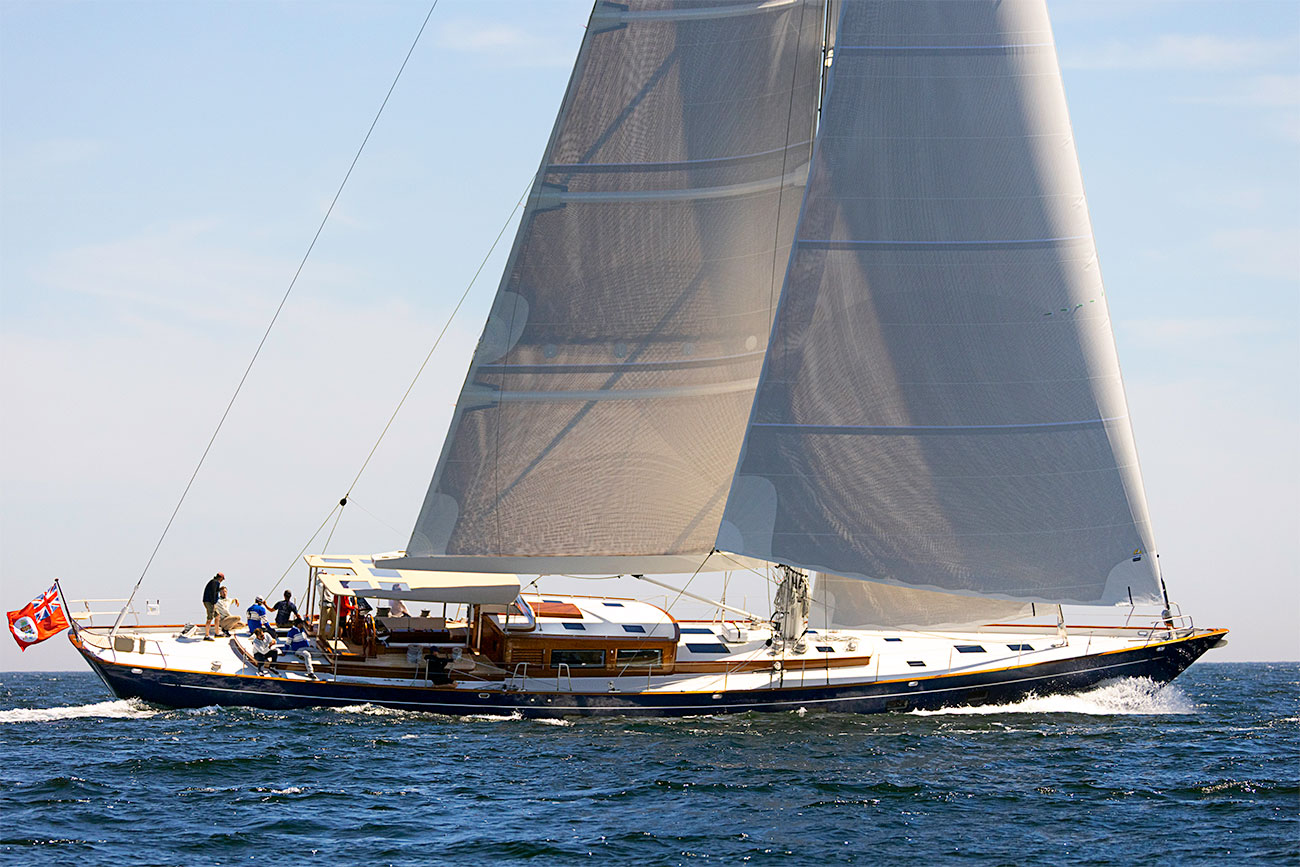
Getting her out of the building took some ingenuity. The deck is 21 feet wide and the shop door is 17, so the crew cut a slot in the gable end of the building.
Sea Trials On Penobscot Bay
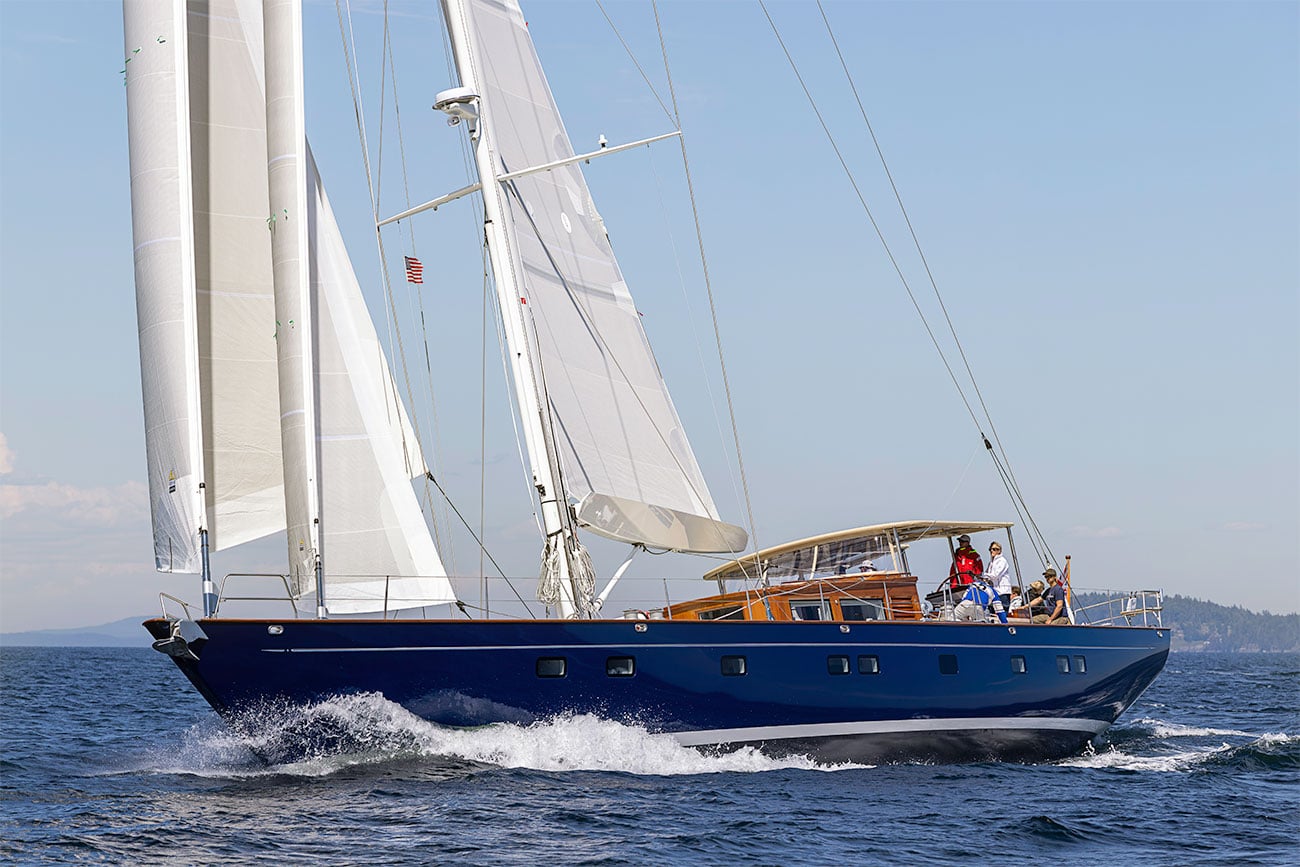
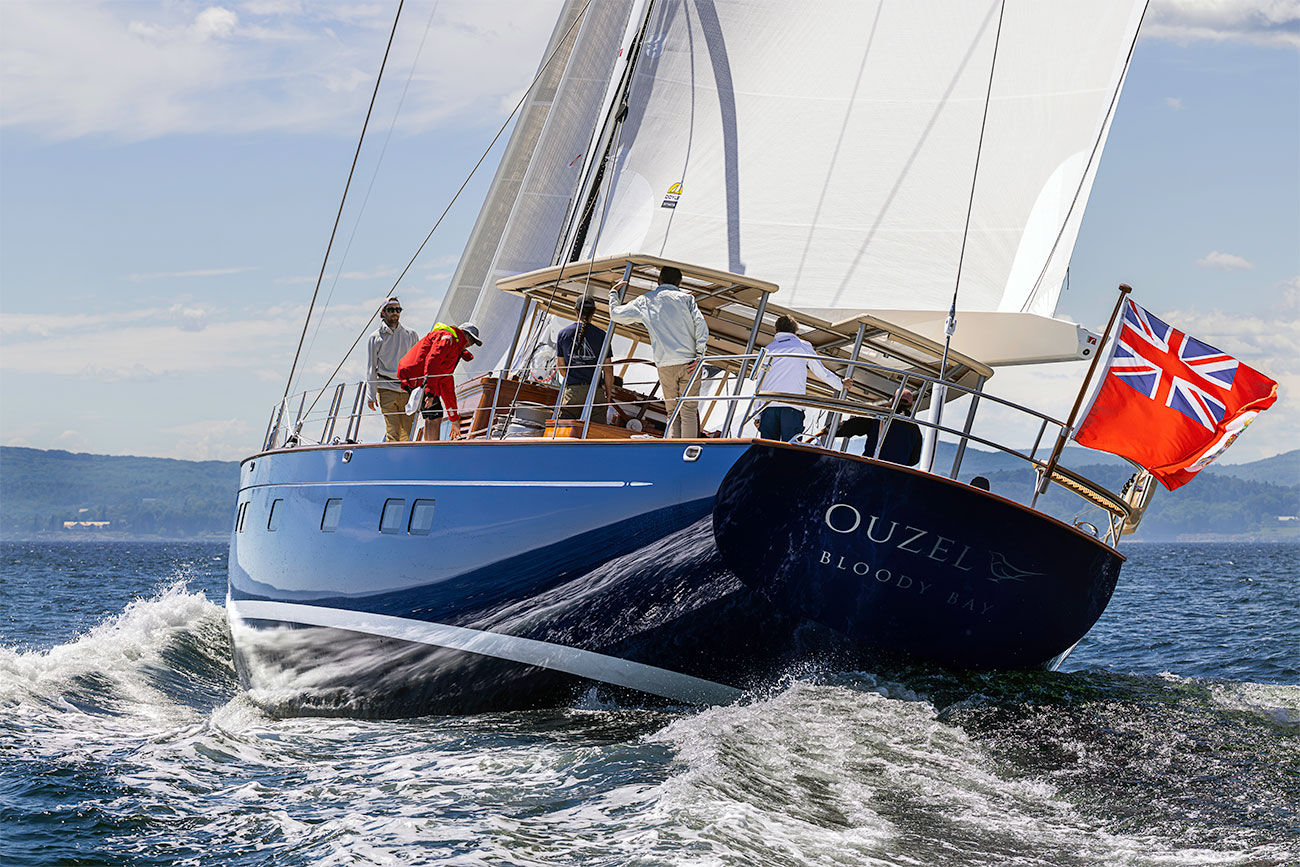
Ouzel spent several days in June on sail trials in Penobscot Bay, with designers, builders and specialists from each firm aboard. In 15 knots of breeze she sailed upwind at about 10 knots, tacking through less than 90 degrees, and reached at around 12. As the afternoon sea breeze built, she briefly topped 13 knots. The owners opted for a deeper, 12-foot draft to favor sailing ability, and Langan’s Tom Degrémont pointed to a practical benefit: a boat that sails well can also move quickly out of the way of bad weather, which matters for a yacht headed to remote waters. Ouzel has since left Maine for the distant shores she was built to reach.
Sources & Credits
-
Ouzel project page, Rockport Marine
-
Rockport Marine / MCM press release, “Bluewater Contemporary Classic Ouzel”
-
Ouzel, Maine Boats, Homes & Harbors magazine
-
From Langan Design Partners, a Classic Cutter, Professional BoatBuilder, July 2024
-
Rockport Marine Inverts Project Ouzel, Cruising World
- Photography: Russell Kaye, Tyler Fields, Billy Black