By Noaa.gov, noaa.gov.
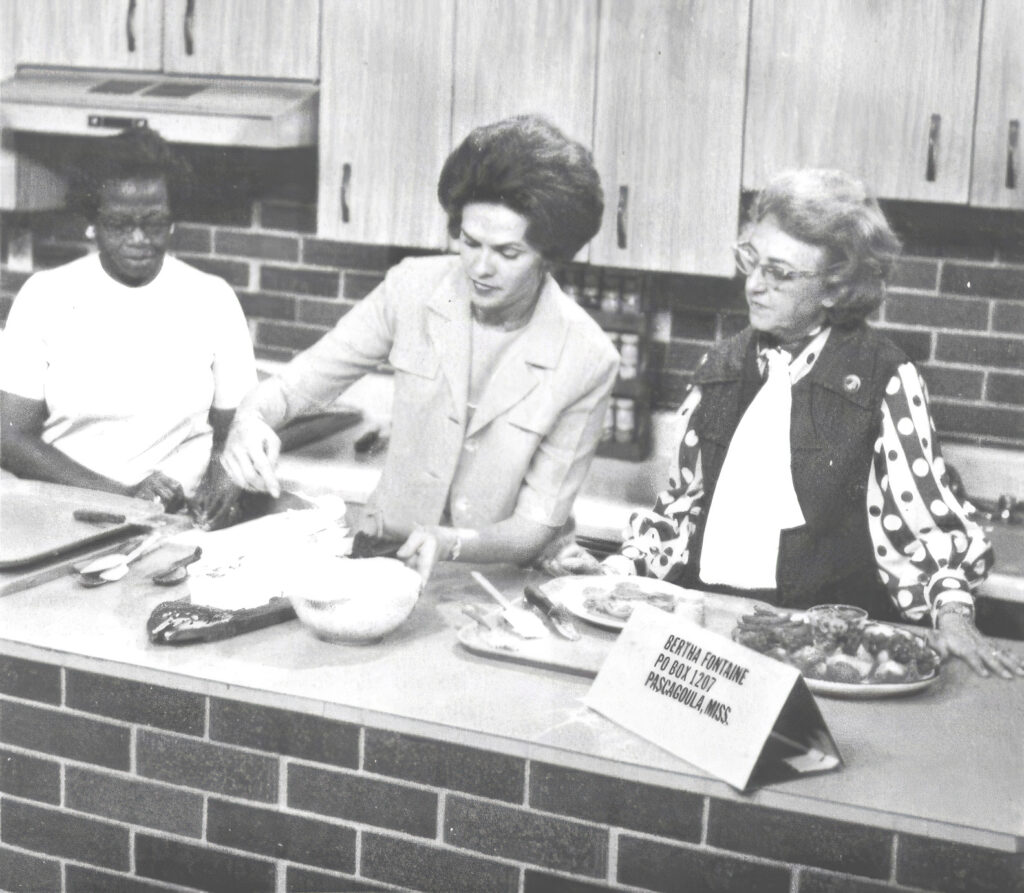
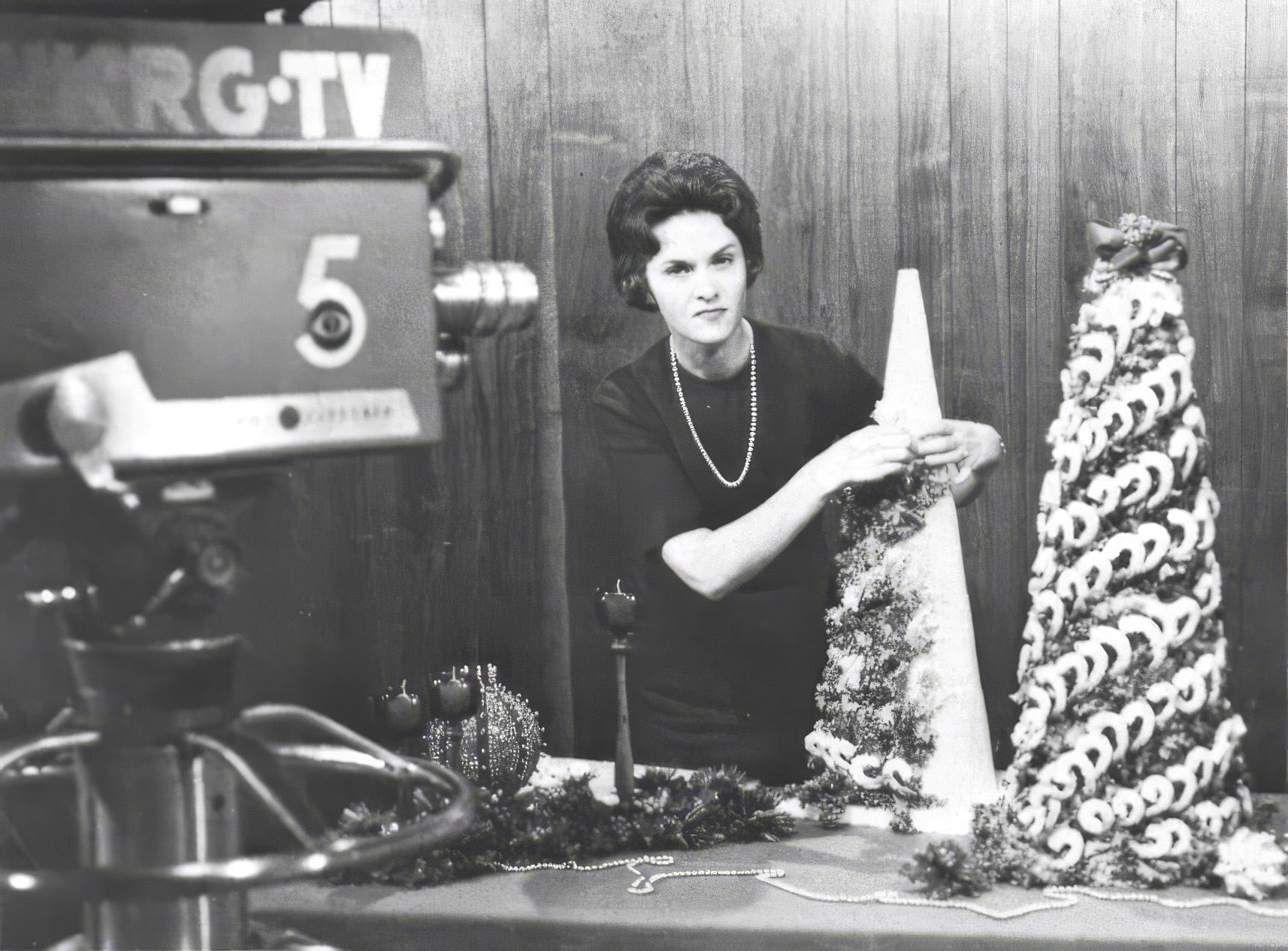
The scene: Boxy television cameras point toward a brightly lit table. Plates of meticulously styled seafood ingredients sit between charming decorations. With her hair in a voluminous bouffant, an energetic woman in a neat dress and a long strand of pearls speaks to the camera in a soft Southern accent, describing the process as she carefully arranges shrimp on a round of pizza dough. This is an appearance by Bertha Fontaine of the Bureau of Commercial Fisheries’ Test Kitchen on a local Southeastern television program, demonstrating one of the kitchen’s latest recipes.
In the 1950s through 1960s, the Bureau of Commercial Fisheries, a predecessor to NOAA Fisheries, set out to encourage more Americans to cook using fish and shellfish. The Bureau recognized a need for accessible information about buying, preparing, and cooking seafood, and thus the Test Kitchen was born. The Test Kitchen team created, tested, and shared utilitarian and unusual seafood recipes with institutions, home economists, and homemakers.
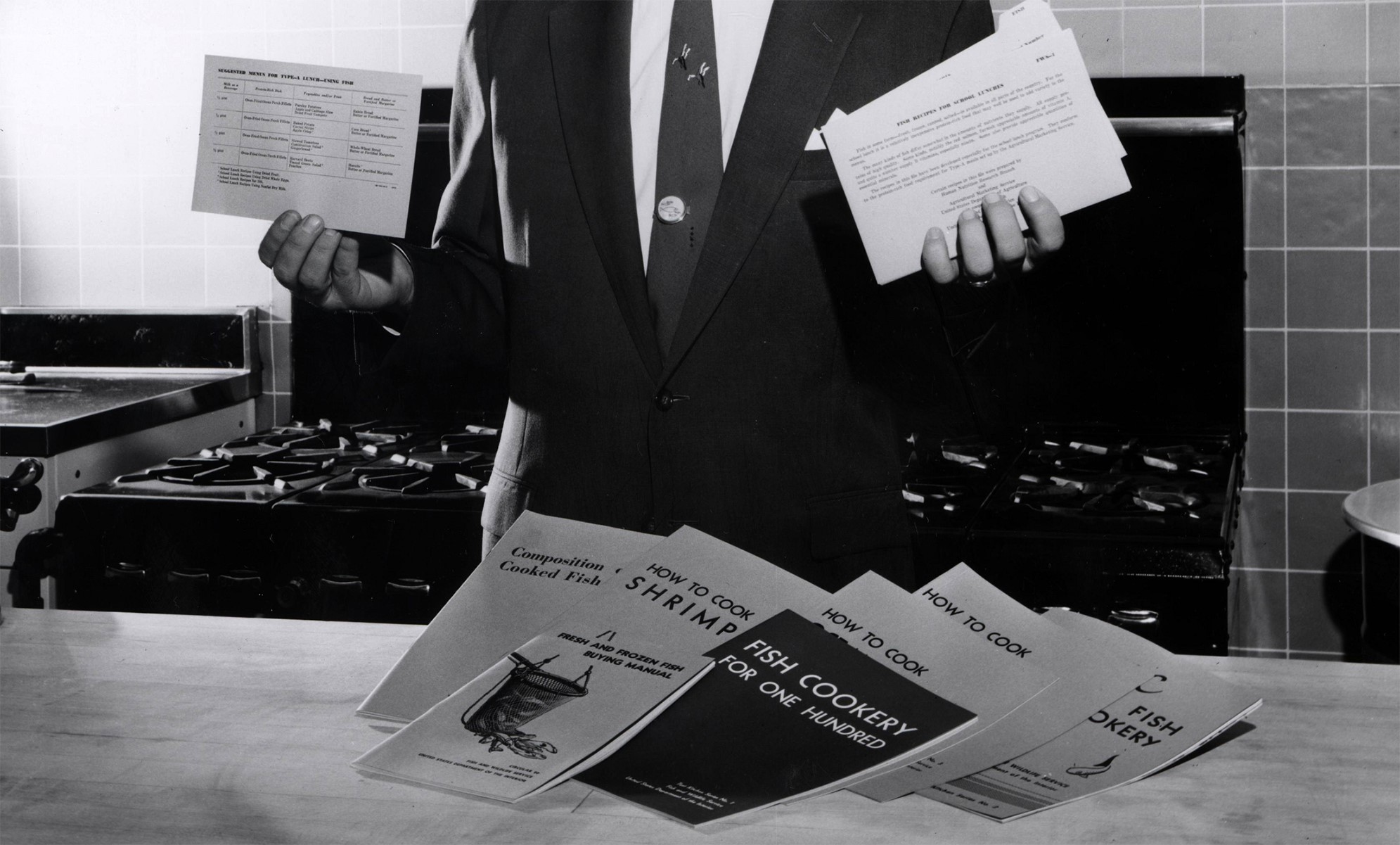
From filé and okra gumbo to shrimp Christmas tree towers, seafood home economist Bertha Fontaine brought these recipes to life. Formerly a high school home economics teacher, Fontaine’s role with the Bureau of Commercial Fisheries was fast-paced and packed with variety. Her work could include developing imaginative seafood recipes in the Pascagoula test kitchen, traveling across the southeastern United States to conduct fish cookery demonstrations, taping television shows, and holding training sessions for home economists in the preparation and use of seafood.
These training sessions were affectionately referred to as “the Fontaine Finishing School.” Students would visit the Pascagoula laboratory for a six-week period, over the course of which they would learn everything there is to know about around 20 unique seafood recipes.