Shedding New Light on Yukon River Chinook Salmon Declines
By Fisheries.Noaa.Gov, fisheries.noaa.gov.
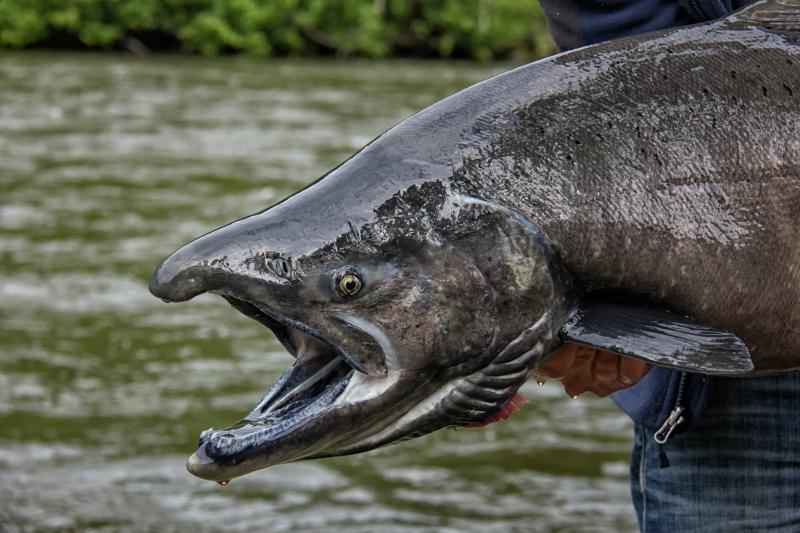
Yukon River Chinook salmon have been declining for decades. These declines have limited salmon harvest and posed hardships for local communities that depend on these fish for their food sovereignty, culture, and livelihoods.
Adult run sizes recently reached their lowest point ever following a downturn from 2019 to 2023. The causes were unclear. But a new study identified a heatwave-associated increase in natural mortality as an important driver of this most recent and particularly severe decline.

Addressing the Challenge
Like most salmon, Yukon River Chinook are anadromous. They hatch in freshwater, migrate to the ocean to grow and mature, and return to freshwater to reproduce. Adult salmon spawn in the same river in which they hatched, and each of these reproductive units is called a “run.”
One of the main challenges for understanding Yukon River Chinook salmon runs is their vast range. Their life cycle spans the interior of Alaska and Canada to the Bering Sea and beyond. This makes monitoring and studying them—and identifying the causes of their declines—extremely difficult. New research led by NOAA’s Alaska Fisheries Science Center and its partners aimed to overcome these challenges. Using cutting-edge analyses, they pulled together multiple data sources from across the life cycle into a unified model framework.