A Secret to Survival for California’s Most Endangered Salmon
By fisheries.noaa.gov, fisheries.noaa.gov.
Traditional field research combined with new technology has revealed a secret to the survival of juvenile salmon as they form in their eggs, especially in low-water years when many do not survive, new research from NOAA Fisheries and the University of California, Davis shows.
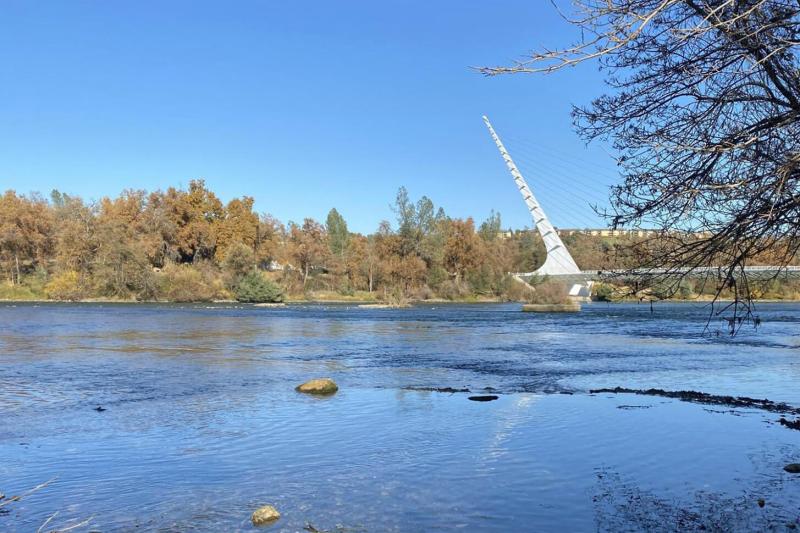
Sacramento River winter-run Chinook salmon are California’s most endangered salmon, with a single surviving population and an average of a few thousand returning fish in recent decades. Shasta Dam blocks their original habitat in cold mountain rivers draining Mount Shasta, leaving them to spawn in the low-lying Sacramento River heated by the summer sun.
The research, published this week in Science Advances, found that cool river temperatures in the first 15 days after their eggs were fertilized was crucial for their survival. In warm years with less water, cold water barely covered this critical thermal window, sharply limiting survival in what may become an increasing reality for salmon as the climate warms.
“Salmon may spawn throughout the summer season, but our results suggest that only a small fraction of those spawning events ultimately produced the juveniles that survived,” said Kohma Arai, who authored the research as a postdoctoral scholar at UC Davis with other scientists from the university, NOAA Fisheries, UC Santa Cruz, UCLA, and the Norwegian Institute for Nature Research.
“This helps us understand the connection between what individuals experience during development and how populations respond to environmental change, which is becoming increasingly important as climate change continues to reshape aquatic ecosystems,” he said.
Water managers try to release cold water from Shasta Reservoir to cool the river enough for salmon eggs incubating in river gravel to survive, while also delivering water to farms and cities vital to California’s economy. The balance grows more difficult in low-water years. Water agencies, water users, such as irrigators, and federal and state fish agencies prioritized the new research to address science questions key to salmon survival in a changing climate. The U.S. Bureau of Reclamation and California State Water Board funded the research.