New eDNA Tool To Help Track Recovery Of Sunflower Sea Star, a Pacific Coast ‘Apex Predator’
Posted
Last Updated
By noaa.gov, noaa.gov.
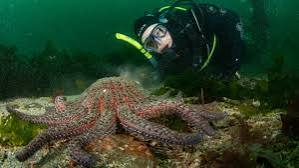
A wasting disease that surged during the intense 2013-2016 Pacific marine heatwave known as the Blob decimated numerous species of sea stars and triggered the collapse of vast coastal kelp forests from the Aleutians to the Baja Peninsula. One of the species most affected was the sunflower sea star, an apex predator that feeds on kelp grazers like sea urchins.
As captive breeding programs and the discovery of additional sea star refuges, (like the one found in Greater Farallones National Marine Sanctuary in August 2025) fuel hopes for the sunflower sea star, researchers at NOAA’s Pacific Marine Environmental Laboratory (PMEL) have developed a rapid environmental DNA (eDNA) detection method that dramatically improves scientists’ ability to monitor the sea star species’ health and recovery.
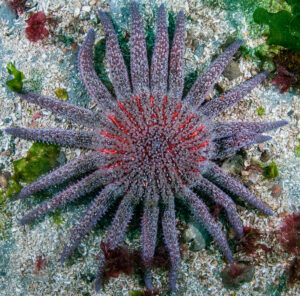
“By analyzing tiny amounts of genetic material they shed into the water, we can now identify these large but elusively rare sea stars without ever seeing them,” said Zachary Gold, a scientist who leads PMEL’s Ocean Molecular Ecology program. “This opens the door to efficiently monitoring the recovery of this species, especially at deeper depths and sites that are difficult for divers to survey.”
The eDNA method, which can detect as few as a handful of copies of DNA in a liter of seawater, is less expensive, more sensitive and more efficient for rapid assessments than dive surveys. Results can be obtained in as little as one or two days and can be followed up by visual confirmation. After one recent eDNA detection, for example, divers in Northern California’s Noyo Bay were able to find one juvenile sunflower sea star the size of a teacup.
Read the full article here: New eDNA Tool To Help Track Recovery Of Sunflower Sea Star, a Pacific Coast ‘Apex Predator’
Originally published on 25 June, 2026.