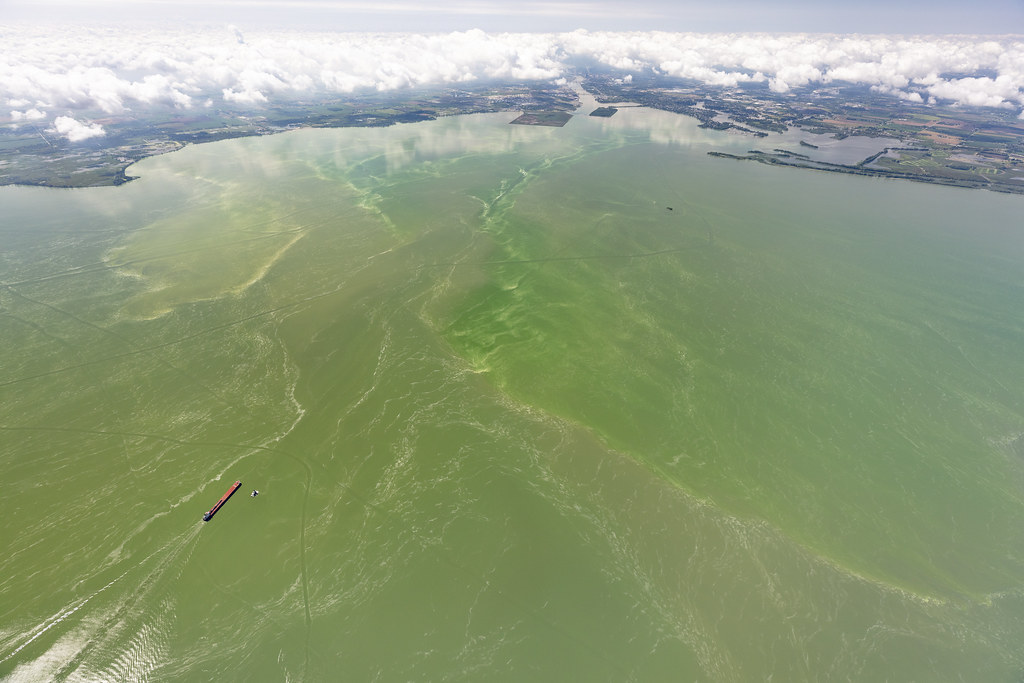
Mild to Moderate Harmful Algal Bloom Predicted for Western Lake Erie
By noaa.gov.
NOAA and its research partners are forecasting a mild to moderate harmful algal bloom (HAB) in western Lake Erie this summer. This year’s bloom is expected to measure 3 on the HAB severity index, with a potential range of 2–4.
The HAB severity index is based on the bloom’s biomass (the amount of algae) during the peak 30 days of the bloom. Moderate blooms have an index of 3–5, while an index above 5 indicates more severe HABs. Blooms over 7 are particularly severe, with extensive scum formation and bloom coverage affecting the lake.
Lake Erie HABs consisting of cyanobacteria (i.e. blue-green algae) are capable of producing microcystin, a known liver toxin which poses a risk to human and wildlife health. Such blooms can lead cities and local governments to add more treatment to drinking water and close beaches. HABs also harm local economies by preventing people from fishing, swimming, boating and visiting the shoreline, with annual economic impacts estimated at over $70 million for the Lake Erie region.
The size of a HAB is not necessarily an indication of how toxic it is. Each algal bloom is unique in terms of size, toxicity and ultimately its impact on local communities. NOAA continues to develop new tools to detect and predict how toxic blooms will be.
“Harmful algal bloom forecasts are critically important for communities around Lake Erie to plan and prepare, and are a key part of NOAA’s scientific service to the nation,” said Nicole LeBoeuf, director of NOAA’s National Ocean Service. “The Great Lakes are a driver of economic activity throughout the region and environmental outlooks can help ensure the hazards of toxic algae are well understood to protect public health.”
 read more at noaa.gov.