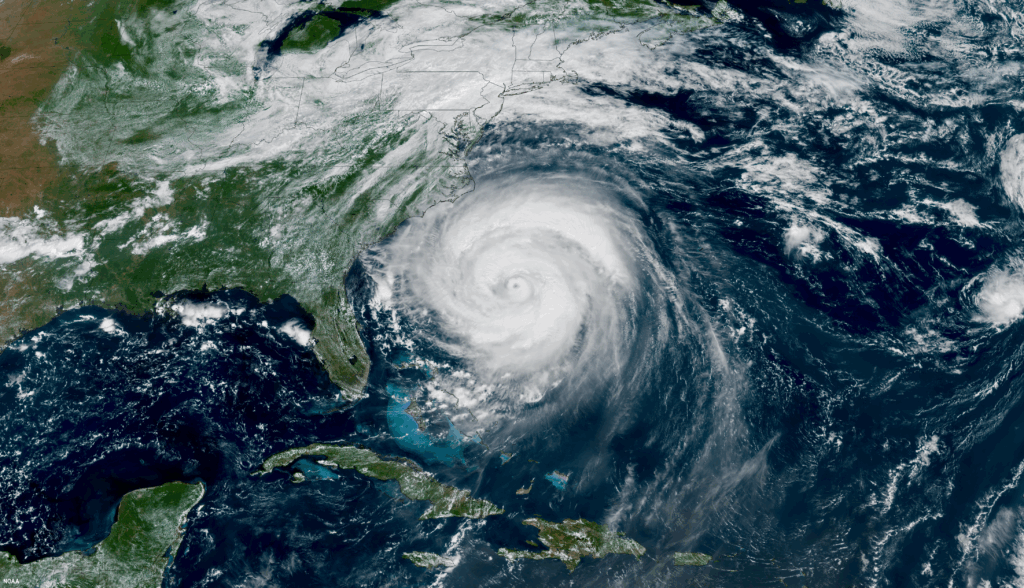
Hurricane Erin Demonstrates Critical Maritime Coordination for Port Safety
Hurricane Erin demonstrated how proactive federal coordination successfully protected East Coast ports and maritime traffic from distant storm threats.
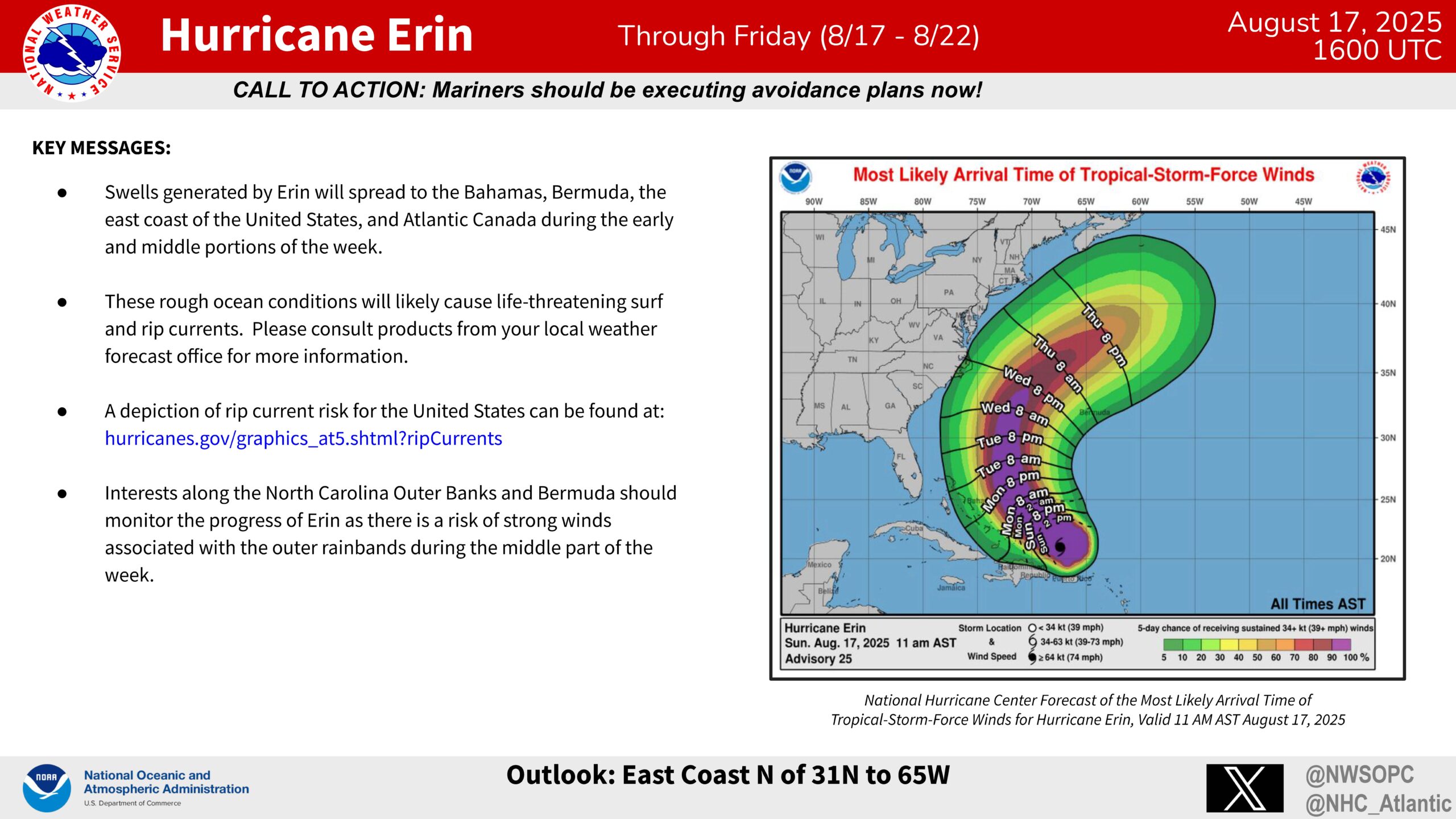
In “Hurricane Erin Demonstrates Critical Maritime Coordination for Port Safety” NOAA, published in noaa.gov. (Sep 10, 2025), it is stated:
Hurricane Erin’s passage near the U.S. East Coast showcased the essential coordination between federal agencies and maritime operators in protecting port infrastructure and commercial shipping routes. The multi-agency response highlights best practices for advance planning and communication that other port authorities can adopt for future storm preparations.
NOAA’s Ocean Prediction Center and the National Hurricane Center support all shipping interests to ensure cargo arrives safely and on schedule. Hurricane Erin’s massive seas and swells made this task a bigger challenge than usual.
In anticipation of this challenge, OPC and NHC provided briefings to partners such as the U.S. Coast Guard as early as August 12, over a week ahead of the heaviest impacts to ports along the U.S. East Coast. Headlines at the top of the OPC briefing slides signaled a clear “CALL TO ACTION: Mariners should be executing avoidance plans now!”
In total, OPC delivered nine briefings to the U.S. Coast Guard, starting with initial indications that a tropical storm may form, throughout Erin’s journey. Ships showed notable avoidance of Erin’s path, with the vast majority of marine traffic getting out of the path of tropical-storm-force winds well in advance of Erin. Ships kept a wide berth as Erin passed, quickly reestablishing their routes as soon as possible behind the storm.
The National Hurricane Center’s Tropical Analysis and Forecast Branch (TAFB) communicated daily with the U.S. Coast Guard Southeast District in the days leading up to and through Erin’s passage via their marine forecast zone, providing 13 live briefings during that period. As a result, the Southeast District restricted ports in the U.S. Virgin Islands and Puerto Rico during Erin’s passage – safely guiding hundreds of millions of dollars of trade goods to these local economies without loss or negative impacts.
The week-long advance briefing timeline and systematic approach to maritime traffic management demonstrated how proactive federal coordination can minimize economic disruption while maintaining port safety during major storm events.