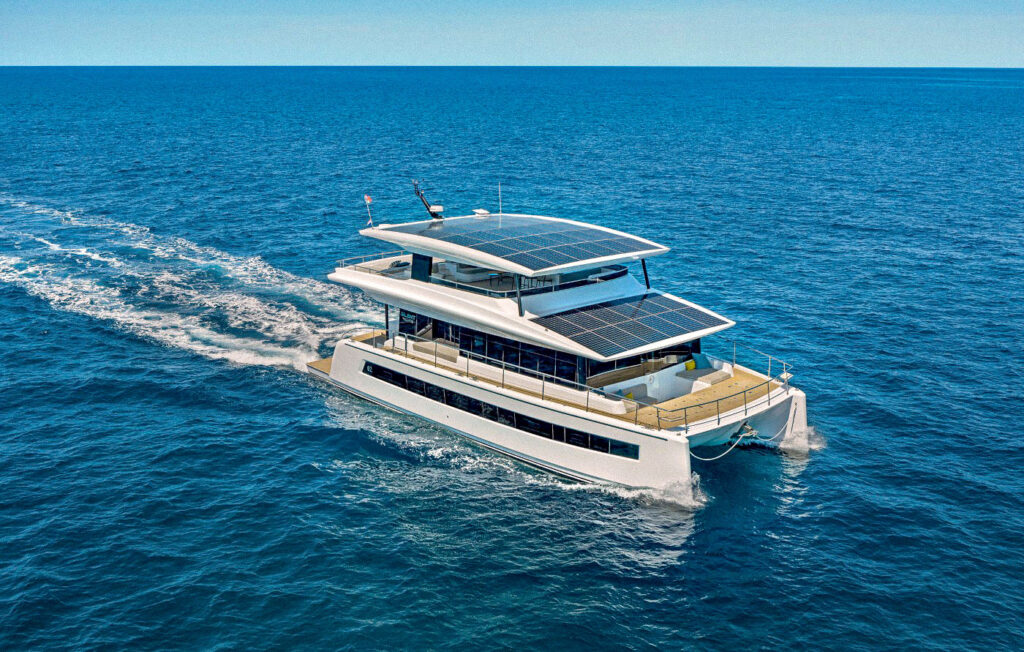
Solar Electric Yachts Extend Range
By YCC Team, Yaleclimateconnections.org.
As solar-powered yachts become more prevalent, harbor and marina operators face new infrastructure considerations including electrical capacity for battery charging, appropriate dock assignments for vessels with rooftop solar arrays, and understanding the operational patterns of these emerging zero-emission vessels. The technology represents a shift that could affect everything from slip design to power distribution systems.
According to an article at Yale Climate Connections:
“It’s an incredible experience to literally cruise for three or four hours and have zero noise, just the noise of the water passing by.”
That’s Steve Bell of Silent Yachts. The Italy-based company builds boats with solar panels on top. The panels charge batteries that power the boats’ electric motors.
He says Silent Yachts are perfect for short trips.
“Most people on a cruise around the Bahamas, around the Mediterranean, would get on the yacht, do two or three hours, go into a mooring area, anchor, … and chill out, relax, and the sun is still then charging the batteries, but you’re not using any propulsion.”
The boats can travel longer distances. But they must either stop occasionally to recharge the batteries or rely on backup diesel generators.
Bell recently captained a trans-Atlantic voyage from Gibraltar to Antigua. To make the trip, he estimates that the Silent Yacht used about two-thirds less diesel than a conventional yacht would have.
The operational pattern described—short cruises followed by anchoring while solar charging—suggests these vessels may have different harbor usage patterns than traditional diesel yachts, with implications for marina stay duration and shore power needs.
Read the full article here: The solar-powered yachts that cruise without the roar
Read the full article here: Silent Yachts 62 Completes Transatlantic Extending Electric Cruising Limits
Originally published on January 29, 2026 by Yale Climate Connections.