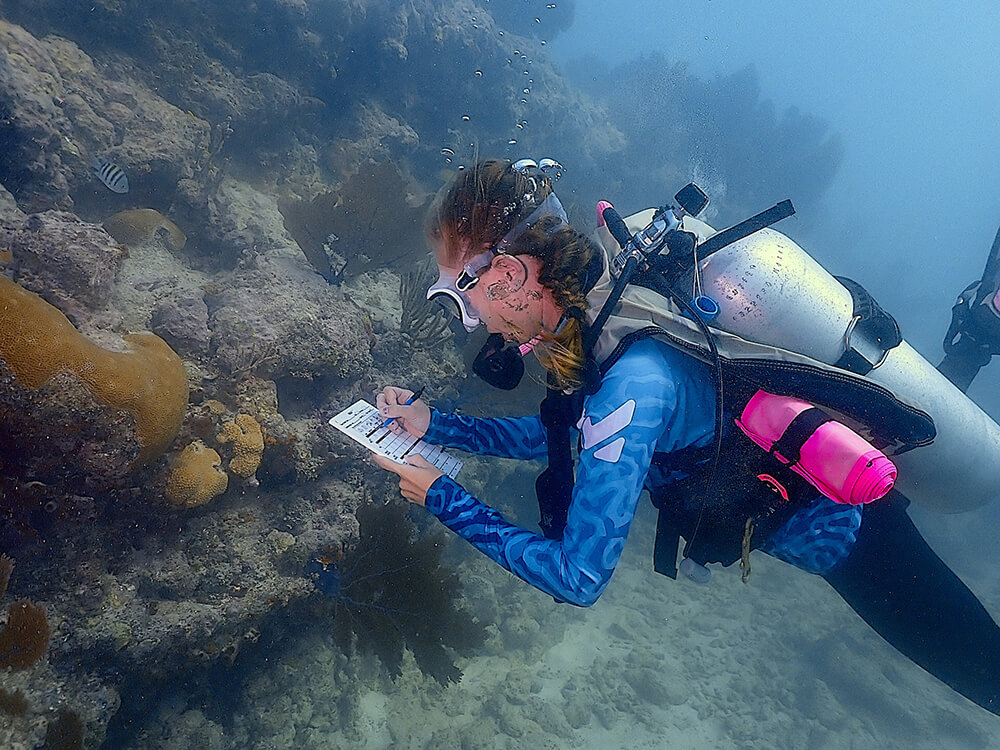
Becoming an Iconic Reef Guardian: A Purposeful Dive in Florida Keys National Marine Sanctuary
By Sanctuaries.noaa.gov, Sanctuaries.noaa.gov.
The first time I laid eyes on a coral reef was in the Florida Keys in 2012 after I had just learned to scuba dive. I remember hovering above the reef in awe trying to take in the colors of coral and sponges, the fish moving through them, and the realization that an entire world existed beneath the surface.
Over time, that sense of wonder became tangled with something harder to name: the slow ache of environmental grief. I have returned to reefs in different places and conditions, and felt the emotional whiplash of knowing what healthy coral ecosystems can be, and seeing what many have become under the pressure of extreme heat events, pollution, disease, and storms. There were moments when I avoided returning to certain sites because I did not want to see what had changed. But as a science communicator, I know that looking away accomplishes nothing.

Read the full article here: Becoming an Iconic Reef Guardian: A Purposeful Dive in Florida Keys National Marine Sanctuary