How Fisheries Steamer Albatross Lit Up the Night Sea
By noaa.gov, noaa.gov.
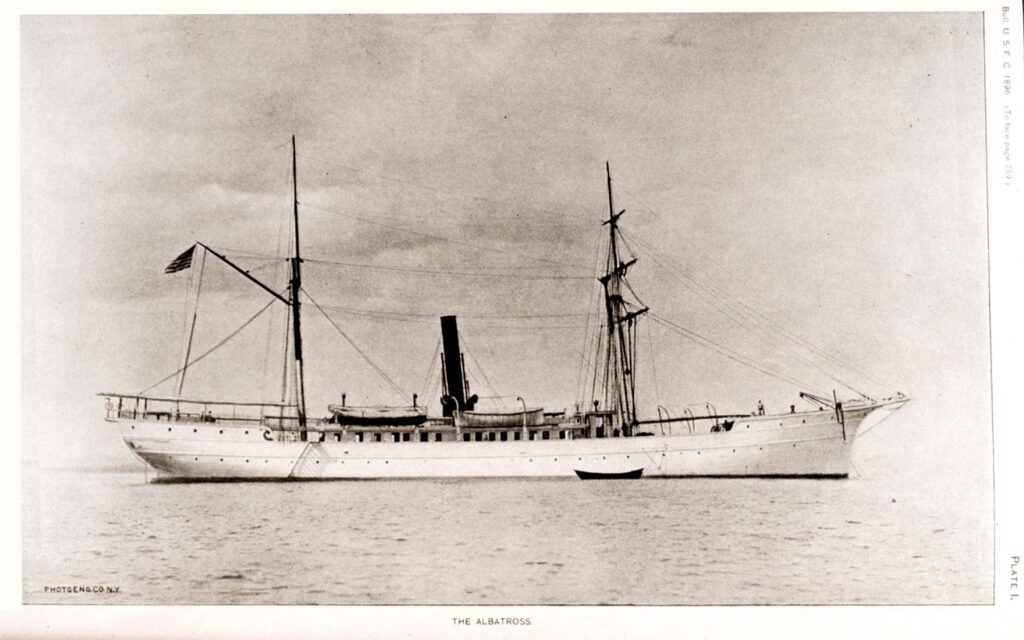
For centuries, the belief that a large seabird called an albatross brought good luck to sailors has lived on in seafaring mythology. The sailors and researchers of the United States Commission of Fish and Fisheries must have thought the steamer Albatross was lucky to have named it after the bird. And they were right in that it was the first government vessel to be outfitted entirely with electric lights—a rare luxury at the time.
In 1881, Congress approved funds for the United States Commission of Fish and Fisheries to build what would be the first vessel built especially for marine research by any government, the steamer Albatross. Charles W. Copeland of New York drew up the plans, Pusey & Jones of Wilmington, Delaware constructed the ship, and most interestingly, Thomas Edison designed an entire lighting scheme for the steamer, making it the government’s first ship to be fully equipped with electric lights.
In 1882 G.W. Baird was made the superintendent engineer of the United States Commission of Fish and Fisheries and started working on the Albatross’ lighting installation with Edison’s company. Baird did not always agree with the choices made by Edison’s engineer.

“This particular engine is larger than should be employed for this plant… I have been obliged to introduce a pressure-regulating valve, which limits the pressure to what is desired. Previous to introducing this valve, two cross-head keys had been sheared off and one cross-head broken, by water in the steam-cylinder.
Read the full article here: How Fisheries Steamer Albatross lit up the night sea