Arctic Ocean Discovery Reveals New Methane Source Using Advanced Marine Sensors
By Woods Hole Oceanographic Institution, whoi.edu.
Marine research technology continues to advance our understanding of ocean chemistry, with implications for Arctic navigation and environmental monitoring that affect commercial shipping routes and harbor operations throughout the region.
According to a November 21, 2025 press release from Woods Hole Oceanographic Institution:
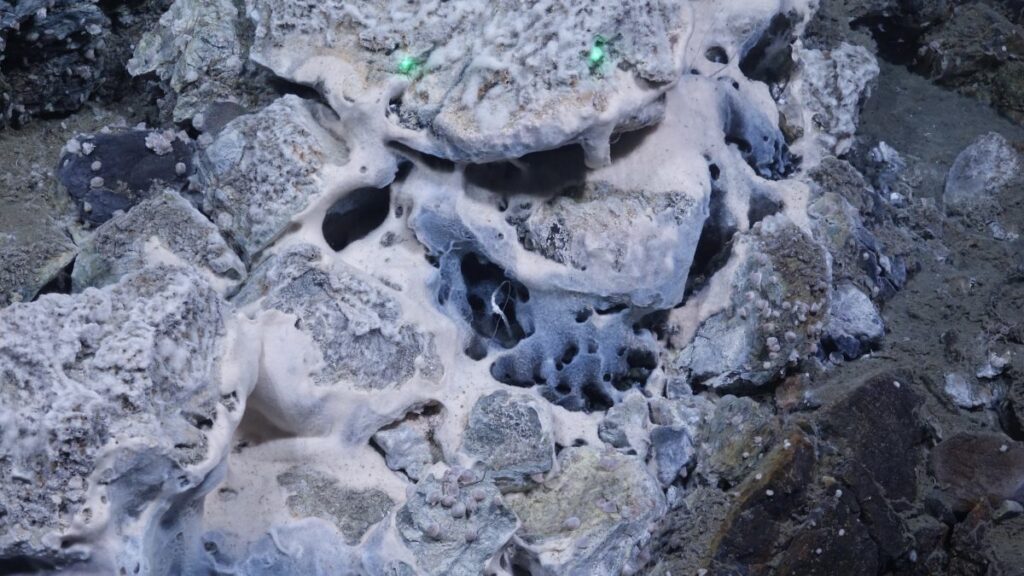
An international team of scientists and students, led by the Arctic University of Norway, and including chemists and engineers from Woods Hole Oceanographic Institution (WHOI), has announced a remarkable discovery of a venting system on the seafloor of the Arctic. This significant finding was made during the ongoing EXTREME25 expedition aboard the research vessel Kronprins Haakon.
Utilizing the advanced remotely operated vehicle ROV ÆGIR 6000, researchers have been exploring the Fram Strait, a passage area situated between Greenland and Svalbard. During their exploration, the team identified a previously unknown diffuse venting field along the fault scarp of an oceanic core complex (OCC).
The WHOI-developed SAGE (Sensor for Aqueous Gases in the Environment) methane sensor was used in situ to confirm the presence of methane in the fluids. This is significant as the location and geology of the area point to the potential of abiotic methane, which is methane that is produced without the presence of living organisms.
“By deploying SAGE on ROV ÆGIR, we were able to measure the emission of methane from this vent in real-time and confirm its composition at source,” explained Mary Burkitt-Gray, WHOI principal investigator on this project. “Using these sensors in situ helps us to immediately start to link the science behind the data.”
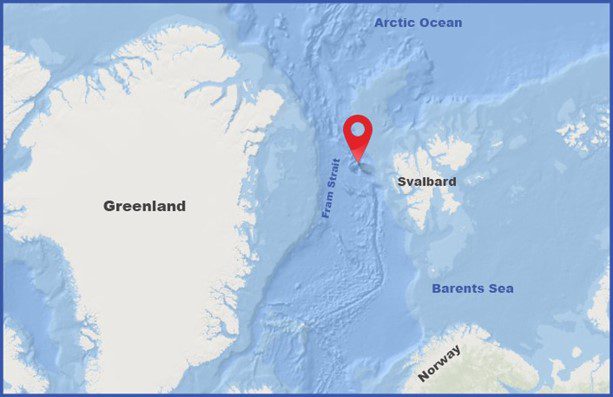
This discovery in the strategically important Fram Strait demonstrates how advanced marine sensing technology enhances our ability to monitor and understand Arctic waters, where increasing vessel traffic and resource exploration activities require comprehensive environmental baseline data.
Read the full article here: International Research Team Discovers a Potential Source of Abiotic Methane in the Arctic Ocean
Originally published November 21, 2025, Woods Hole Oceanographic Institution, Woods Hole, Massachusetts.