New Jersey Exceeds Goals for Shell Recycling Program Expansion
By coast.noaa.gov, Published in coast.noaa.gov.
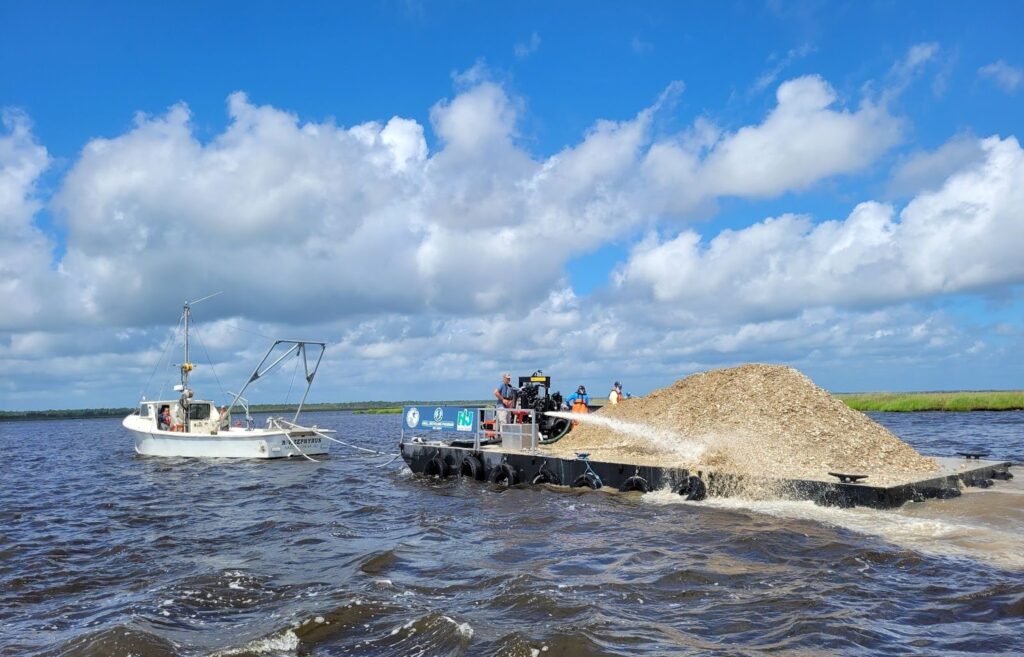
Despite rising water temperatures, disease, and other challenges, an oyster reef in New Jersey’s Mullica River holds fast as one of the last self-sustaining populations along the state’s Atlantic coast. Historically abundant on the East Coast, oysters have experienced a major decline in the last century, but a few resilient reefs provide hope for recovery. New Jersey coastal partners are giving these remarkable shellfish a boost through a shell recycling program that was recently expanded with a more-than-$1.2-million NOAA grant.

New Jersey’s restaurant and shellfish industries depend on healthy oyster populations to ensure sustainable supply year after year. Besides being great for business, oysters provide many benefits for the entire coastal community. Approximately 2.5 acres of oyster reef can provide up to $99,000 worth of ecosystem services every year through shoreline stabilization, storm protection, and improved water quality.
Recognizing the value of healthy oyster populations, the New Jersey Department of Environmental Protection (NJDEP) and partners have long worked to enhance oyster habitat. In 2019, they launched a shell recycling and oyster reef restoration program in collaboration with the Hard Rock Hotel and Casino in Atlantic City. Now, the new grant has allowed New Jersey to successfully expand the recycling program to three coastal counties—a significant step toward restoring the state’s wild oysters.
Read the full article here: New Jersey Exceeds Goals for Shell Recycling Program Expansion