NOAA improves aviation forecasts to bolster U.S. air travel efficiency, safety
By noaa.gov, noaa.gov.
Passengers, pilots, and crew: Get ready for greater peace of mind.
Starting in late March, a new NOAA weather forecast system will provide improved prediction of two aviation hazards that pose threats to flight safety and create anxiety among passengers: airplane icing and turbulence.
Covering the contiguous United States, the new Domestic Aviation Forecast System (DAFS) will generate more detailed forecasts of evolving icing and turbulence risks, giving pilots real-time intelligence about changing weather conditions along their flight path.
DAFS was developed with funding from the Federal Aviation Administration’s (FAA) Aviation Weather Research Program. The system is transitioning from development teams led by NOAA Research into operational use at NWS’s National Centers for Environmental Prediction.
“This is the culmination of extensive research and years of work that gets right to the heart of our aviation forecast mission: supporting passenger safety and the aviation industry,” said Terra Ladwig, acting chief of NOAA Global Systems Laboratory’s (GSL) Assimilation, Verification, and Innovation Division.
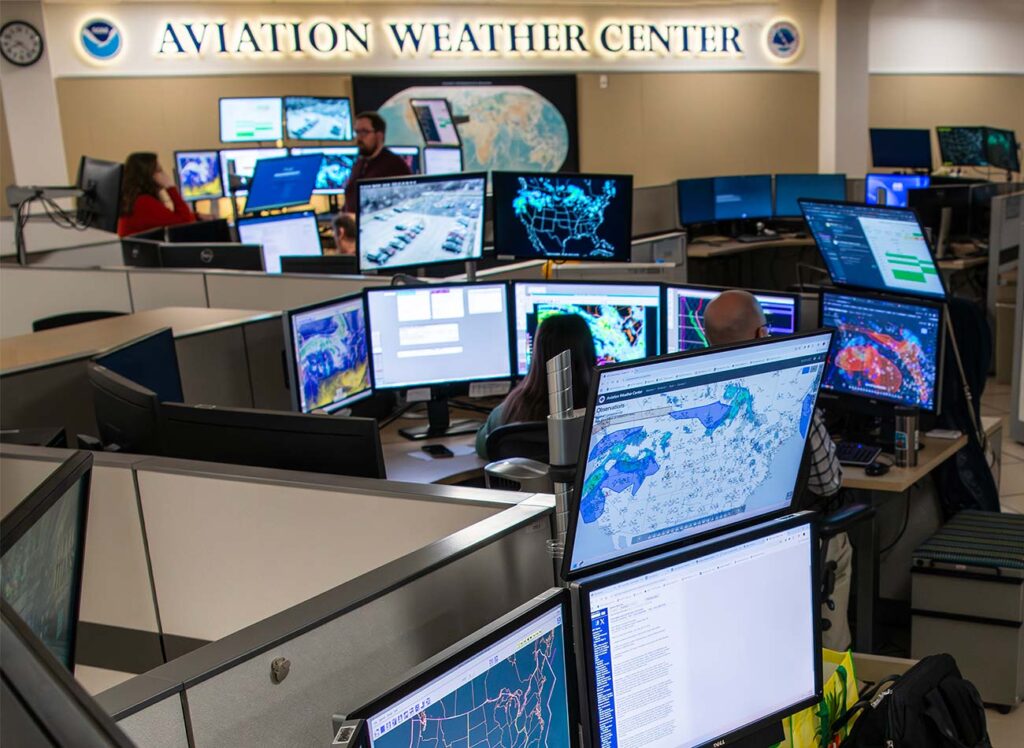
“The DAFS is another example of how NOAA continuously works with the FAA to deliver the most accurate, timely and useful aviation forecasts,” said Joshua Scheck, aviation support branch chief for NOAA’s Aviation Weather Center. “Improving prediction of turbulence and icing will strengthen NOAA’s ability to provide critical flight safety information to the FAA and the aviation community.”

To help the FAA generate flight paths that route planes around dangerous weather, National Weather Service’s 122 Weather Forecast Offices provide more than 3,000 regularly scheduled forecasts to approximately 700 airports daily. The NWS Aviation Weather Center (AWC) issues more than 300 additional aviation weather forecasts daily, along with 55,000 in-flight aviation weather warnings per year on average.
Read the full article here: NOAA improves aviation forecasts to bolster U.S. air travel efficiency, safety