NOAA’s National Weather Service Eyes the Cloud for Next-Gen Applications
By noaa.gov, noaa.gov.
Technology improvements will add mobility to the NWS throughout the U.S.
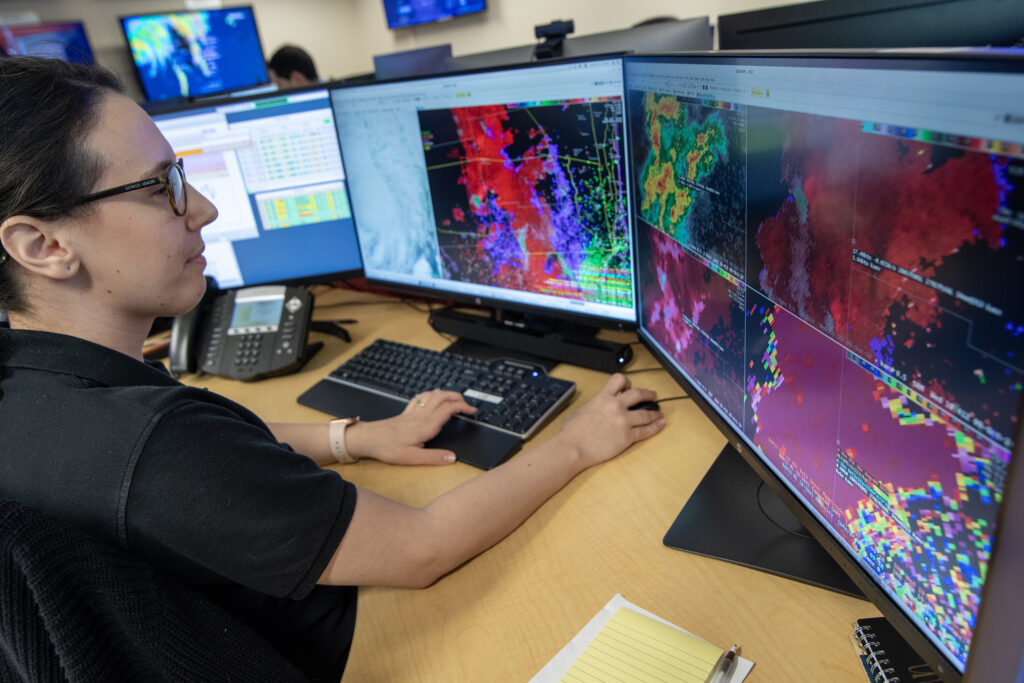
NOAA’s National Weather Service (NWS) has awarded two contracts for the NWS’s new cloud-based data and applications services, launching a new era of modernization for the nation’s weather agency. These tools will effectively transfer the capabilities of AWIPS, the information technology system used by NWS to integrate meteorological, hydrological, satellite and radar data to the cloud, allowing forecasters to create, visualize and distribute weather forecasts, warnings and advisories without being tethered to a specific location.
“For far too long American weather forecasters have relied on decades-old, hardwired technology to provide critical data to the American public,” said Secretary of Commerce Howard Lutnick. “Under President Trump’s leadership, we are modernizing the National Weather Service’s operations using the cloud and our American tech stack.”
With this new technology, NWS forecasters will have unprecedented flexibility to:
- Securely access data and issue products, such as forecasts and warnings, even if they are miles from their home office;
- Access the system securely from a variety of devices, including mobile phones;
- Provide support to other NWS offices at a moment’s notice;
- Apply artificial intelligence and machine learning techniques to future forecast processes; and
- Provide gold-standard decision support for NWS partners, with all the guidance tools at their fingertips.
“This transition to cloud-based technology is a monumental improvement from the current structure, which was first implemented in the 1990s,” said Neil Jacobs, Ph.D, NOAA administrator. “This upgrade will greatly improve the NWS mission by eliminating time spent downloading data to desktop workstations, while increasing flexibility through remote laptop accessibility.”
Read the full article here: NOAA’s National Weather Service eyes the cloud for next-gen applications