Capelin: a “Sea Canary” for Marine Ecosystem Change in Response to Heatwaves
By fisheries.noaa.gov, fisheries.noaa.gov.
Capelin are a major forage fish species in high-latitude marine ecosystems. Recent heatwaves in Alaska led to a dramatic decline in capelin abundance, which can have major impacts on predators, including marine mammals, seabirds, and fish.
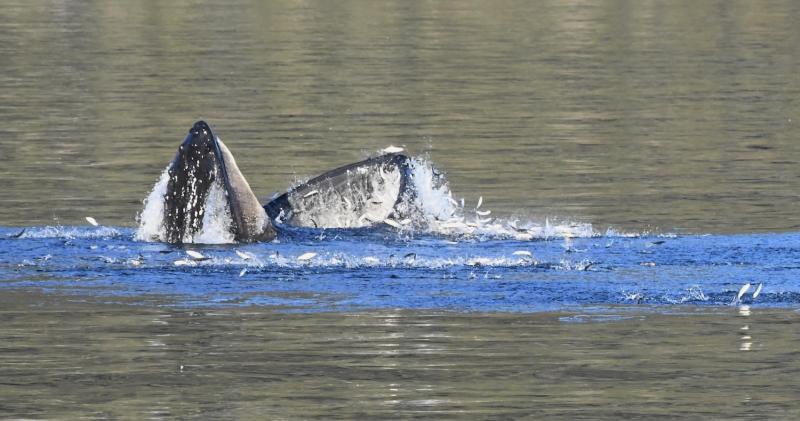
Twenty years ago, Dr. George Rose with Memorial University of Newfoundland called capelin “a sea canary for marine ecosystem change.” A new study reinforces its role as a pillar of healthy marine ecosystems. It shows that heatwaves can dramatically affect capelin populations. Commercially important fish species like salmon and halibut rely on capelin as a food source—as do whales, seals, sea lions, and seabirds. And because they are not commercially harvested in the northeast Pacific Ocean, studying capelin in Alaska offers a unique opportunity to investigate population changes relative to environmental factors.
Between 2002 and 2022, Alaska Fisheries Science Center scientists observed capelin’s response to two marine heatwaves.They found declines in capelin abundance reduced energy available to predators to less than 1 percent of pre-heatwave values.
Capelin: an Indicator Species for Marine Ecosystems in Alaska
Lead author of the study Rob Suryan explains, “We consider capelin, along with herring, sand lance, and krill, to be the ‘big 4’ pelagic schooling forage species in Alaska. They are incredibly energy-rich—meaning they have a high lipid, or fat, content. And when they school, they form dense aggregations, which greatly increases foraging efficiency for predators. These two factors make them very valuable food for marine mammals, seabirds, and many commercial fish species.”
Abundant prey is critical for these predators. Decreased capelin populations, in particular, have been linked to declines in cod, birds, and seals and sea lions in both the North Atlantic and North Pacific Oceans.

In the North Atlantic Ocean, capelin are harvested for food, bait, and fishmeal by multiple countries. They are not commercially harvested in the northeast Pacific Ocean. Therefore, changes in capelin abundance and condition in the waters off Alaska primarily reflect natural changes that are independent of potential effects by commercial harvesting. This “canary” for ecosystem change in Alaska provides an important, unbiased indicator for understanding how environmental changes influence population fluctuations of capelin and other species throughout the ecosystem.
Originally published on May 18, 2026.