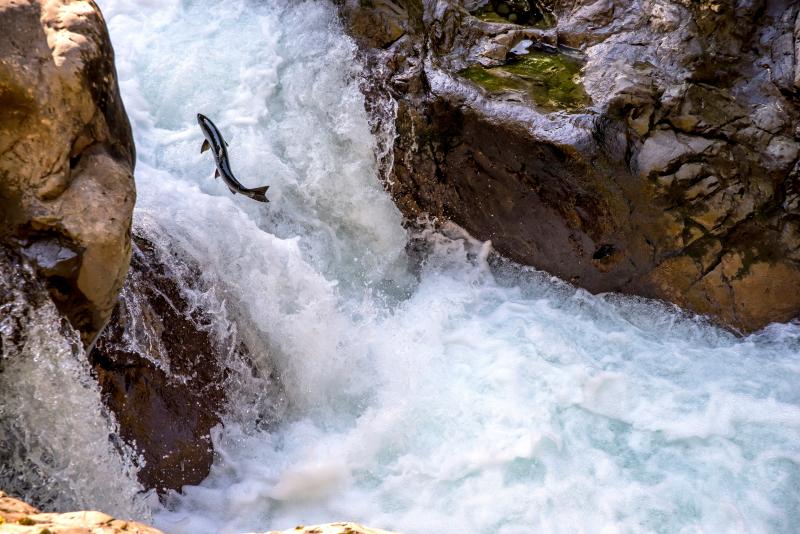
World Fish Migration Day
By fisheries.noaa.gov, fisheries.noaa.gov.
May 23, 2026 is World Fish Migration Day: a global celebration of the importance of migratory fish.
Every year, millions of fish—salmon, steelhead trout, shad, alewives, and sturgeon, among others—migrate to their native habitats to reproduce. Some fish swim thousands of miles through oceans and rivers to reach their destination.
Learn how NOAA works to protect and restore the rivers, streams, and coastal habitats these important species rely on to make their journeys.
Restoring Habitat for Migratory Fish
Decades of Effort Restore Steelhead and Salmon Passage on California’s Alameda Creek
Last year, California Trout and Pacific Gas & Electric removed the final barrier to fish passage on California’s Alameda Creek. For the first time in 50 years, threatened Central California Coast steelhead and other migratory fish can reach spawning grounds and juvenile rearing habitat in the upper watershed.

Restoring Cold-Water Pathways for Idaho’s Salmon and Steelhead
NOAA-funded projects are reconnecting tributaries and restoring habitat in the Snake River Basin, helping threatened salmon and steelhead complete one of the longest migrations in the lower 48 states.

Yakima River Salmon Get a Lifeline with Removal of Causeway
NOAA funding helped the Yakama Nation and partners remove a causeway in Richland, Washington, that had wreaked havoc on Yakima River salmon and steelhead populations. Now, fish have a better chance of surviving migration in and out of the river.
Read more about the causeway removal project

Reconnecting Habitat Aids Migratory Fish on the Roanoke River
The Roanoke River provides essential spawning habitat for migratory fish like striped bass, blueback herring, hickory shad, American eels, and the endangered Atlantic sturgeon. NOAA and The Nature Conservancy are reconnecting floodplains and tributaries to the main river channel to reopen miles of habitat and reduce flooding.
Read the full article here: World Fish Migration Day
Originally published on May 18, 2026.