WHOI Develops Tool to Predict Coral Bleaching Months Before It Strikes
By whoi.edu, whoi.edu.
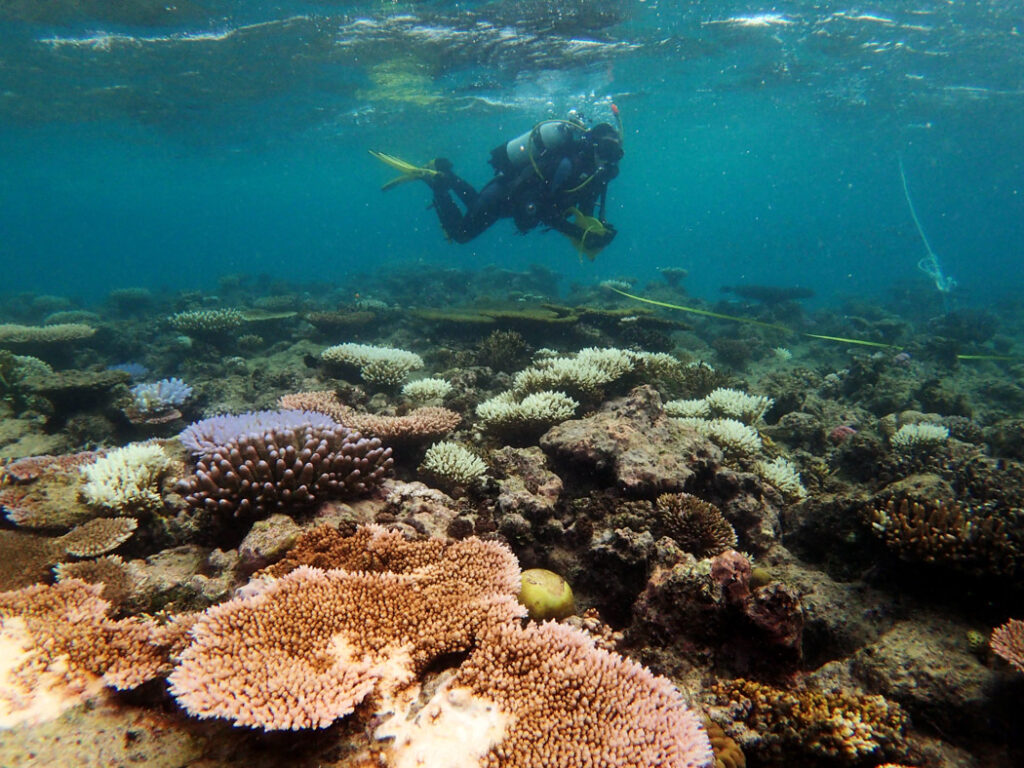
A new forecasting tool from Woods Hole Oceanographic Institution could give reef managers and coastal communities a five-to-six-month head start on one of the ocean’s most destructive events: coral bleaching. Called the Bleaching Event Early Predictor (BEEP), the system works by tracking three large-scale climate patterns in the Atlantic and Pacific oceans that, when they align in specific ways, create the conditions for extreme marine heat stress on Caribbean reefs. For boaters and divers who frequent coral reef waters — and for the coastal economies that depend on healthy reefs — this kind of advance warning could be a game-changer.
As WHOI reports:
Researchers at the Woods Hole Oceanographic Institution (WHOI) have developed a new method to predict coral bleaching five to six months before it occurs, giving reef managers valuable time to protect vulnerable ecosystems.
According to Mariya Galochkina, lead author of the study and MIT-WHOI Joint Program doctoral researcher, “Existing bleaching forecasts track heat stress in near-real time, and also rely on generalized thresholds for predicting bleaching risk, which means they often do not provide reef managers and restoration practitioners with enough lead time to prepare and respond effectively, or the predictions are inaccurate.” “We take a different approach by using large-scale climate patterns that interact to shape regional ocean and atmosphere conditions with a time lag, which lets us identify bleaching risk months in advance.”
To build the tool, the team reconstructed a 72-year bleaching history from CT scans of 44 coral skeleton cores collected on Curaçao, revealing that significant bleaching on the island began around 1990 as ocean temperatures crossed a critical threshold. The bleaching events tracked closely with the combined behavior of three climate modes: Atlantic Multidecadal Variability, El Niño–Southern Oscillation, and the North Atlantic Oscillation. When these patterns converge, they weaken regional winds and suppress the cooling effect of upwelling currents, pushing reef temperatures past the bleaching point. The team hopes to expand BEEP to cover reefs across the Caribbean and other tropical regions.