Eyes On The Deep: How Ocean Imaging Is Transforming Underwater Discovery
Posted Updated
By Elise Hugus, whoi.edu.
From ancient shipwrecks in the Black Sea to a lost WWI submarine off San Diego, the ability to see — and share — what lies on the ocean floor has never been more powerful. A new feature from WHOI’s Oceanus magazine profiles Dwight Coleman, the institution’s director of ocean imaging, who is combining autonomous underwater vehicles, photogrammetry, and AI to create detailed 3D models of the deep sea that are accelerating both scientific discovery and public engagement with the ocean. For anyone fascinated by maritime history, ocean technology, or what lies beneath the harbors and coastlines we navigate, this is a compelling look at the cutting edge.
As Elise Hugus writes for Oceanus:
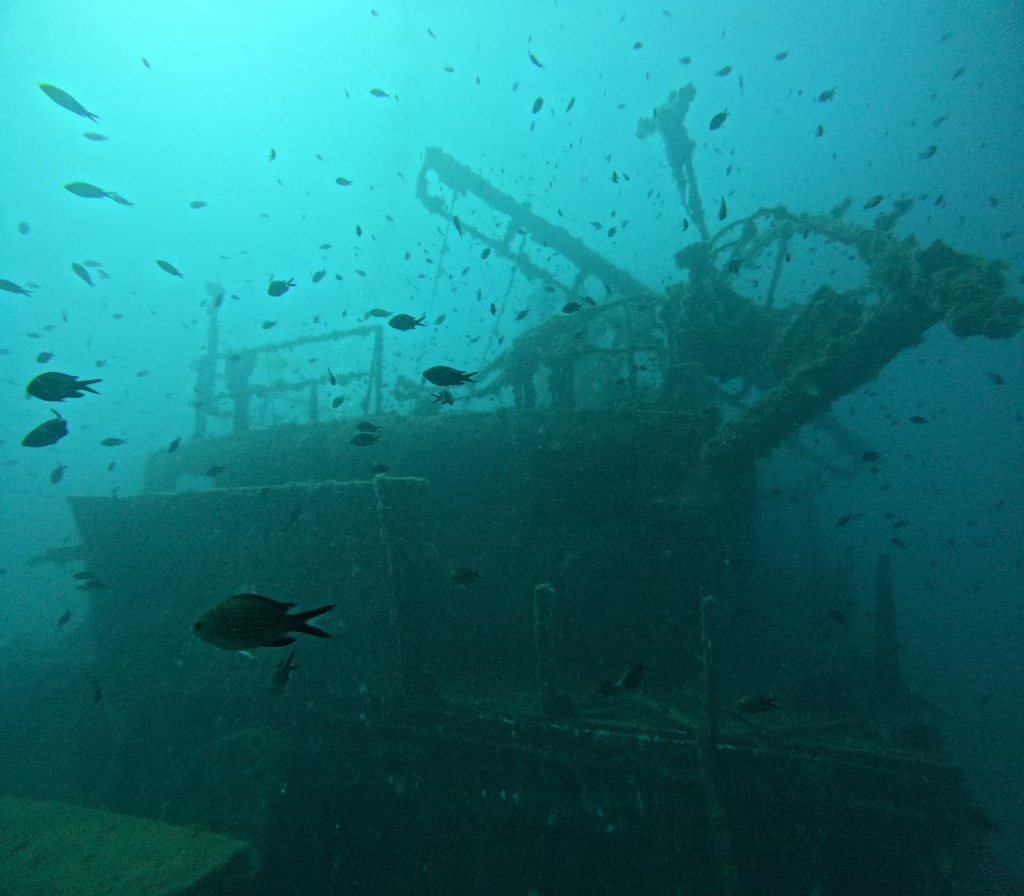
At about 1,000 feet deep, a long, ghostly shape appeared on Coleman’s video monitor. As the vehicle veered closer, details emerged: rope lashing around an upright mast, a rudder and tiller still attached to a streamlined wooden hull. Later estimated at 1,500 years old, this was the best-preserved ship of antiquity discovered at the time.
“The ocean is a deep, dark place that’s very poorly understood, and we don’t have a lot of high-quality imagery to illustrate the environment down there. I think a really powerful way to move our science forward is to visualize it better,” said Coleman.
Coleman’s recent work includes a landmark survey of the USS F-1, a submarine lost off San Diego in 1917 with 19 sailors aboard. Using WHOI’s AUV Sentry for sonar mapping and submersible Alvin for high-resolution photography, his team created 3D photogrammetric models of the wreck — providing closure to families 108 years later while also revealing how marine life colonizes human-made structures on the seafloor. He’s now developing new medium-sized ROVs that will allow scientists to operate vehicles and review imagery remotely from anywhere in the world via satellite, opening deep-sea exploration to researchers who can’t go to sea.
Read the full article here: Eyes on the deep
Originally published on 26 July, 2026.