Giving North Atlantic Right Whales a Check-Up Using Advanced Technology
By fisheries.noaa.gov, fisheries.noaa.gov.
This story is part three of a three-part series. Read about how we are listening for North Atlantic right whales with passive acoustics, monitoring them with aerial surveys, and using boats, drones, uncrewed surface vehicles and satellites to learn as much as we can about them and their habitat. In the Northeast, we work with many partners to track right whales, including mothers and calves, using advanced technology to help inform actions that reduce risks to the species.
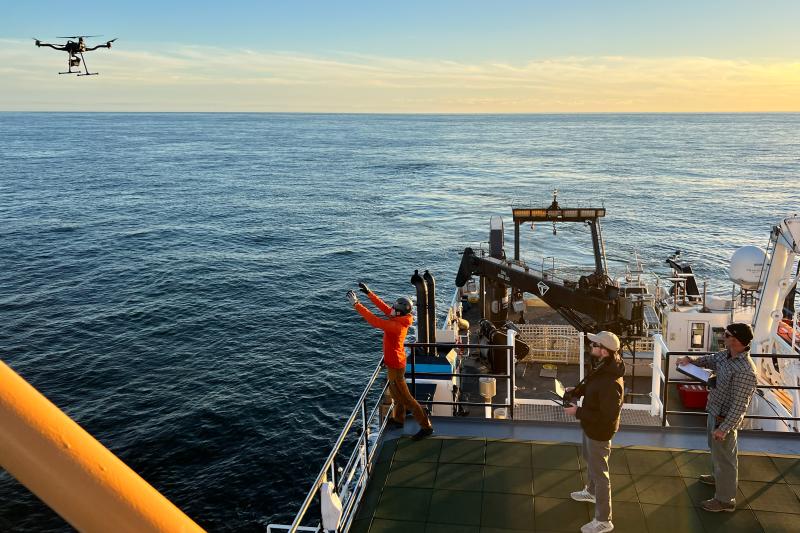
Passive acoustic monitoring and aerial surveys can provide critical information about endangered North Atlantic right whales. But to assess their health, you need to get closer. That’s why we use these techniques in tandem with vessel surveys. From the water, scientists conduct drone photogrammetry, take biopsies and photographs, and even collect breath samples. Our team flies drones and takes samples from the R/V Selkie, a 23-foot boat, in Cape Cod Bay in the spring and in the Southeast over the winter.
Assessing Right Whale Health Using Drones and Biopsies
Taking and analyzing specialized photos using a drone is called photogrammetry. It allows scientists to measure calf growth rates and check on mother right whales’ health. Mothers nurse their calves but do not eat while they are in the Southeast, so they lose blubber until they start feeding again in the Northeast. Our team gets a longer time series by sampling both in the Southeast calving grounds and Northeast feeding grounds. They also use drone imagery to examine scarring and entanglements. Our team processes the photos using an open source software called MorphoMetriX .
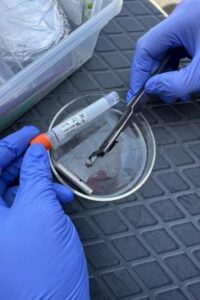
Our vessel survey teams also collect right whale biopsy samples. Along with state partners, they biopsied all but one of the 23 newborn calves this season. Samples provide critical information about the genetics of the calves. Genetics allow us to identify individuals and trace family relationships. These samples can also inform scientists about the health of the calf. That information is added to the North Atlantic Right Whale Catalog.