Image Credits: Freerange Stocks.

Migrating Seabirds Are Bringing Forever Chemicals into the Arctic

10/23/2024 - By William von Herff. New research shows how toxic chemicals hitch a ride with seabirds flying from southern latitudes to the Arctic. Between March and May each year, 15 million black-legged kittiwakes gather from across the North Atlantic and Pacific Oceans to nest and breed on rocky Arctic cliffs—some making the journey… SEE MORE
Image Credits: Pexels.com.

In the Gateway to the Arctic, Fat, Ice and Polar Bears are Crucial. All Three are in Trouble

10/21/2024 - By Seth Borenstein. Searching for polar bears where the Churchill River dumps into Canada’s massive Hudson Bay, biologist Geoff York scans a region that’s on a low fat, low ice diet because of climate change. And it’s getting lower on polar bears. There are now about 600 polar bears in the… SEE MORE
Image Credits: goodfon.com.

Offering a Dose of Healing, Curious Beluga Whales Frolic in a Warming Hudson Bay

10/17/2024 - By Seth Borenstein. Playful large white beluga whales bring joy and healing to Hudson Bay. Their happy chirps leap out in an environment and economy threatened by the warming water melting sea ice, starving polar bears and changing the entire food chain. Loud and curious belugas swarm boats here, clicking, nudging and frolicking.… SEE MORE
Image Credits: Flickr.com.

For at Least a Decade Quinault Nation has Tried to Escape the Rising Pacific. Time is Running Out

10/16/2024 - By Hallie Golden. Standing water lies beneath the home Sonny Curley shares with his parents and three children on the Quinault reservation a few steps from the Pacific Ocean in Washington’s Olympic Peninsula. The back deck is rotting, and black mold speckles the walls inside, leaving the 46-year-old fisherman feeling… SEE MORE
Image Credits: PxHere.

The Galapagos Islands and Many of Their Unique Creatures are at Risk from Warming Waters

10/15/2024 - By Alie Skowronski. GALÁPAGOS ISLANDS, Ecuador  — Warm morning light reflects from the remains of a natural rock arch near Darwin Island, one of the most remote islands in the Galapagos. In clear, deep blue water, thousands of creatures — fish, hammerhead sharks, marine iguanas — move in search of… SEE MORE
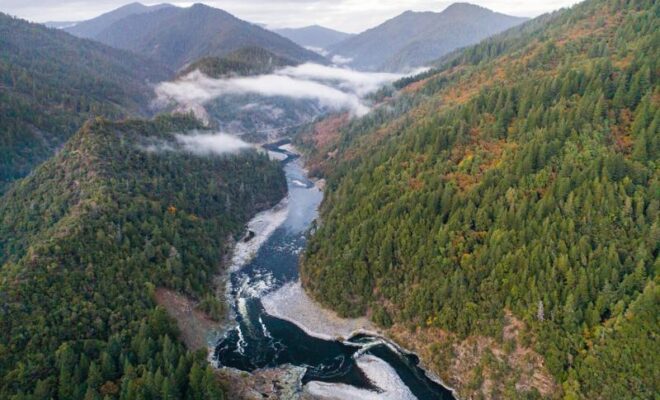
The removal of four large dams from the Klamath River allows salmon to again reach about 400 miles of their original habitat that had been blocked for many decades. Photo courtesy Jason Hartwick/Swiftwater Films

Final Step in Klamath River Dam Removal Opens Path for Returning Salmon

10/10/2024 - By fisheries.noaa.gov. NOAA Fisheries led coordination efforts to protect water quality. Heavy equipment removed the final obstacle separating the Klamath River from the Pacific Ocean on Tuesday. The reconnected river was turbid but remained safe for fish after crews took steps to avoid erosion and impacts to water quality. “These… SEE MORE
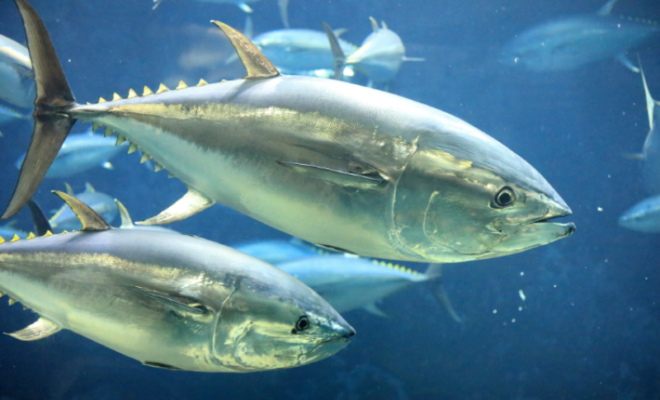
Pacific bluefin tuna swim underwater. Credit: Adobe Stock

More U.S.-Caught Pacific Bluefin Tuna to Hit U.S. Markets Next Year

10/9/2024 - By fisheries.noaa.gov. Increased catch limits culminate a decade-long international effort to rebuild the once-imperiled species. Commercial Pacific bluefin tuna vessels in the United States can harvest almost 80 percent more fish in 2025–2026. The Inter-American Tropical Tuna Commission increased catch limits during a meeting in Panama in early September. This decision comes 3… SEE MORE
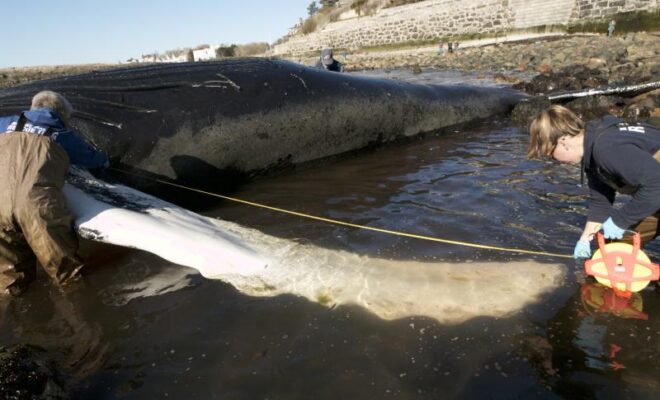
Authorized responders from the Seacoast Science Center take measurements of a dead humpback whale that stranded in Marblehead, Massachusetts. Credit: Seacoast Science Center.

$4 Million Awarded for Marine Mammal Rescue Efforts through Prescott Grant Program

10/7/2024 - By fisheries.noaa.gov. NOAA Fisheries recommended awarding 37 grants, totaling more than $4 million, through the John H. Prescott Marine Mammal Rescue and Assistance Grant Program to our partners in 16 states. NOAA Fisheries recommended awarding 37 grants, totaling more than $4 million, through the John H. Prescott Marine Mammal Rescue and… SEE MORE