Optics Technology: At the Heart of Marine Research
Videos and images from advanced underwater cameras are a critical component of collecting data. We use this information to make informed management decisions for marine species and habitat.
At NOAA Fisheries, optics technology plays a major role in gathering data to better understand our marine and coastal ecosystems. Optics uses tools such as advanced underwater cameras to generate video and images that scientists use to better understand biodiversity and track the behavior of species.
To collect data, many surveys have traditionally relied on securing time on a NOAA ship. Researchers typically sail to the area where the survey is taking place, but they are limited to collecting data in areas the ship can navigate. Ship time can be very costly, and researchers must plan their efforts around the time of year the ship is available.
Optics increases our capacity to help gather this same data by using video and image data instead of human observation. This is particularly helpful in the deepest parts of the ocean, which can be difficult to access due to a lack of light and extreme pressure. We are able to “see” the underwater ecosystems we protect while ensuring safer operations. Incorporating this information into our research provides a richer understanding of precious marine resources.
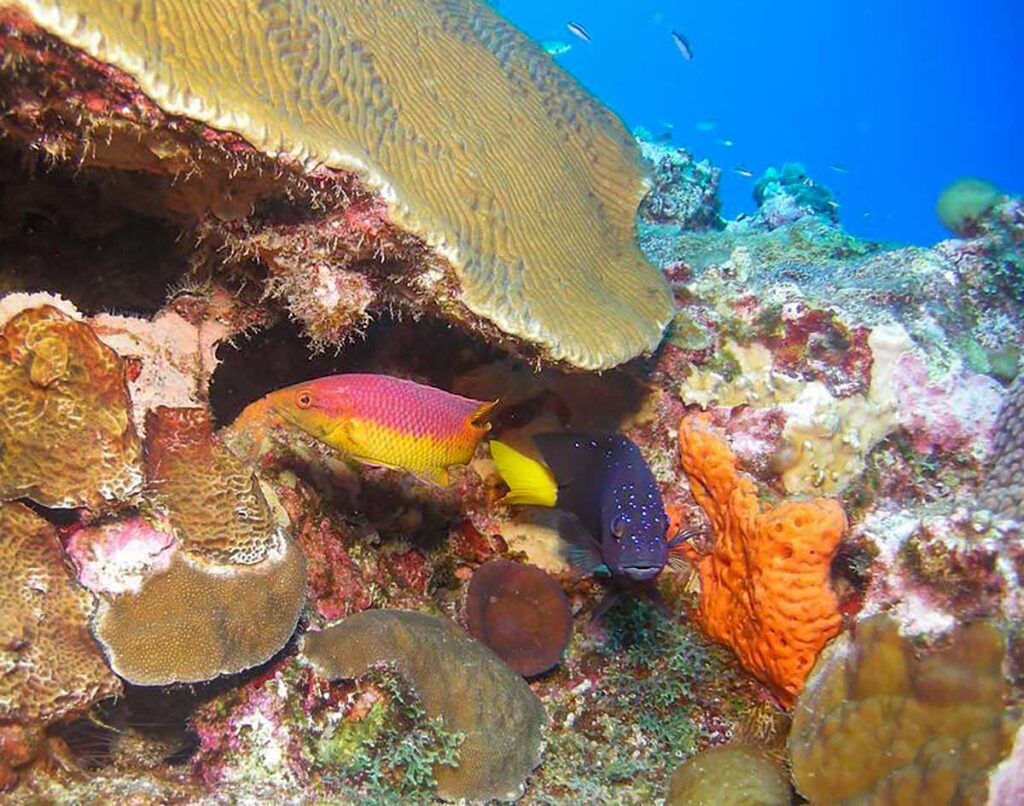
The findings have a direct impact on management decisions for habitat and species conservation. In warmer climates, we use optics to survey corals in the National Coral Reef Monitoring Program. In science centers across the country, we use remote underwater video cameras to identify marine resources.
In colder climates such as remote locations of Alaska, we identify marine mammals with drone footage and infrared optics. And in Antarctica, we attach cameras to autonomous underwater vehicles such as gliders to gather information on krill and plankton.
Data Challenges
As researchers increasingly rely on optics, however, they are faced with a growing problem: The videos and images they collect are generating massive amounts of data. Dr. Matthew Campbell, Gulf and Caribbean Reef Fish Branch Chief for the Southeast Fisheries Science Center, shared his insights into the challenge:
“Once a survey is complete, we will have collected thousands of hours of footage that must be reviewed. Many surveys deploy hundreds—or even thousands—of cameras. The sheer amount of data can be overwhelming.”
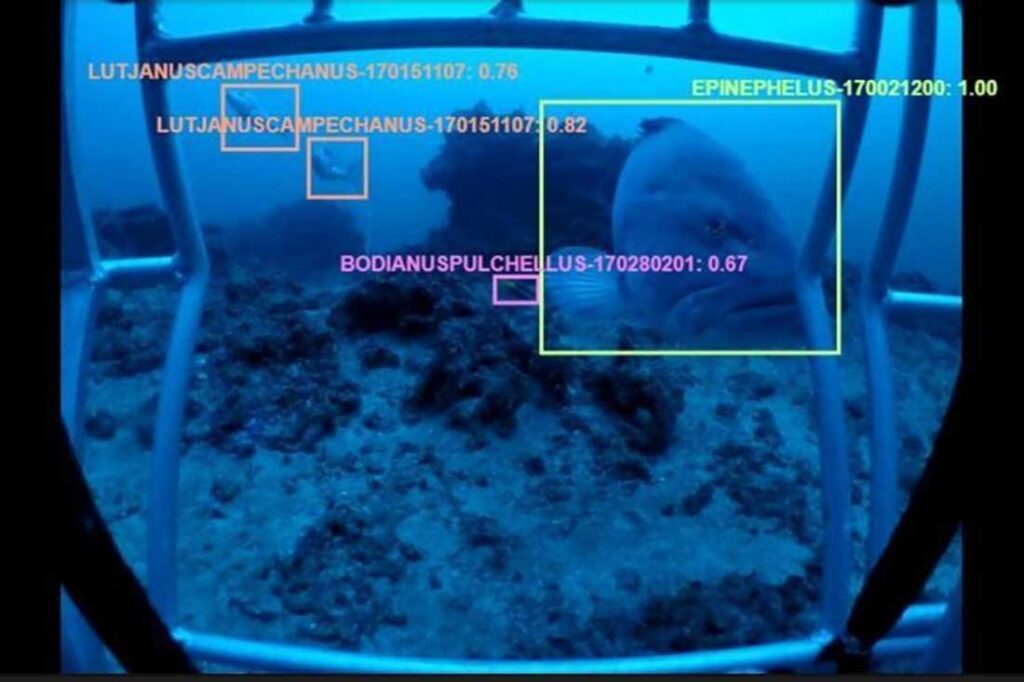
For many surveys, transforming raw data into usable information can take a very long time. Each data point must be manually annotated for identification and all fish counts must be recorded. The process often consists of correctly tagging thousands of data points in a video or image one at a time.

A spherical device equipped with cameras on all sides is used for some surveys. It is dropped to the ocean floor to record fish and their surroundings in every direction. Credit: NOAA Fisheries
Each survey team has a limited amount of resources available, especially in terms of personnel, so a bottleneck can occur during the post-processing phase. Once the annotation stage is complete, researchers can then start the process of analyzing the data, which can also be time-consuming. Fully processing and analyzing optical data can take a year or longer, depending on the amount of data collected.
Once collected, data storage can also be a challenge. Many researchers opt to store the data locally, which means they are limited to the local network’s computational power. In addition, only those who have access to the local network can work on the dataset. As a result, the data are not available for others to help with the analysis process or to conduct related scientific research.
Of course, working with our survey data requires highly technical skills. There is limited flexibility on which software to use. Many researchers specializing in fisheries biology must first learn technical programming languages and software before they analyze any data. While user abilities range from entry-level to expert-level, more personnel with advanced computational skillsets are needed.
To address current challenges around data collection and with optical processing and analysis, we are focusing our investments in three main categories: data acquisition, powerful processing tools, and increased accessibility. Find out more at fisheries.noaa.gov.
Photos of Optics Technology: At the Heart of Marine Research