Practice Makes Perfect: Drone Operations in Hawaiian Islands Humpback Whale National Marine Sanctuary
By sanctuaries.noaa.gov, Published in sanctuaries.noaa.gov.
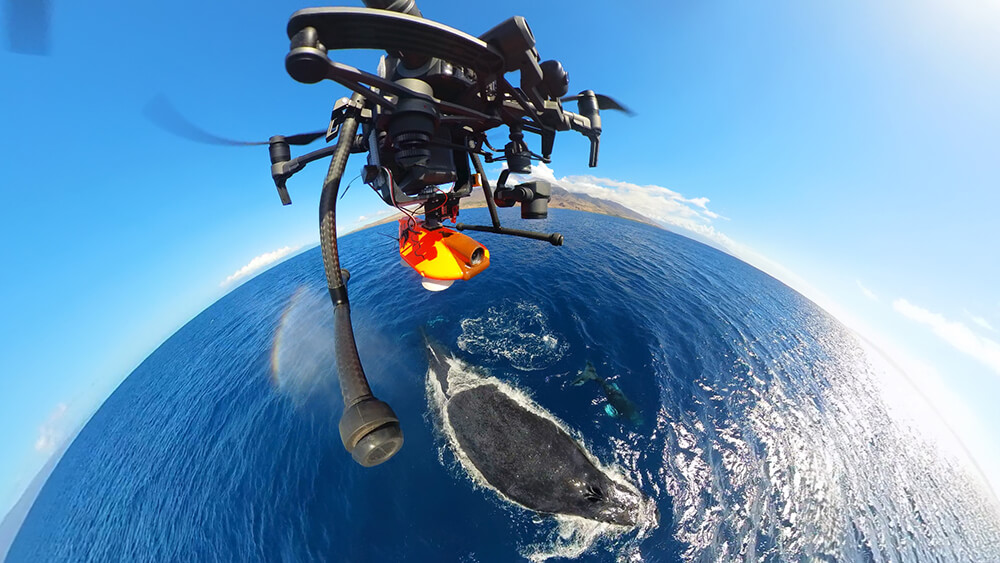
A well-placed multi-sensor tag on a humpback whale allows researchers to track its underwater movements and observe its behavior. But how do whale researchers practice dropping these suction cup tags from a drone onto the back of a massive ocean animal? With a surfboard, of course! At the onset of humpback whale (koholā) season in Hawaii, the research team at Hawaiian Islands Humpback Whale National Marine Sanctuary spent a full morning practicing drone operations from aboard the R/V Koholā. The ocean was calm, the sky was clear, and the team took to the air, running through tag drop drills with the precision of a pit crew.
We asked sanctuary research coordinator and whale expert, Dr. Marc Lammers, for more details. Below is a look at how the day went, and some interesting details about how this top-notch team stays focused and ready throughout each season to tag, track, and study the majestic koholā that migrate to these sanctuary waters each winter.
Why are you tagging whales with an aerial drone?
Aerial drones give researchers a safe and precise way to place temporary suction-cup tags on humpback whales. These tags record detailed information—such as dive depth, body orientation, and underwater sound—that would otherwise be difficult to gather.
Lammers says that they still maintain the pole system, but the team primarily uses aerial drones for deployments: “Drone tagging has become the preferred method because it allows us to collect high-resolution data while maintaining greater distance and reducing disturbance to the whales. It also increases tagging precision and expands the range of behaviors we can safely approach.”
Deploying tags from a drone keeps the research vessel farther from whales, reduces disturbance, and improves tagging accuracy and efficiency. The long-reach pole remains a valuable backup when weather or sea conditions—such as high winds—limit drone use
Read the full article here: Practice Makes Perfect: Drone Operations in Hawaiian Islands Humpback Whale National Marine Sanctuary