Why Are Corals So Colorful? Understanding Reef Health Indicators
By Woods Hole Oceanographic Institute, whoi.com.
For harbor communities and coastal areas that depend on healthy reef ecosystems, understanding coral coloration provides valuable insights into reef health. Coral reefs protect harbors from wave action, support commercial and recreational fisheries, and indicate overall marine ecosystem conditions—making the science behind coral color more than just aesthetic curiosity.
According to Woods Hole Oceanographic Institution’s Ocean Learning Hub:
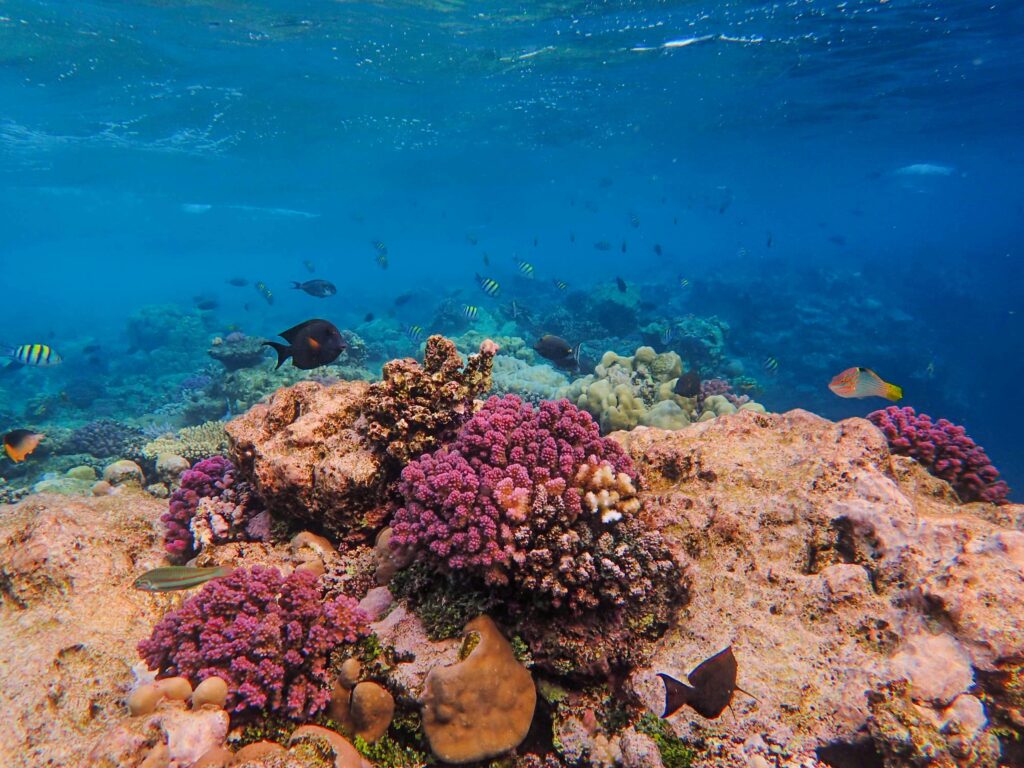
Corals are living animals. A colony of coral polyps lives in a skeleton-like framework of its own making. It’s equal part anchor and house. This framework is what many people think of as coral. By itself, the skeleton is ghostly white. It’s the animals living in the skeleton that give it its color.
Coral polyps catch food drifting in the water. But corals get most of their nutrients from another source. Single-celled algae, called zooxanthellae (zoo-zan-THEL-ee), live in their tissues as symbionts. The algae, like plants, turn sunlight into sugar. This process is called photosynthesis. They use chlorophyll, the same structures found in plants, to do this. As in plants, it’s the chlorophyll that gives the algae their green-brown color.
All living corals have this green-brown color from the algae. But many corals appear much brighter. These corals also produce protein pigments. These can be a variety of colors, but most reflect light in purple, blue, green, or red. Some pigments are fluorescent. They absorb one color of light, in this case, blue. Instead of reflecting that color, they emit it as another color, usually green or red.
The article explains that these fluorescent pigments may help algae photosynthesize by converting blue light to usable wavelengths, while also protecting corals from harmful UV radiation. Understanding these color mechanisms helps researchers and coastal communities monitor reef health and predict stress responses.
Read the full article here: Why are Corals so Colourful