Another Ocean Drone Joins NOAA’s Growing Fleet
By noaa.gov, noaa.gov.
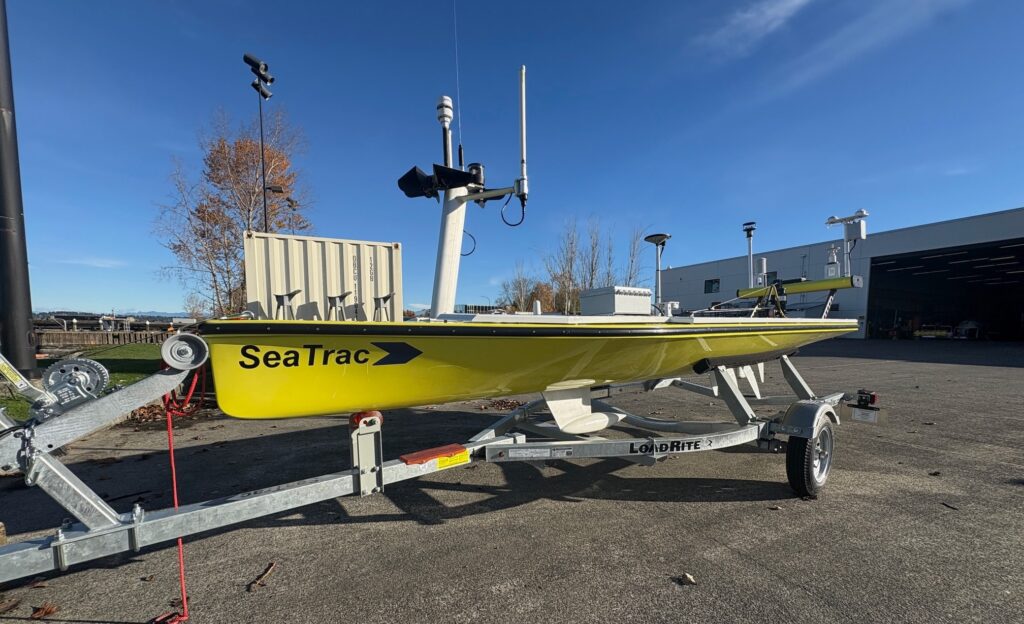
It’s bright yellow, solar-powered and self-propelled. It can stay at sea for months, collecting data with a wide variety of off-the-shelf and NOAA-designed instruments. It’s emerging as the next important member of NOAA’s growing Uncrewed Surface Vehicle(USV) fleet.
The SeaTrac project is the latest example of one of PMEL’s strengths: collaborating with industry to transform a commercially available platform with NOAA-designed modifications to enhance ocean and atmospheric observation capabilities.
“The SeaTrac offers formidable adaptability, mission flexibility, reduced cost, ease of transport and zero carbon footprint,” said Scott Stalin, acting director of the NOAA Pacific Marine Environmental Laboratory’s Engineering Development Division. “It checks almost every box.”
The SeaTrac is a mid-size ocean drone manufactured by a small Marblehead, Massachusetts company. At 15 feet long and 600 pounds, it can be easily towed, stowed, or trailered, enabling rapid deployment from ship or shore to respond to sudden events such as storms, buoy failures, or gaps in ocean observations.
Since it’s self-propelled, the SeaTrac can operate in conditions that challenge wind-powered USVs, such as calm winds, strong currents, or near the sea ice edge. Its ability to loiter on station like a buoy will allow it to lie in wait for an oncoming storm or atmospheric river. A flexible payload bay allows engineers to install or replace instruments to configure it for different missions.

Testing and validation
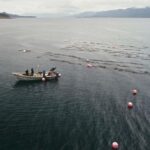
PMEL engineers recently conducted system tests near Puget Sound, programming an extensively modified SeaTrac to navigate from a shore deployment to a tsunami buoy. The deployment focused on validating sensor integration, data transmission reliability, and overall system robustness in a lower-risk environment before open-ocean testing.
Read the full article here: Another ocean drone joins NOAA’s growing fleet
Originally published on April 9, 2026.