Luxury Antarctic Cruises Double as Climate Research Platforms Through WHOI-Ponant Partnership
By Laura Castanon, whoi.edu.
A new partnership between Woods Hole Oceanographic Institution and French expedition cruise line Ponant is turning luxury Antarctic voyages into working science missions — giving researchers rare access to some of the most remote glaciers on the planet while passengers watch the work unfold in real time. For those who follow ocean science and maritime exploration, it’s a creative model that addresses a persistent challenge: getting scientists to places research vessels can’t always reach.
As Laura Castañón writes for WHOI’s Oceanus magazine:
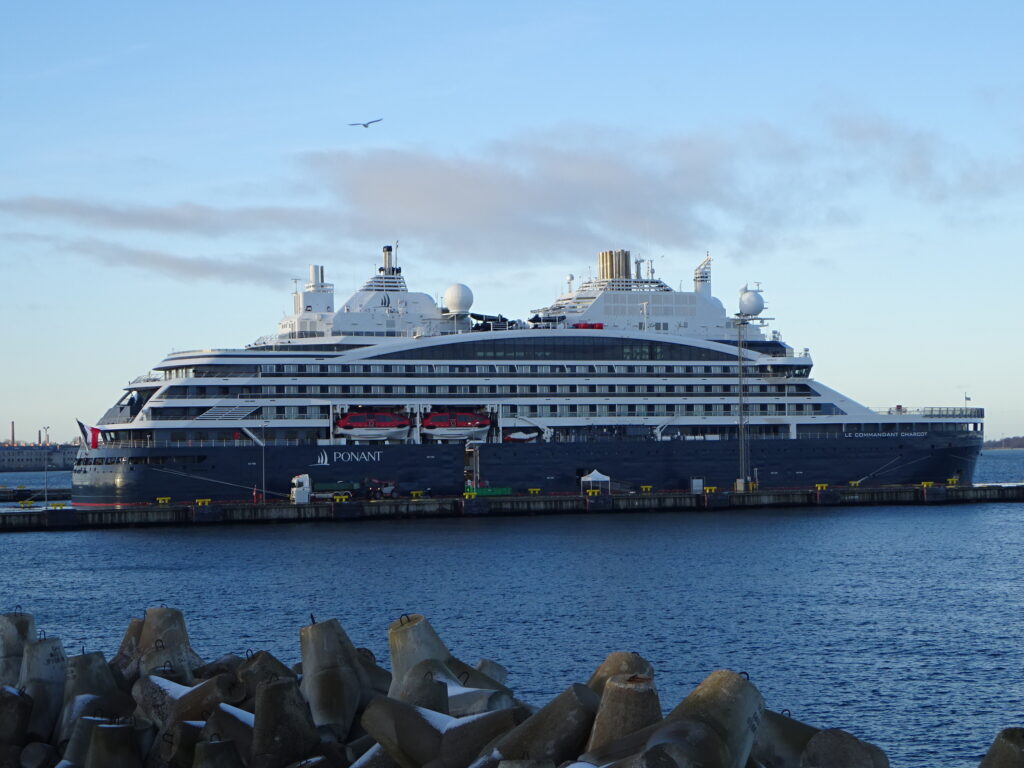
The three-year partnership is providing berths aboard Le Commandant Charcot for WHOI scientists to conduct fieldwork in some of the most remote parts of the planet. The 200-passenger ship was designed with spaces specifically dedicated to science, including wet and dry labs, and is a hybrid polar exploration vessel that can penetrate thick, multiyear sea ice. This allows it to navigate uncharted ice flows and visit areas of Antarctica and other regions that are beyond the reach of most passenger ships.
The research focuses on measuring glacier heights where they meet the ocean — data critical to understanding when and how Antarctic ice may collapse and raise global sea levels. Current computer models estimate glacier fronts will fail at around 295 feet, but no one has verified that in the field. WHOI doctoral students aboard have been collecting laser altimeter readings and high-resolution photographs of glacier faces from angles satellites can’t capture. As one researcher noted, virtually every measurement collected represented new data from areas with almost no prior observations.
Beyond the science, the setup gives passengers a front-row seat to active fieldwork — through onboard lectures, lab tours, and conversations over dinner — blending expedition cruising with genuine public engagement in climate research.
Originally published on April 9, 2026.