The Container Ship That’s Also an Ocean Science Lab
Posted Updated
By Amy E. Nevala, whoi.edu.
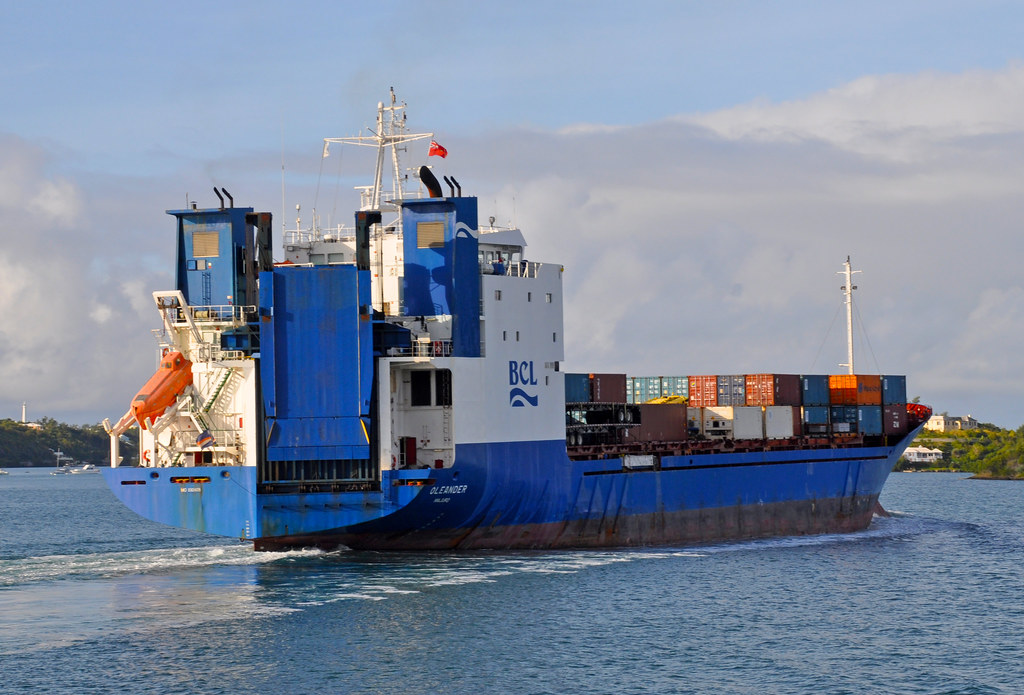
Some of the most valuable ocean data in the Atlantic isn’t being collected by a research vessel — it’s riding aboard a container ship. The M/V Oleander, which makes twice-weekly cargo runs between Port Elizabeth, New Jersey, and Hamilton, Bermuda, has carried scientific instruments since the late 1970s, forming one of the longest-running ocean observation programs in the world. Now, with the addition of a robotic underwater microscope, the ship is capturing detailed images of microscopic plankton across 750 miles of open ocean — giving scientists an unprecedented look at the hidden life that drives marine food webs and the global carbon cycle.
As Amy E. Nevala writes for WHOI’s Oceanus magazine:
For nearly half a century, the Oleander has transported cargo between Port Elizabeth and Hamilton, delivering supplies from food and medicine to lumber and scooters. Since the late 1970s, the vessel, owned and operated by Bermuda Container Line, has also carried scientific instruments collecting biological, chemical, and physical marine data, forming one of the longest-running ocean time series.
“It’s a fortuitous relationship,” said Magdalena Andres, a physical oceanographer who collaborates with biologist Heidi Sosik at Woods Hole Oceanographic Institution to collect data using instruments on board Oleander. “Bermuda needs supplies, so the ship runs year-round, and that route happens to be incredibly valuable for ocean science.”
The newest addition is an Imaging FlowCytobot, first prototyped at WHOI in 2005, which captures tens of thousands of phytoplankton images daily from seawater pumped through the engine room. Each crossing takes the Oleander through the Gulf Stream and three distinct water masses — from cool continental shelf waters off New Jersey, through the warmer Slope Sea, and into the subtropical Sargasso Sea — creating a natural transect for studying how circulation and climate variability shape marine ecosystems. Scientists hope to expand this model to other commercial ships worldwide, building a global ocean-observing network powered by the vessels already crisscrossing the seas.
Read the full article here: The Container Ship That’s Also an Ocean Science Lab
Originally published on May 20, 2026.