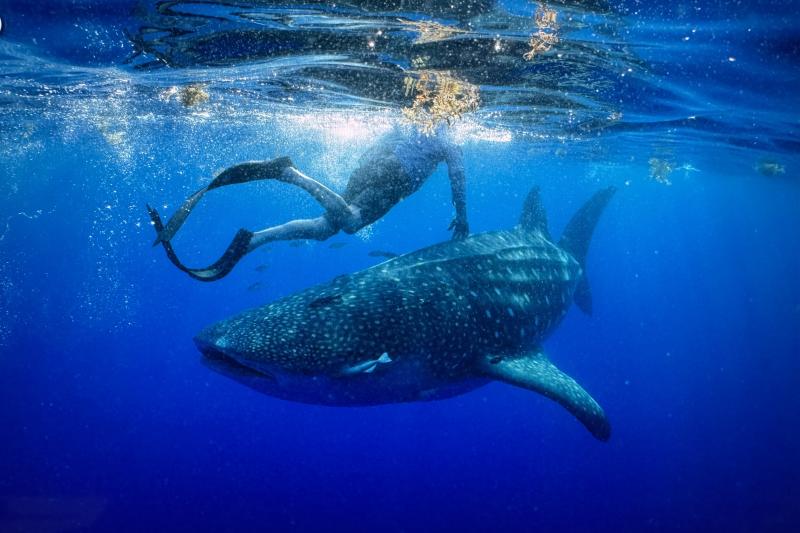
A Year in the Life of Larry the Whale Shark
By fisheries.noaa.gov, fisheries.noaa.gov.
One year ago today, researchers deployed a satellite tag on a whale shark off the coast of Tampa Bay, Florida. They never could have anticipated the epic journey that would ensue.
On May 28, 2025, researchers set out from Boca Ciega Bay, Florida, heading into the Gulf of America aboard a 36-foot vessel owned by physician Dr. Larry Spetka. Dr. Spetka graciously hosted the team as they searched for whale sharks recently spotted near Tampa Bay. Their goal: find and tag whale sharks to track their movements and migratory patterns in the Gulf and beyond.
Thanks to sighting reports from local anglers to the University of Southern Mississippi’s whale shark reporting form, the team quickly located a sizable group of sharks. Whale sharks are the largest fish in the ocean, but there aren’t very many of them, so scientists rely on sightings reports from the public to find and study them.
“Citizen scientists are a critical part of the research we conduct. We cannot be on the water all the time, so when the public reports their sightings, they are helping us glean knowledge on whale shark behavior and movements,” said Jill Hendon, director of the Center for Fisheries Research and Development at The University of Southern Mississippi and co-lead on this project.

Uncovering a Culinary Clue: the Egg Buffet
As the team donned snorkel gear and slipped into the water, the first thing they noticed was all the fish eggs in the water. The scientists believe this is what the whale sharks were here for—a buffet of fresh fish eggs.
“There were so many eggs in the water it was almost hard to see the sharks,” recalled Dr. Eric Hoffmayer, NOAA fishery biologist and co-lead on the project. “Based on what we previously knew about whale shark feeding, and the timing of fish spawning, we had a theory about what species the eggs were from but decided to collect samples to confirm.”
After sending the eggs off for genetic sampling, the team learned they were from a species previously undocumented as a whale shark food source in the Gulf of America. In past years, whale sharks were observed feeding on the eggs of little tunny—also called false albacore or bonita. This time, the eggs were from Spanish sardines. This uncovered a new clue about whale shark diets, and which prey species may be influencing their distribution and movements.