Deep Diving and Innovation to Restore the Gulf’s Mesophotic Corals
By fisheries.noaa.gov, fisheries.noaa.gov.
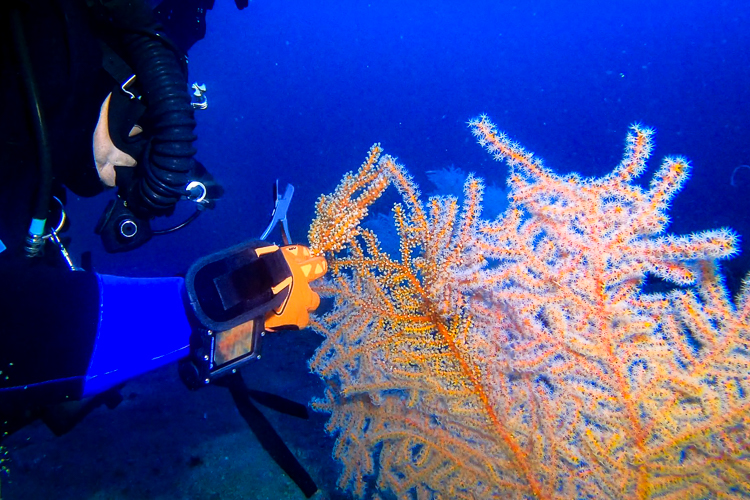
Deep in the Gulf of America lies a vital but little-known habitat. In the “mesophotic” (middle light) zone are coral ecosystems that are essential to the Gulf’s food web. In 2010, the Deepwater Horizon oil spill injured extensive areas of this delicate environment. Today, scientists across federal agencies and partner organizations are working together to restore these foundational habitats.
In the spring of 2026, a mission on board NOAA Ship Nancy Foster set out to achieve ambitious restoration goals. The team focused on planting propagated corals of species Swiftia exserta, Muricea pendula, and Thesea nivea, and collecting samples to better understand the seafloor and local water quality. Some of the corals were planted on new dome-shaped concrete structures. They were specially designed by Marine Applied Research and Exploration to support coral growth and provide habitat for other small marine animals.

Getting the corals safely down to the bottom is a challenge. In the past, scientists used “coral elevators.” These large, weighted platforms can be lowered from the ship to the seafloor where a remotely operated vehicle can then move the corals into place. However, these were cumbersome to maneuver, and met significant resistance as they moved through the water. Plus, it’s hard for an ROV, or remotely operated vehicle, to precisely place individual coral fragments on the new dome structures. This challenge called for a new way to transport the corals from the surface down to the bottom, and required the use of human divers to plant them precisely in their intended place.