Is Offshore Construction Noise Stressing New England’s Lobsters? WHOI Scientists Want to Know
By Kiran Johnson, whoi.edu.
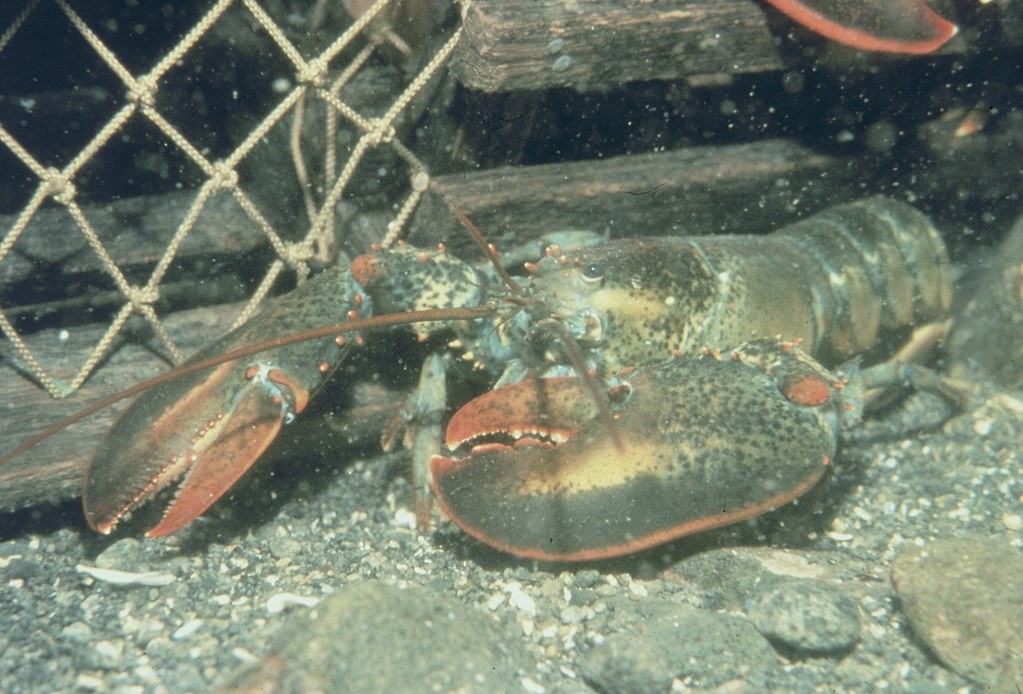
As offshore wind farms multiply along the New England coast, a question with real consequences for one of the region’s most valuable fisheries is getting its first rigorous scientific investigation: does the noise from wind farm construction affect the American lobster? WHOI scientists are working alongside commercial lobster fishermen to measure underwater sound levels near active wind farm sites and test how lobsters respond to that noise in the lab — research that matters to every harbor community where lobster traps stack on the dock.
As Kiran Johnson writes for WHOI’s Oceanus magazine:
As the ocean warms, lobsters have been moving farther offshore where the water is cooler — and where a growing number of wind farms are being built. These include two fully operational offshore wind farms in New England waters, Block Island Wind Farm and South Fork Wind, as well as others at various stages of development along the East Coast.
Sounds from the construction and operation of these wind farms introduce a new source of noise into a rich underwater soundscape composed of dolphin whistles, fish calls, and physical sounds from wind, waves and rain. Much of it occurs at the same low frequencies that lobsters were recently shown to be capable of detecting.
The research, funded by NOAA Sea Grant’s American Lobster Initiative, pairs WHOI marine ecologist Andria Salas and associate scientist Aran Mooney with the Commercial Fisheries Research Foundation, where lobster fishermen deploy acoustic recorders inside traps at varying distances from the South Fork and Revolution Wind sites. Back at WHOI, Salas exposes lobsters to recorded boat and pile-driving noise while monitoring heart rate and movement with a custom-built sensor she calls the “lobster Fitbit.” The combination of over 500 cumulative recording days of field data and controlled lab experiments should reveal whether construction noise is a passing annoyance or a genuine physiological stressor for lobsters.
For New England’s lobster industry and the coastal communities that depend on it, the answers can’t come soon enough.