Seeing Double: Good News for Rare False Killer Whales in Hawaiʻi
By fisheries.noaa.gov, fisheries.noaa.gov.
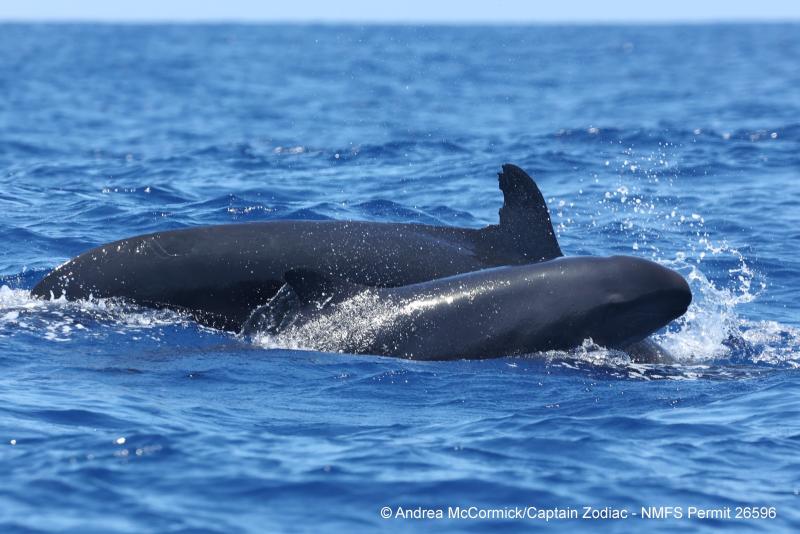
Research partners spotted two endangered main Hawaiian Islands insular false killer whale calves this year, and they’re starting to grow up! This is a rare and exciting discovery for this small, resident population of only about 140 individuals

NOAA staff with the Hawaiian Islands Humpback National Marine Sanctuary first photographed the newborns off Maui in February. In August, Captain Zodiac staff spotted them again and alerted Cascadia Research Collective, a NOAA collaborator.
The first 6 months are an especially vulnerable time for calves, so seeing them swimming strong at roughly 8 months is encouraging.
This is big news for the only endangered population of false killer whales in the world!
Newborn Calf Sightings Are Rare

Only 10 newborn calves have been documented in this population since 1999. That makes this discovery extra special.
NOAA Fisheries works with partners to recover the endangered population. With roughly 140 individuals remaining, recovery is a slow process—and not just because of the small population size.
Rebuilding their numbers is also slow because of false killer whale biology. Females take nearly a decade to reach calf-bearing years.
We’re still working to determine the actual reproductive rate for the endangered population, but data indicates females typically give birth only once every 7 to 9 years. Over a lifetime, that translates to about 4 to 7 potential calves per female.
False killer whales are highly social animals that stick together. The main Hawaiian Islands resident population is especially close knit. In fact, they’re genetically distinct from other false killer whales.
We refer to them as a resident population because they live within about 50 miles of the main Hawaiian Islands—a distance roughly the length of Oʻahu.
Read the full article here: Seeing Double: Good News for Rare False Killer Whales in Hawaiʻi
Originally published on 16 September, 2026.