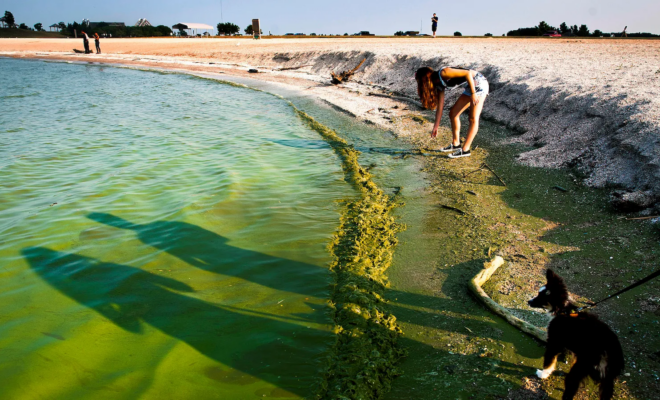
![mage of a harmful algal bloom in Lake Erie as seen from the NOAA/NASA Suomi-NPP satellite on August 16, 2015. The Ocean Color Instrument on GeoXO will overcome the limitations of low-Earth orbiting satellites whose observations are often affected by cloud cover and sunglint. [Credit: NOAA]](https://www.usharbors.com/wp-content/uploads/2024/07/Algal-bloom-16Aug2015-SNPP_small.png)
GeoXO’s OCX Instrument Will Be Game Changer for Satellite Ocean Observations
7/26/2024 - By nesdis.noaa.gov. After nearly 50 years of GOES satellites providing critical Earth-observing data and imagery, NOAA is working on its next generation series of advanced geostationary satellites—the Geostationary Extended Observations mission, or GeoXO. GeoXO will host a payload of new instruments that will provide unprecedented information for addressing our changing planet… SEE MORE