Magnuson-Stevens Act at 50: Charting a Course to Sustainable Fisheries
By fisheries.noaa.gov, fisheries.noaa.gov.
This landmark legislation set the United States on track to become a world leader in sustainable fisheries management.
In April, we celebrated the 50 years since the United States signed the Magnuson-Stevens Act. This landmark law set the United States on a course toward sustainably and cooperatively managed marine resources. But in order to appreciate how far we’ve ventured, it helps to understand why we embarked.
Vacuuming the Seas
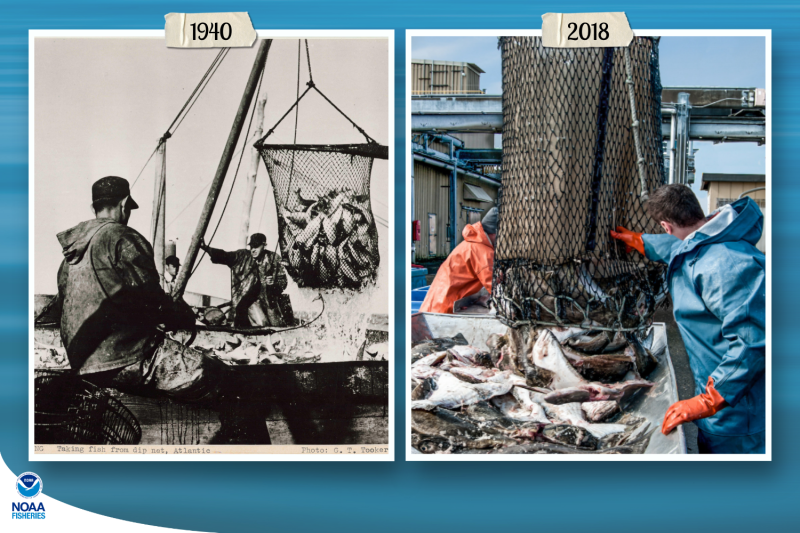
The mid-20th century was a boom time for fishing around the world. Technological advances changed how people harvested, transported, and consumed seafood. More fish were being harvested off the coasts of the United States, but not necessarily by American fishermen.
Between 1965 and 1975, the volume of fish caught by foreign fishing vessels in the United States exceeded the catch of domestic harvesters. The newer, larger, far-ranging factory trawlers of the foreign fleets would anchor just beyond the 3-nautical-mile U.S. territorial limit. As Senator Warren Magnuson (D-Washington) recalled, the fleets were “virtually vacuuming the seas” of valuable marine life—and economic opportunity. When they depleted one stock, they simply moved on to the next. In many cases, they sold their harvest back to American consumers after processing.

“If the U.S. is to maintain world prominence,” warned Magnuson, “we must learn to steward our declining resources.” He partnered with Senator Ted Stevens (R-Alaska), Representative Don Young (R-Alaska) and Representative Gerry Studds (D-Massachusetts) to push for action through extensive deliberations in both chambers of Congress.
Lawmakers agreed that a serious problem existed, but they debated how to solve it. The 94th Congress considered dozens of proposals before combining ideas into one law. On April 13, 1976, they passed what is now known as the Magnuson-Stevens Act.
A Law that Charts New Territory
The Magnuson-Stevens Act introduced two major changes to U.S. federal fisheries management. First, it created a 200-nautical-mile “fishery conservation zone”—later redesignated an “Exclusive Economic Zone” around our coasts. American fishermen have the first right to fish marine species in this area. Second, the Act created eight regional fishery management councils. They established a collaborative and tailored approach to managing the domestic fishing industry in the newly claimed federal waters. These councils would bring together representatives from state governments, industry, and other interests to develop fishery management plans for the stocks in their regions, adhering to national standards.
Read the full article here: Magnuson-Stevens Act at 50: Charting a Course to Sustainable Fisheries
Originally published on May 8, 2026.