Restoring Habitat for Great Lakes Fish at the Historic Edsel and Eleanor Ford Estate
By fisheries.noaa.gov, fisheries.noaa.gov.
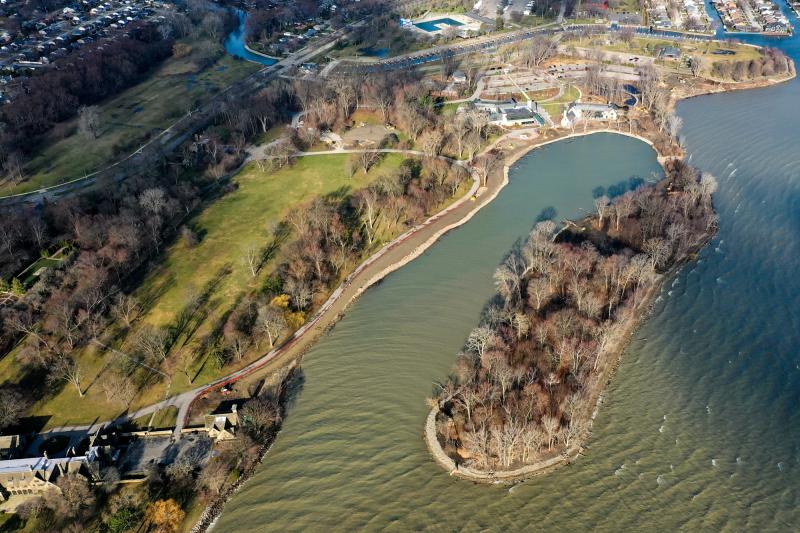
With $7 million in funding from NOAA Fisheries, the Ford House estate on Lake St. Clair in Michigan is rebuilding shoreline habitat for fish and other wildlife while expanding access and educational opportunities for visitors.
NOAA Fisheries’ Office of Habitat Conservation has established a unique partnership with Ford House, the historic 1920s estate of Eleanor and Edsel Ford. Together, they are restoring shoreline habitat for fish and other wildlife on Michigan’s Lake St. Clair. About 99.9 percent of Michigan’s shoreline is hardened with concrete slabs and rock piles. Shoreline hardening helps prevent erosion and flooding, but it also removes important fish habitat.
“The hardened shoreline essentially eliminates that nearshore habitat that’s important for fish spawning, breeding, and nursery areas,” said NOAA Marine Habitat Resource Specialist Terry Heatlie. “It’s also tough on turtles and other species that need to move between the land and water.”
Across the lake in Canada, the contrast between the two shores is stark.
“On the Canadian side, where there’s much less shoreline hardening, monitoring shows a huge difference in the number and diversity of fish,” Heatlie said. “It’s largely attributed to how developed the U.S. shoreline is.”

Ford House is removing hardened shoreline and replacing it with nature-based features that reduce flooding while rebuilding habitat for fish, amphibians, reptiles, and birds. New boardwalks and other amenities will also allow visitors to experience the restored shoreline and learn about the importance of habitat restoration.
“There are very few places left on the lake where you can do restoration at this scale,” said Kevin Drotos, Ford House landscape and natural areas manager. “We have more than a mile of shoreline, and it would be nearly impossible to find another site like this.”
Read the full article here: Restoring Habitat for Great Lakes Fish at the Historic Edsel and Eleanor Ford Estate