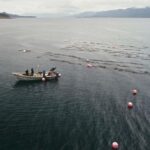
Three Ocean Robots Exploring Active Underwater Volcanoes
By Amelia Macapia, whoi.edu.
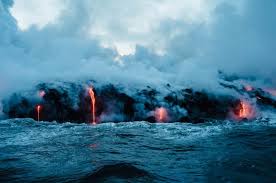
The ocean floor is home to thousands of volcanoes — many of them active — and understanding what’s happening down there requires machines that can go where humans can’t. A new feature from WHOI’s Oceanus magazine profiles three robotic vehicles that are transforming what scientists know about submarine volcanism, deep-sea ecosystems, and the limits of autonomous exploration. For anyone fascinated by the technology that makes ocean science possible, these three machines represent the cutting edge.
As Amelia Macapia writes for Oceanus:
Ocean robots have taken scientists into live underwater volcanoes. From Jason to Mesobot to Nereid Under Ice (NUI), these vehicles have maneuvered through narrow craters and their hydrothermal systems, helping researchers track how Earth releases heat, how volcanoes influence migrating marine life, and how far robots can go on their own.
The article details three distinct missions. ROV Jason returned to Kama’ehuakanalua Seamount off Hawai’i in 2023, where it dove into the mile-wide summit crater Pele’s Pit and discovered fresh lava flows and warming vents — evidence that the system is primed for its next eruption. Mesobot, equipped with environmental DNA samplers, deployed at Vailulu’u volcano in the Samoan Archipelago to study whether volcanic activity at depth alters the daily vertical migration patterns of marine life — potentially boosting biodiversity and productivity in overlying waters. And the hybrid vehicle Nereid Under Ice (NUI) made history at Kolumbo volcano in the Aegean Sea by collecting the first known autonomous robotic sample using a manipulator arm, vacuuming up fragile organisms from hydrothermal vents in conditions too extreme for human divers.
Together, these missions point toward a future where ocean robots operate with increasing autonomy — and bring back data from places that remain among the least explored on Earth.
Read the full article here: Three ocean robots that plunge into active volcanoes
Originally published on March 18, 2026.