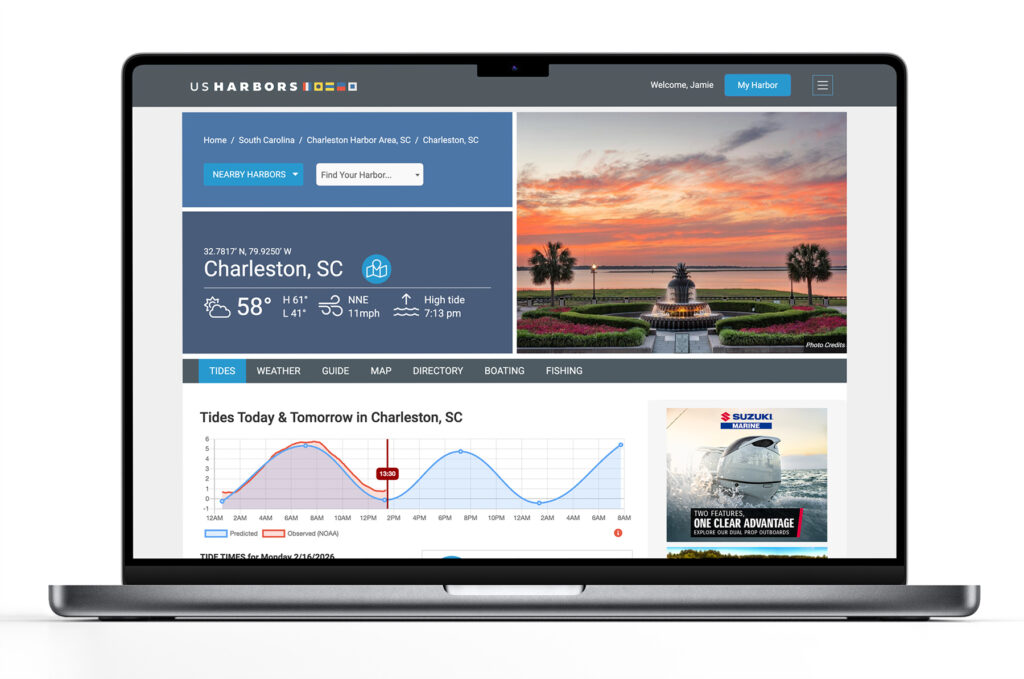
US Harbors is the #1 Source for Tide Charts and Coastal Information for over 1,400 harbors in 30 coastal states. Our curated data helps you plan smarter, enjoy your time on the water, and stay ahead of rapidly changing tides, storms, and flooding.
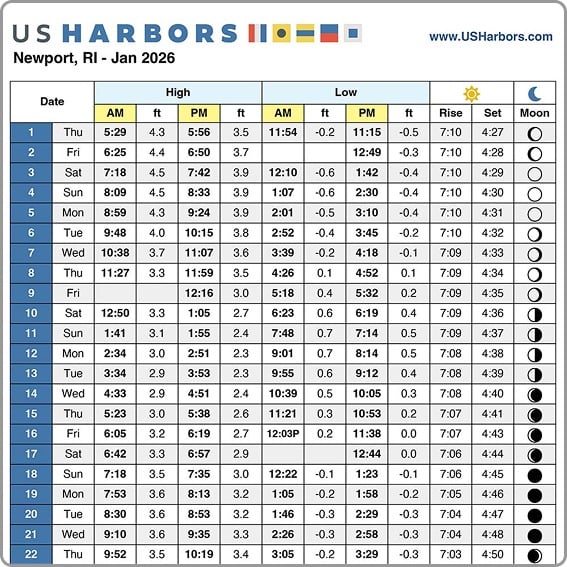
 

Tide Charts

US Harbors illustrates tide forecasts with our simple, intuitive charts. Easily scan the highs and lows online or print a convenient monthly tide chart for the boat or office.
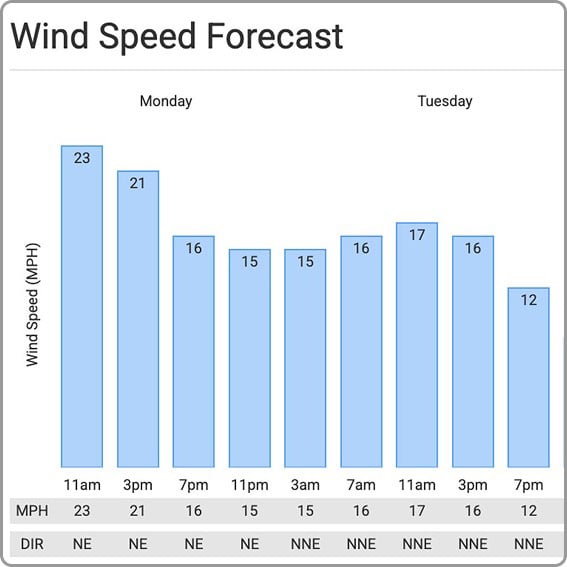
Wind speed forecast bar graph

Weather

US Harbors delivers weather predictions with a focus on marine forecasts, buoy data, weather alerts, and onshore forecasts for harbors near you that include wind speed and direction, relative humidity, and more.
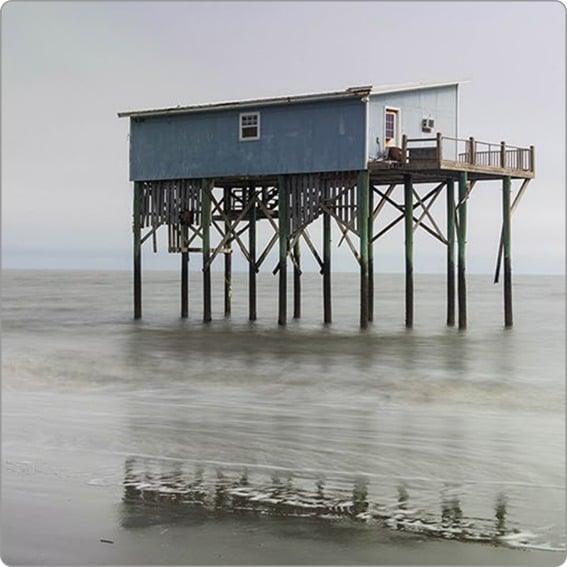
High Tide Flooding

Each month, we publish a high-tide flooding report for forecasted harbors across the country. Look for harbors near you to know when extreme high tides could cause flooding. Sign up for our newsletter to be alerted to new high tide flooding reports.
"I rely on US Harbors and consult it many times a week during boating season and often multiple times per day. I've also recommended it to other boaters as a truly valuable resource."

- Bill P. Long Island, NY

Latest Coastal News Filter

Image Credits: WIkimedia Commons.

Remarkably Bright Creatures: A Story of Octopus Intelligence Set in the Pacific Northwest

7/14/2026

By Janet Green Hammerman, best4boats.com. The Netflix adaptation of Shelby Van Pelt’s bestselling novel Remarkably Bright Creatures is drawing renewed attention to one of the ocean’s most fascinating inhabitants — the giant Pacific octopus. Set in a fictional Pacific Northwest coastal town, the story follows an aging widow, a drifting… SEE MORE

Image Credits: PxHere.

Into the Deep: Alvin Dives to Shackleton's and Scott's Lost Ships in the North Atlantic

7/9/2026

By Ken Kostel, whoi.edu. Four decades after its legendary surveys of the Titanic, the submersible Alvin is heading back to the North Atlantic — this time to document two shipwrecks tied to the greatest names in polar exploration. WHOI’s R/V Atlantis departed Woods Hole on July 2 carrying scientists, engineers,… SEE MORE

A scientist measures a tagged greater amberjack prior to releasing it. (Photo courtesy of Texas A&M University-Corpus Christi)

Research Project Provides New Estimates Of Greater Amberjack Abundance in U.S. South Atlantic, Gulf Of America

7/3/2026

By seagrant.noaa.gov, seagrant.noaa.gov. A multi-year research project to estimate the number of greater amberjack in the U.S. South Atlantic and Gulf of America has provided new insight into the species. The Greater Amberjack Count was led by Sean P. Powers, Ph.D., fisheries ecology professor and Director of the Stokes School of Marine… SEE MORE

Michael Peñuelas, a Seattle scuba diver, examines a large sunflower sea star in the Edmonds Marine Park in Puget Sound, Washington, in 2021. (Image credit: Courtesy of Zachary Gold)

New eDNA Tool To Help Track Recovery Of Sunflower Sea Star, a Pacific Coast ‘Apex Predator’

6/30/2026

By noaa.gov, noaa.gov. A wasting disease that surged during the intense 2013-2016 Pacific marine heatwave known as the Blob decimated numerous species of sea stars and triggered the collapse of vast coastal kelp forests from the Aleutians to the Baja Peninsula. One of the species most affected was the sunflower sea star, an… SEE MORE

A fish-eye view of the wake of a ship out at sea. Here's an ocean fact: The surface layer of the ocean is teeming with photosynthetic plankton. Though they're invisible to the naked eye, they produce more oxygen than the largest redwood trees. (Image credit: NOAA)

What World Ocean Day Can Look Like in 100 Years

6/29/2026

By noaa.gov, noaa.gov. More often than not, when we talk about ocean conservation, the conversation naturally gravitates toward what we stand to lose if we don’t act. This is only natural, as the urgency of the climate and biodiversity crises forces us to consider a future where our most cherished… SEE MORE

An aerial photo of the green waters of harmful algal bloom in western Lake Erie, July 20, 2020. (Image credit: Courtesy of Zachary Haslick, Aerial Associates)

Moderate Harmful Algal Bloom Predicted for Western Lake Erie

6/27/2026

By noaa.gov, noaa.gov. NOAA and its research partners are forecasting a moderate harmful algal bloom (HAB) in western Lake Erie this summer. This year’s bloom is expected to measure 3.5 on the HAB severity index, with a potential range of 3 to 4.5. “Toxic algae affect not only the health… SEE MORE

Vessels from the West Coast squid fleet followed market squid north into Oregon as ocean waters warmed, leading Oregon to adopt its first regulations for squid fishing in the state. Photo courtesy of California Department of Fish and Wildlife.

7 Ways El Niño and Large Marine Heatwave Could Affect West Coast Marine Species

6/23/2026

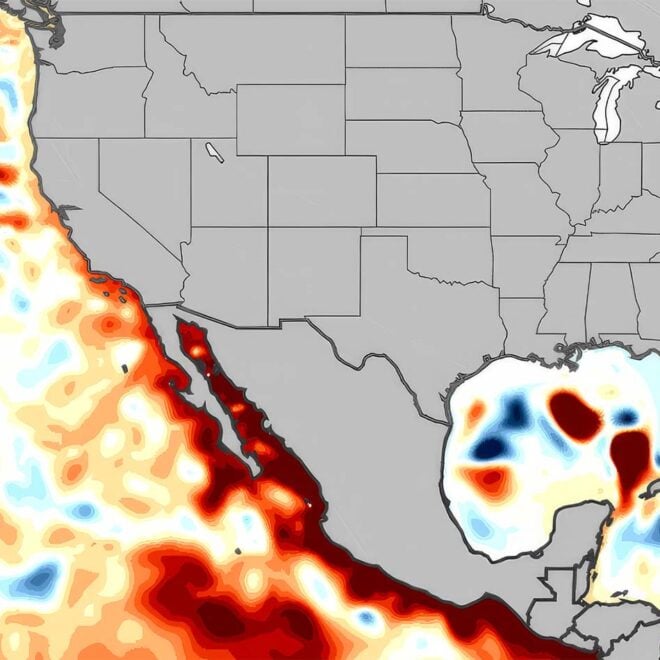
By fisheries.noaa.gov, fisheries.noaa.gov. A large marine heatwave has bathed parts of the West Coast in very warm ocean waters over the past year, breaking temperature records in the Pacific. NOAA has also announced that El Niño has developed in the tropical Pacific and is predicted to intensify to a moderate or strong level this… SEE MORE

Image Credits: Fisheries.noaa.gov.

NOAA Fisheries Announces $2.3 Million to Study Atlantic Mackerel with the Northeast Fishing Industry

6/11/2026

By fisheries.noaa.gov, fisheries.noaa.gov. NOAA Fisheries is beginning a cooperative research initiative, partnering with the Northeast fishing industry to learn more about Atlantic mackerel population dynamics. The initiative will receive $2.3 million in the current fiscal year. The project will engage more than 50 fishing vessels to collect and analyze data… SEE MORE