Image Credit: Pix4free.com.

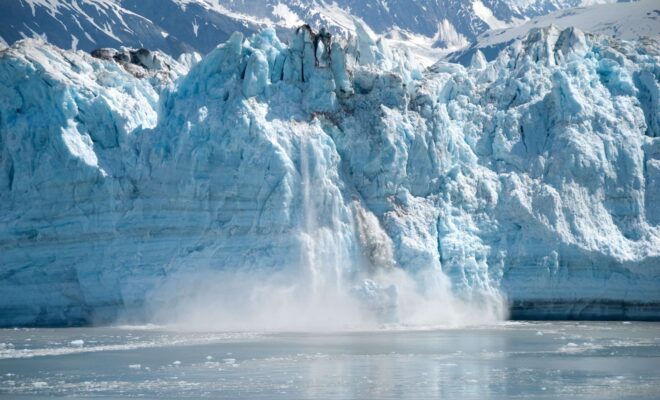
Melting of Alaska’s Juneau icefield accelerates, losing snow nearly 5 times faster than in the 1980s

8/10/2024 - By Seth Borenstein. The melting of Alaska’s Juneau icefield, home to more than 1,000 glaciers, is accelerating. The snow covered area is now shrinking 4.6 times faster than it was in the 1980s, according to a new study. Researchers meticulously tracked snow levels in the nearly 1,500-square mile icy expanse going back… SEE MORE
Image Credit: Flickr.com.

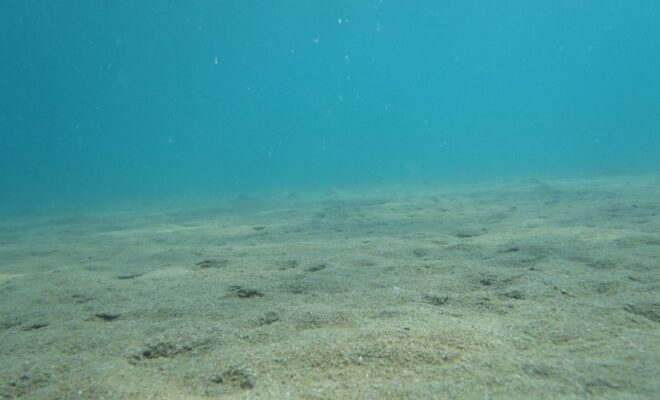
The Mysterious Discovery of ‘Dark Oxygen’ on the Ocean Floor

8/9/2024 - By Mara Magistroni. Researchers believe they have discovered oxygen being produced 4,000 meters below the sea surface, and think polymetallic nodules—the sought-after bounty of deep-sea miners—could be the source. For more than 10 years, Andrew Sweetman and his colleagues have been studying the ocean floor and its ecosystems, particularly in… SEE MORE
Image Credit: doi.org.

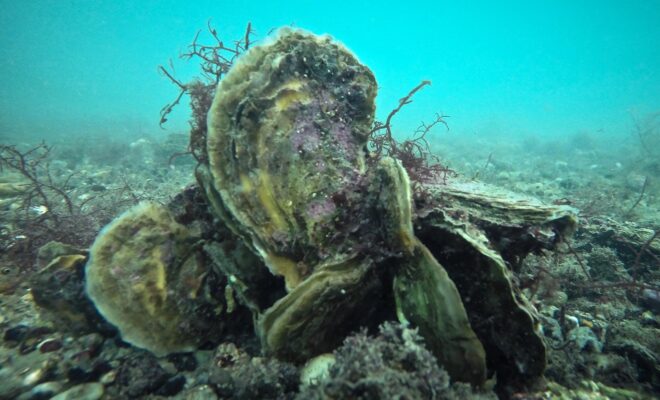
The ocean is becoming too loud for oysters, research finds

8/2/2024 - By sciencedaily.com. Baby oysters rely on natural acoustic cues to settle in specific environments, but new research from the University of Adelaide reveals that noise from human activity is interfering with this critical process. "The ocean's natural sound is gradually hushing due to habitat loss, leading to a quieter natural… SEE MORE
Image Credit: Pxhere.

NOAA Announces $10 Million Grant for Oyster Sanctuary Reef Construction in Maryland

7/29/2024 - By news.maryland.gov. The National Oceanic and Atmospheric Administration has announced that it has recommended awarding $10 million to fund new reef construction for a Maryland Department of Natural Resources oyster sanctuary in the Chesapeake Bay. The four-year grant will provide infrastructure funding for building reef bases on about 50 to… SEE MORE
mage of a harmful algal bloom in Lake Erie as seen from the NOAA/NASA Suomi-NPP satellite on August 16, 2015. The Ocean Color Instrument on GeoXO will overcome the limitations of low-Earth orbiting satellites whose observations are often affected by cloud cover and sunglint. [Credit: NOAA]

GeoXO’s OCX Instrument Will Be Game Changer for Satellite Ocean Observations

7/26/2024 - By nesdis.noaa.gov. After nearly 50 years of GOES satellites providing critical Earth-observing data and imagery, NOAA is working on its next generation series of advanced geostationary satellites—the Geostationary Extended Observations mission, or GeoXO. GeoXO will host a payload of new instruments that will provide unprecedented information for addressing our changing planet… SEE MORE
Image Credit" PICRYL

Detection of Massive Harmful Algal Bloom in the Arctic Prompts Real-Time Advisories

7/25/2024 - By ecomagazine.com. In the summer of 2022, a research cruise detected a massive harmful algal bloom (HAB) in the Bering Strait region of western Alaska. This expedition provided a dramatic example of science utilizing new technology to track a neurotoxic HAB and effectively communicate information that protects remote coastal communities… SEE MORE