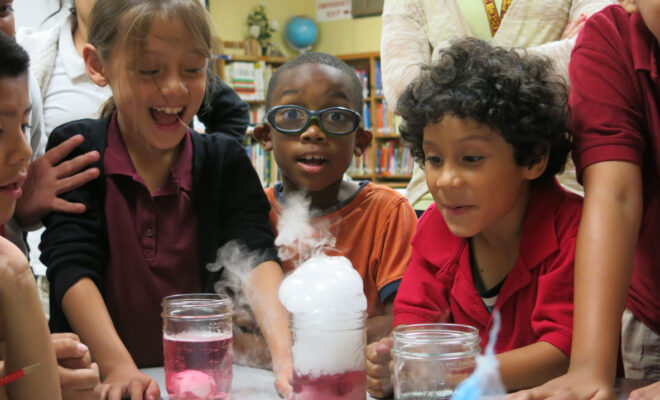
he first Your Shores cohort learning to scuba dive. Credit: Phillip and Patricia Frost Museum of Science

NOAA-Funded Program Helps Miami Teens from Under-Resourced Schools Enter Marine Science Field

8/11/2024 - By fisheries.noaa.gov. The Your Shores program at the Phillip and Patricia Frost Museum of Science provides high school students from diverse backgrounds with dive certifications, habitat restoration and research experience, and marine science training. To address the inequity of opportunities for students of all backgrounds in the marine science field and… SEE MORE
Image Credit: Pix4free.com.

Melting of Alaska’s Juneau icefield accelerates, losing snow nearly 5 times faster than in the 1980s

8/10/2024 - By Seth Borenstein. The melting of Alaska’s Juneau icefield, home to more than 1,000 glaciers, is accelerating. The snow covered area is now shrinking 4.6 times faster than it was in the 1980s, according to a new study. Researchers meticulously tracked snow levels in the nearly 1,500-square mile icy expanse going back… SEE MORE
Image Credit: Flickr.com.

The Mysterious Discovery of ‘Dark Oxygen’ on the Ocean Floor

8/9/2024 - By Mara Magistroni. Researchers believe they have discovered oxygen being produced 4,000 meters below the sea surface, and think polymetallic nodules—the sought-after bounty of deep-sea miners—could be the source. For more than 10 years, Andrew Sweetman and his colleagues have been studying the ocean floor and its ecosystems, particularly in… SEE MORE
High tide flooding April 12, 2024, blocks businesses in Annapolis, Maryland. (NOAA photo)

High Tide Flooding may Lessen across the U.S., NOAA Scientists Predict

8/7/2024 - By noaa.gov. After record-breaking coastal flooding, La Niña could slightly reduce number of flood days NOAA’s 2024-25 Annual High Tide Flooding Outlook predicts fewer high-tide flood days than last year. The outlook documents high-tide flooding events from May 2023 to April 2024 at 97 NOAA tide gauges along the U.S. coast. It… SEE MORE
Image Credit: doi.org.

The ocean is becoming too loud for oysters, research finds

8/2/2024 - By sciencedaily.com. Baby oysters rely on natural acoustic cues to settle in specific environments, but new research from the University of Adelaide reveals that noise from human activity is interfering with this critical process. "The ocean's natural sound is gradually hushing due to habitat loss, leading to a quieter natural… SEE MORE