During the 2025 Deep-sea Habitats of the Cook Islands expedition on Exploration Vessel Nautilus the team surveyed various seascapes to better understand seabed environments, and natural and mineral resources in the region. In this image, polymetallic nodules rest on sediment accumulated in a depression between rounded pillows and extended lobate lava flows, which are evidence of ancient volcanoes. (Image credit: Courtesy of Ocean Exploration Trust)

NOAA Scientists and Partners to Map Deep Waters, Seabed in the Cook Islands

6/6/2026 - By noaa.gov, noaa.gov. This summer, NOAA Ocean Exploration will conduct an expedition on NOAA Ship Okeanos Explorer to map, explore and characterize deep waters off the coast of the Cook Islands. The effort is in partnership with the Cook Islands Seabed Minerals Authority. Using remotely operated vehicles (ROVs), mapping technologies and onsite… SEE MORE
Spring Chinook Salmon. Credit: Michael Humling, U.S. Fish & Wildlife Service

NOAA Fisheries Finds Listing Gulf of Alaska Chinook Salmon Under the Endangered Species Act “Not Warranted”

5/28/2026 - By fisheries.noaa.gov, fisheries.noaa.gov. NOAA Fisheries’ 12-month review shows a low risk of extinction. NOAA Fisheries has completed a status review and 12-month finding for Gulf of Alaska Chinook salmon in response to a January 2024 petition. The Wild Fish Conservancy petitioned to delineate and list one or more evolutionarily significant units (ESUs) of Gulf of Alaska Chinook salmon… SEE MORE
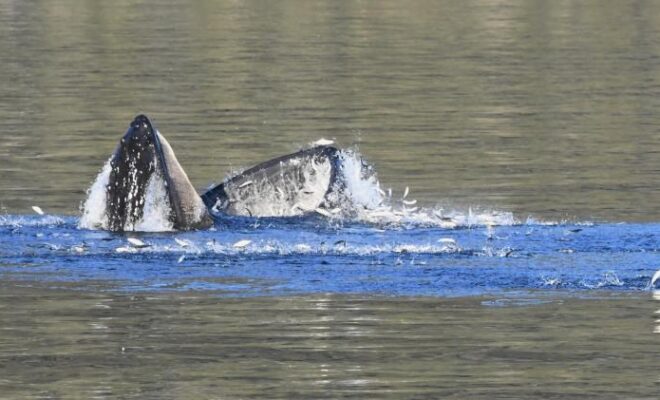
A humpback whale feeds on schooling forage fish in Prince William Sound Alaska. Photo taken under NOAA Fisheries Permit #24378 Credit: NOAA Fisheries/John Moran

Capelin: a “Sea Canary” for Marine Ecosystem Change in Response to Heatwaves

5/27/2026 - By fisheries.noaa.gov, fisheries.noaa.gov. Capelin are a major forage fish species in high-latitude marine ecosystems. Recent heatwaves in Alaska led to a dramatic decline in capelin abundance, which can have major impacts on predators, including marine mammals, seabirds, and fish. Twenty years ago, Dr. George Rose with Memorial University of Newfoundland called capelin… SEE MORE
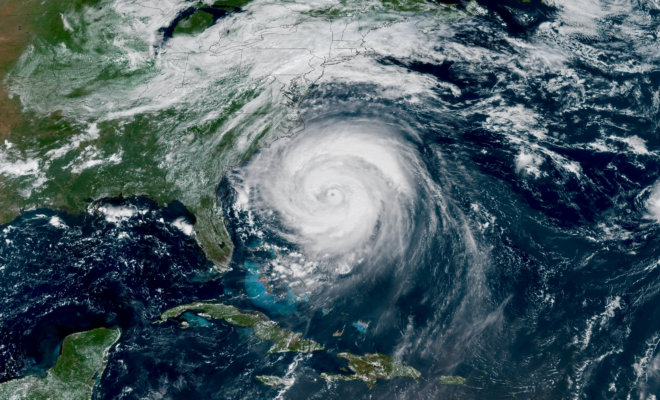
A NOAA satellite view of a massive Hurricane Erin churning off the U.S. East Coast taken August 20, 2025. (Image credit: NOAA Satellites)

NOAA Predicts Below-Normal 2026 Atlantic Hurricane Season

5/25/2026 - By noaa.gov, noaa.gov. Early preparation essential to staying safe all season. Forecasters with NOAA’s National Weather Service are predicting a below-normal hurricane season for the Atlantic basin this year. NOAA’s outlook for the 2026 Atlantic hurricane season, which runs June 1 to November 30, predicts a 35% chance of a… SEE MORE
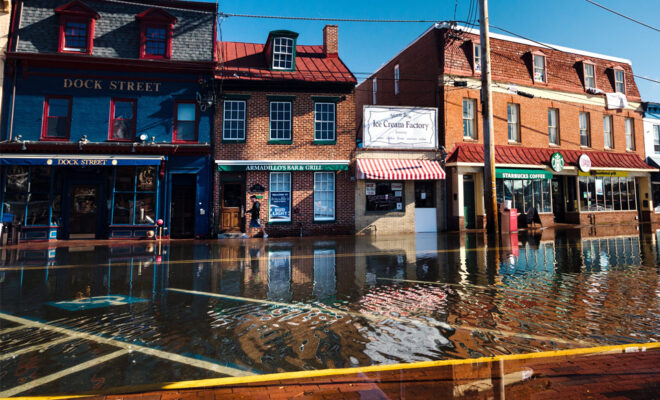
High-tide flooding on October 24, 2017, submerged roads and parking areas along Dock Street, in the historic heart of Annapolis, Maryland. Photo by Will Parson, Chesapeake Bay Program. Used with permission.

El Niño and High Tide Flooding, a Possible Double Whammy for Some Coastal Communities in 2026

5/24/2026 - By oceanservice.noaa.gov, oceanservice.noaa.gov. NOAA’s National Weather Service is predicting El Niño is likely to emerge by July 2026 and continue through the winter, and for many locations in the U.S. this could mean more high tide flooding. To understand why more flooding is expected, it helps to understand what El Niño is and… SEE MORE
A coho salmon swims up the Sol Duc river on the Olympic Peninsula. Credit: Adobe Stock.

World Fish Migration Day

5/22/2026 - By fisheries.noaa.gov, fisheries.noaa.gov. May 23, 2026 is World Fish Migration Day: a global celebration of the importance of migratory fish. Every year, millions of fish—salmon, steelhead trout, shad, alewives, and sturgeon, among others—migrate to their native habitats to reproduce. Some fish swim thousands of miles through oceans and rivers to… SEE MORE